The Living Room at Thinkers’ Lodge
This room helps explain why Thinkers’ Lodge was such an unusual setting for an international gathering. Rather than meeting in a formal conference center, the scientists who came to Pugwash lived and spent time together in a house overlooking the Northumberland Strait. Rooms like this provided informal spaces where conversations could continue beyond the scheduled meetings.
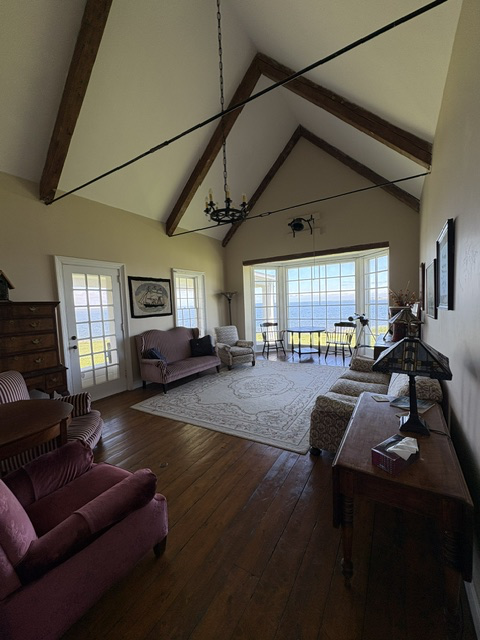
The large windows and doors open toward the water, while the exposed wooden beams, simple furniture and wooden floors retain the feeling of a summer residence rather than an institution. That informality was an important part of the atmosphere Cyrus Eaton wanted to create at Thinkers’ Lodge. Scientists from countries divided by the Cold War could eat together, relax together and continue talking away from microphones, government officials and formal negotiating tables.
During the first Pugwash Conference in July 1957, those personal interactions were particularly important. The 22 scientists who gathered here came from ten countries and represented very different political systems and experiences. Some came from the United States and Western Europe, while others came from the Soviet Union, China and Eastern Europe. They were meeting at a time when communication across those divisions was extraordinarily difficult.
I particularly like this room because it reminds us that some of the most important conversations at Pugwash did not necessarily happen around the official conference table. They also happened in spaces like this—sitting in chairs, looking out over the water and continuing discussions as individuals rather than representatives of opposing nations.
The setting was intentionally simple and isolated. Here in a small Nova Scotia village, far from the centers of political power, there was time and space for people who might otherwise have regarded one another as adversaries to simply talk.
Read More From Nancy
The Conference Room
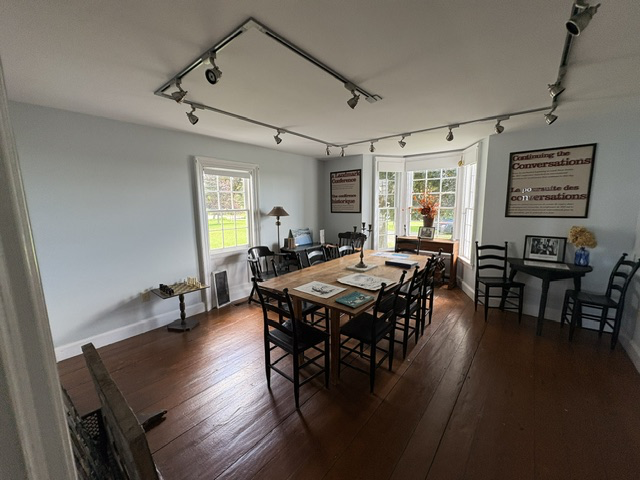
This is the conference room at Thinkers’ Lodge, a space that represents the kind of face-to-face conversation at the heart of the Pugwash idea. Its simplicity is striking: a long wooden table, closely arranged chairs, wooden floors and windows looking out over the grounds. There is little here to suggest the formality of international diplomacy. […]
The 1995 Nobel Peace Prize — Pugwash and Joseph Rotblat
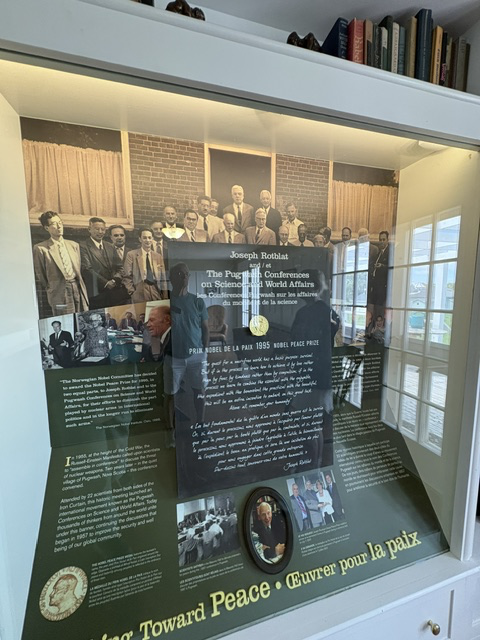
This display brings the story of Thinkers’ Lodge forward almost forty years from the first conference. Across the bottom are the words “Toward Peace,” while the center identifies Joseph Rotblat and the Pugwash Conferences on Science and World Affairs as recipients of the 1995 Nobel Peace Prize. The large photograph at the top shows’ participants at the […]
Joseph Rotblat’s Room
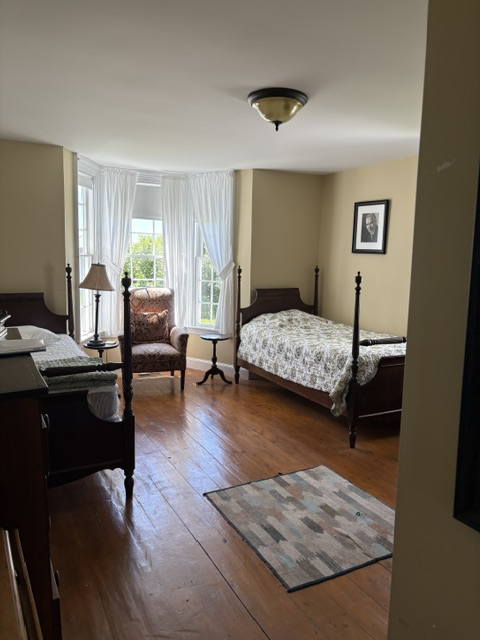
This modest bedroom at Thinkers’ Lodge is associated with Joseph Rotblat, one of the most important figures in the Pugwash movement. Originally identified as Room No. 4, it became Rotblat’s preferred room when he returned to Pugwash for conferences and meetings. His association with it became so strong that the Pugwash Park Commission eventually designated it the […]

