Constance Hopkins’s Beaver Hat
Among the objects we discovered in Plymouth was something remarkably personal: a beaver-felt hat associated with Constance Hopkins, a passenger on the Mayflower.
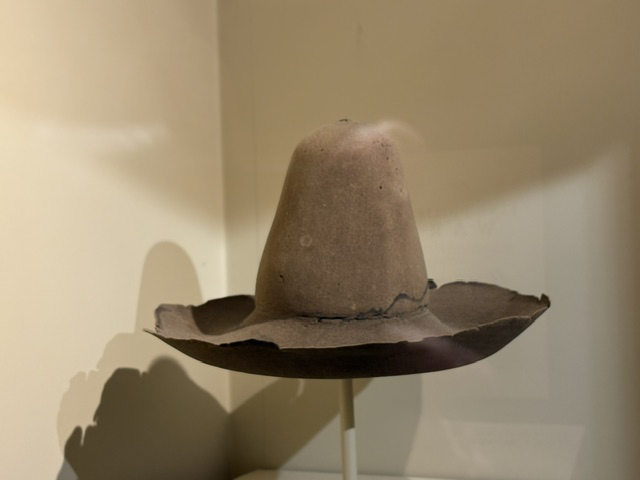
Constance was only about fourteen years old when she crossed the Atlantic in 1620 with her father, Stephen Hopkins, her stepmother Elizabeth, and other members of their family. Unlike many objects displayed from the colonial period, this hat is connected by family tradition directly to someone who experienced that voyage and the beginnings of Plymouth Colony.
The hat also tells a larger story about the economy of the new colony. Between 1615 and 1640, beaver hats were extremely fashionable in England and Europe. Their dense felt was durable, could be shaped into the high-crowned styles of the period, and became desirable enough that beaver pelts were valuable commodities.
For Plymouth, that demand mattered enormously. The colonists arrived deeply in debt to the investors who had financed their voyage and settlement. One of the commodities they could obtain in North America and sell profitably in England was beaver fur. The colonists traded with Native peoples for pelts, particularly through trading networks extending northward into what is now Maine. The furs were shipped across the Atlantic, where hatmakers removed the guard hairs and processed the soft underfur into felt.
So, this simple hat connects several worlds: Native hunting and trade networks, Plymouth’s struggle to establish an economically viable colony, transatlantic commerce, and European fashion.
Read More From Nancy
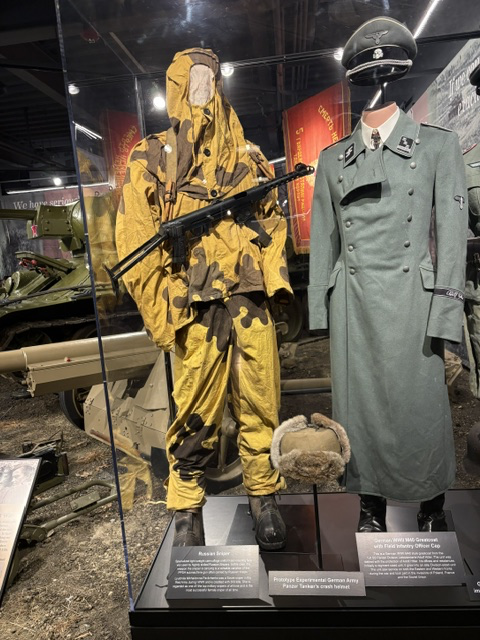
The Russian Sniper
During a visit to the American Heritage Museum in Hudson, Massachusetts, I stopped at this display highlighting one of the most specialized and demanding roles of the Second World War: the Soviet sniper. While the museum is known for its extraordinary collection of tanks and military vehicles, it also tells the human stories behind the equipment through […]
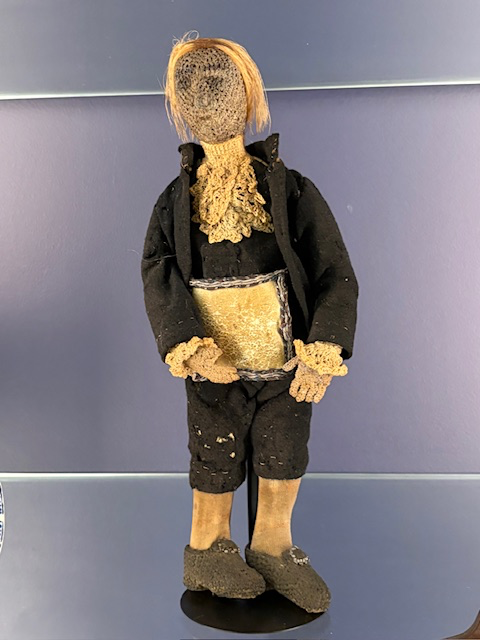
Washington Doll
In the years immediately following the American Revolution, George Washington became a living symbol of a new nation. Across the young republic, admiration for him inspired countless small acts of devotion. This rare type of commemorative doll is an example of this admiration. It was crafted from wool in 1790. These were not toys but expressions of patriotism, Washington’s image […]
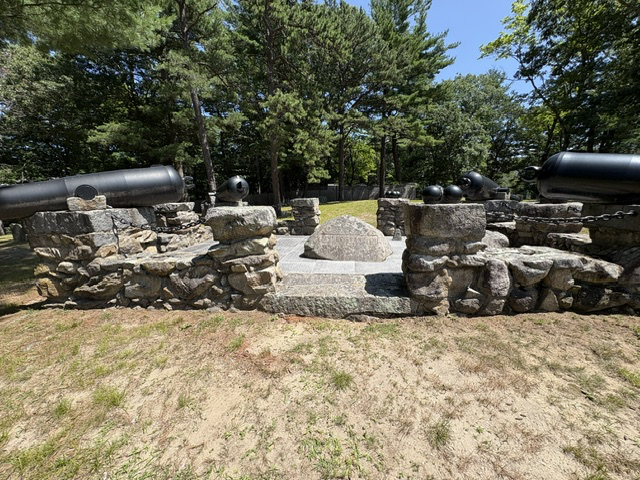
The Gravesite of Myles Standish
After visiting the site of Myles Standish’s homestead, we continued following his story in Duxbury to the place where he was laid to rest. Standish died here on October 3, 1656, more than three decades after arriving aboard the Mayflower and after spending much of his later life helping establish the community of Duxbury. There […]

