Museum of Fine Arts
The Museum of Fine Arts in Boston has been part of our family story for as long as I can remember. Our oldest daughter, Emily, loved going there from the time she was very young. Even as a toddler, she would climb the great steps of the museum and make her way to the Impressionist galleries. She knew exactly where she wanted to go.
We would walk through the galleries together, and Emily would move from painting to painting identifying the artists: Monet, Renoir, Degas. These were names that became familiar to her at an age when most children were just beginning to discover art. As she grew older, she began bringing a sketch pad with her. Instead of simply looking at the paintings, she would sit in front of them and draw, studying the lines, shapes, and details as she tried to reproduce what she saw. The museum became a place where she could learn by looking and creating.
When Erin came along, she developed her own relationship with the MFA. She especially enjoyed the Egyptian collection, and a good scavenger hunt through those galleries could keep her exploring. Mummies, sarcophagi, sculptures, jewelry, hieroglyphics, and objects from everyday life provided endless things to search for and questions to ask. The two girls experienced the museum differently, which was part of what made our visits so much fun. Needless to say, we became members and went often. On any given Sunday afternoon, we might decide to drive into Boston and spend a few hours at the museum. We saw the special exhibitions as they came through, but we also returned again and again to our favorite rooms. There was no pressure to see everything because we knew we would be back. Sometimes we could spend most of a visit in just one part of the museum.
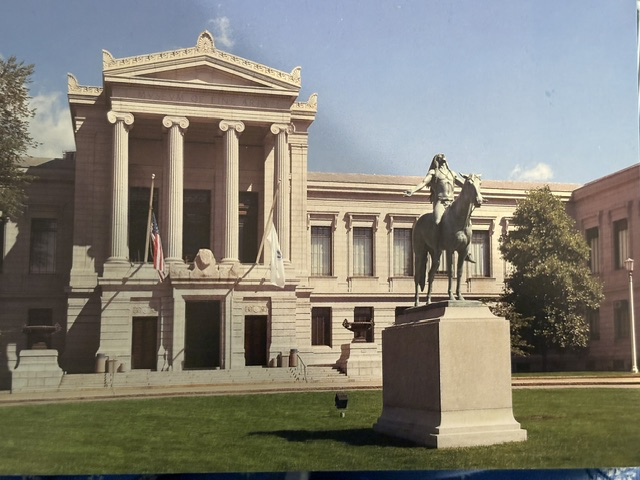
The MFA itself has been part of Boston since 1870. It originally opened in Copley Square in 1876 before moving to its present Huntington Avenue location in 1909. The new building was designed by architect Guy Lowell, and the museum continued to expand around it. Today its collections encompass nearly half a million works spanning thousands of years and cultures from around the world.
One of the treasures Emily encountered in those Impressionist galleries was the MFA’s extraordinary collection of paintings by Claude Monet. The museum holds more than 30 of his paintings, one of the largest collections of Monet’s work outside France. For a child fascinated by the Impressionists, she could return to the same museum repeatedly and see not just an isolated example but many different stages of an artist’s work.
Erin’s favorite Egyptian galleries have an equally interesting Boston story. The MFA began collecting Egyptian antiquities in the 19th century, but its collection grew enormously through archaeological excavations conducted jointly with Harvard University during the early decades of the 20th century. Archaeologist George Reisner led excavations in Egypt and Sudan, and under the system then used to divide excavated objects between Egypt and the archaeological expeditions, many objects came to Boston. The result is one of the most significant collections of ancient Egyptian and Nubian art in the United States.
There is also a familiar figure standing outside the Huntington Avenue entrance in my photograph. The bronze equestrian statue is Appeal to the Great Spirit, created by Cyrus E. Dallin and installed in front of the museum in 1912. Dallin is an artist whose work appears repeatedly as we explore New England history. He also created the Paul Revere statue in Boston, the Massasoit statue in Plymouth, and the great Mayflower Compact relief we visited in Provincetown. Suddenly, places that seem unrelated begin connecting with one another through a single artist.
The photograph of the Huntington Avenue entrance brings back those years when walking up these steps was such a familiar part of our lives. Museums were not places we saved for vacations or special occasions. They were places we returned to regularly, allowing the girls to develop their own interests and make discoveries at their own pace.
Read More From Nancy
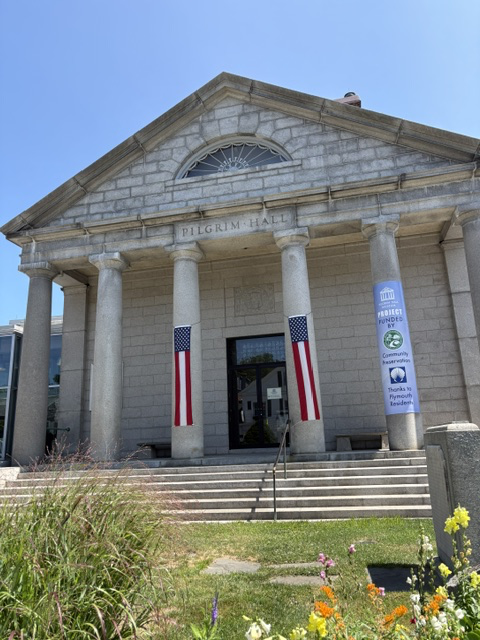
Pilgrim Hall Museum
Just a few blocks from the Plymouth waterfront stands Pilgrim Hall Museum, another place where the story of Plymouth becomes tangible. Founded by the Pilgrim Society in 1824 and opened the following year, it is the oldest continuously operating public museum in the United States. The imposing granite building was designed specifically to preserve the […]
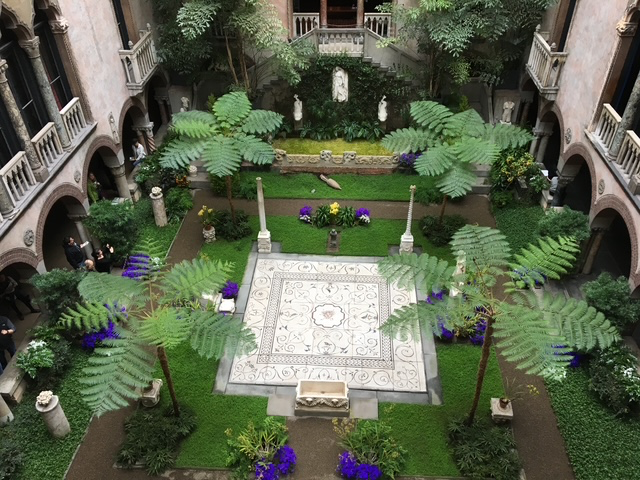
The Isabella Stewart Gardner Museum
Is this a home? Or is it one of the most extraordinary private collections in Boston? It is both. The Isabella Stewart Gardner Museum is unlike almost any other museum I have visited because it is difficult to separate the collection from the woman who created the setting for it. This was not simply a […]
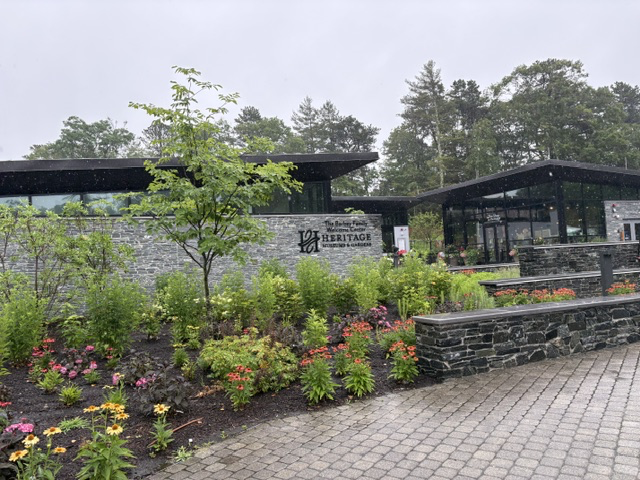
Heritage Museums & Gardens
One of the things I enjoy about exploring museums is discovering that the museum itself often has a story that is just as interesting as the collections inside. Heritage Museums & Gardens in Sandwich is a perfect example. Spread across 100 acres, it brings together Cape Cod history, gardens, art, automobiles and the stories of […]

