The Isabella Stewart Gardner Museum
Is this a home? Or is it one of the most extraordinary private collections in Boston? It is both.
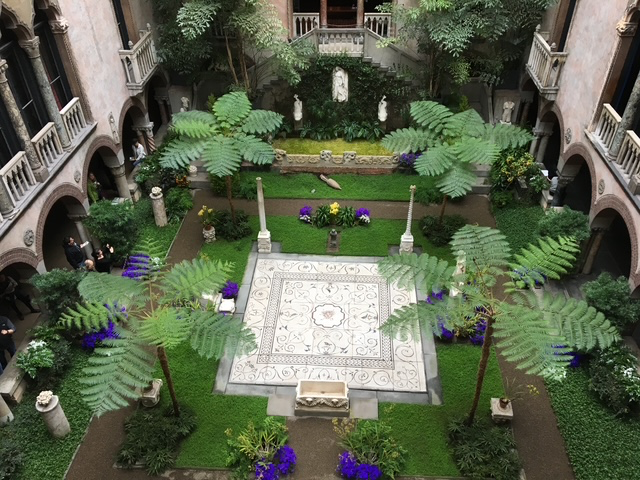
The Isabella Stewart Gardner Museum is unlike almost any other museum I have visited because it is difficult to separate the collection from the woman who created the setting for it. This was not simply a building constructed to display works of art. Isabella Stewart Gardner envisioned the rooms, chose the objects, determined where they would be placed and created an environment in which architecture, art, furniture, textiles, plants and even views from one room into another became part of the experience.
Isabella Stewart Gardner was born in New York City in 1840 and married John Lowell “Jack” Gardner Jr., a member of a prominent Boston family, in 1860. They eventually settled in Boston, where Isabella became known for her independence, curiosity and willingness to ignore many of the social conventions expected of women of her position. Travel became an important part of her life. Isabella and Jack traveled extensively through Europe, the Middle East and Asia, and those journeys helped shape her interests as a collector. Over the years, she assembled paintings, sculptures, manuscripts, furniture, textiles, decorative arts and architectural fragments from many cultures and periods.
Her collection eventually became too large for the Gardners’ Beacon Street home. After Jack died in 1898, Isabella moved forward with an idea they had discussed together: creating a building specifically for her growing collection. She purchased land in Boston’s Fenway area and worked closely with architect Willard T. Sears to create Fenway Court, the building we now know as the Isabella Stewart Gardner Museum.
It opened in 1903. Inspired by the architecture Isabella had encountered in Venice, the building was organized around the remarkable four-story interior courtyard shown in my photographs. Arched openings, balconies, columns, stonework and architectural fragments surround a garden filled with plants and flowers. Standing on an upper level and looking down into the courtyard, it is easy for a moment to forget that you are in Boston.
The courtyard itself is not static. Its horticultural displays change throughout the year, but the architecture surrounding it creates the feeling of stepping into an old Venetian palace. Gardner acquired works associated with some of the great names in European art, including Rembrandt, Titian, Botticelli, Raphael and Vermeer, but she did not limit herself to European painting. Her interests reached across centuries and cultures. Ancient Roman objects, medieval sculpture, Asian art, Islamic works, manuscripts, tapestries, furniture and architectural elements appear throughout the building.
The Asian works were especially interesting to us as we wandered through the galleries. Rather than being isolated within the kind of uniform gallery we often associate with museums, objects appear within the richly layered surroundings Gardner created for them. A sculpture might stand beside furniture, beneath a textile or near an architectural fragment from an entirely different place and period.
Gardner was not trying to organize her museum like a textbook. She created relationships among objects according to her own eye and imagination. Paintings are sometimes hung above or below one another. Furniture remains part of the rooms. Sculptures occupy unexpected corners. Architectural fragments are incorporated directly into walls and windows.
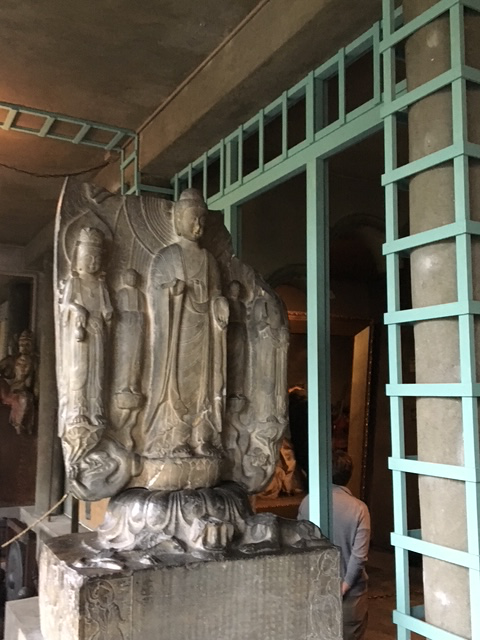
The museum therefore preserves not simply what Isabella Gardner collected, but how she wanted us to encounter it. That intention became permanent through her will. Gardner stipulated that the arrangement of her collection should not be substantially altered. If her wishes were violated, the collection was to be sold and the proceeds given to Harvard University. As a result, walking through the historic building today allows us to experience the rooms much as Gardner arranged them herself.
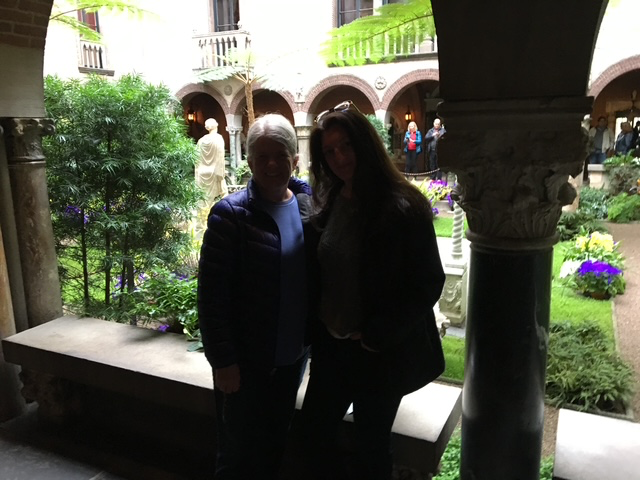
Walking through the Gardner does not feel quite like walking through a conventional museum. There is an intimacy to it. You move through rooms created by one woman, surrounded by things she chose because they interested or moved her, looking through arches and balconies into the garden she placed at the center of everything. More than a century after she opened Fenway Court, we are still walking through the world she assembled and seeing it largely as she wanted us to see it.
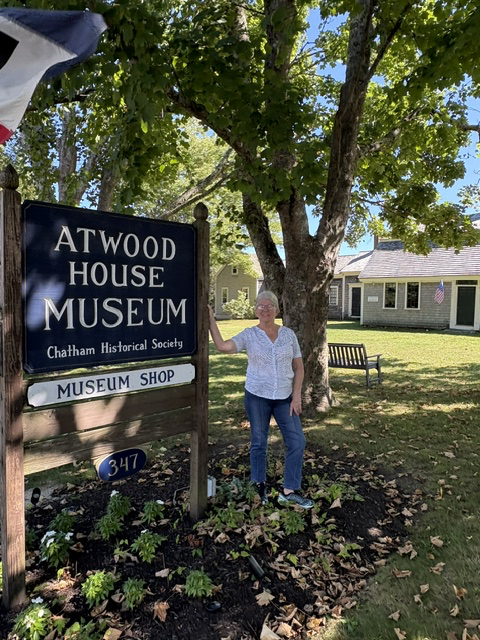

Read More From Nancy
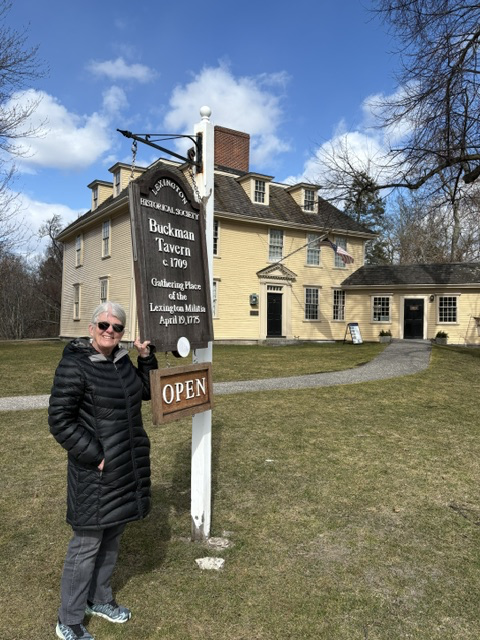
Buckman Tavern
There are some towns that have preserved their colonial roots remarkably well, and Lexington is certainly one of them. Marty and I took a ride over to the town this year simply to walk the familiar sites once again. Since Buckman Tavern was open, we took the opportunity to tour it and revisit one of the places […]
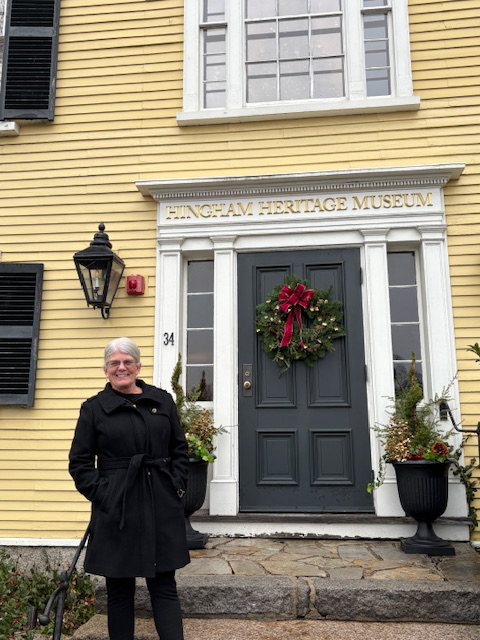
Hingham Historical Society
While visiting Hingham for the day, we stopped by the Hingham Historical Society to learn more about what this town is most proud of. Hingham is one of the oldest towns in Massachusetts, founded in 1635, and its museum captures much of the town’s story, from its colonial roots to its maritime heritage and civic […]
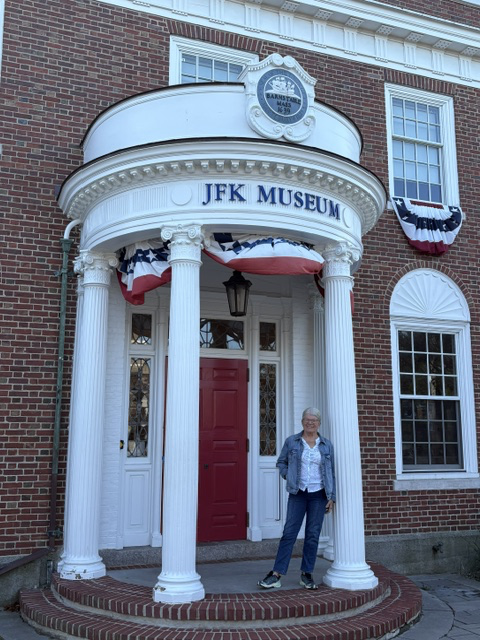
John F. Kennedy Museum
I grew up in a family that greatly admired the Kennedys. My mother kept a bust of President John F. Kennedy on our mantel, and there was little we did not know about the family and its many branches. Over the years, I visited numerous places associated with the Kennedys, so traveling to Hyannis and […]

