Fort Raleigh National Historic Site
Fort Raleigh National Historic Site on Roanoke Island, North Carolina, was established on April 5, 1941, to preserve the site of England’s first attempt to establish a permanent colony in the New World and to interpret one of the greatest mysteries in American history. Overlooking the waters of Albemarle Sound, this quiet landscape marks the place where hope, ambition, and uncertainty came together more than four centuries ago.
In 1587, Governor John White led 115 English settlers. including men, women, and children, to Roanoke Island. Among them was his daughter, Eleanor Dare, who gave birth to Virginia Dare, the first English child born in the English colonies of North America. The settlement struggled almost immediately, facing shortages of food and supplies. White reluctantly returned to England to obtain provisions, expecting to be gone only a few months.
England soon found itself preparing to defend against the Spanish Armada, and every available ship was pressed into service. White was unable to return to Roanoke for three years. When he finally reached the settlement in 1590, the colonists had vanished.
There were no signs of battle, no graves, and no evidence of a desperate struggle. The houses had been carefully dismantled, suggesting an orderly departure rather than a violent attack. The only clue was the word “CROATOAN” carved into a wooden post and the letters “CRO“ carved into a nearby tree. Before leaving, White and the colonists had agreed that if they relocated, they would leave a message indicating their destination. Because there was no distress symbol accompanying the carving, White believed they had moved to Croatoan Island, now Hatteras Island. Storms prevented him from searching there, and he was forced to sail back to England.
What happened to the Lost Colony has remained one of American history’s enduring mysteries. Historians and archaeologists have proposed many theories. Some believe the settlers were welcomed by the Croatoan people and gradually became part of their community. Others suggest they attempted to move inland, where they may have joined other Indigenous groups or succumbed to disease, starvation, or conflict. Archaeological discoveries continue to provide intriguing clues, but no single explanation has ever been proven.
Fort Raleigh National Historic Site preserves more than the mystery itself. The park protects archaeological remains associated with the sixteenth-century colony, commemorates the birthplace of Virginia Dare, and interprets the rich history of the Indigenous peoples who lived on Roanoke Island long before English settlers arrived. It is also home to The Lost Colony, the outdoor drama first performed in 1937 and recognized as the longest-running outdoor symphonic drama in the United States.
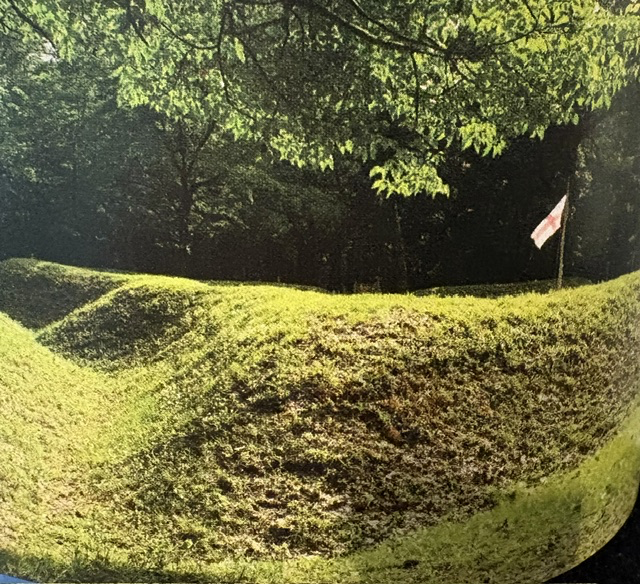
The grassy fortifications and quiet woods give little hint of the hopes carried by those first settlers or the uncertainty that followed their disappearance. Unlike so many historic places that preserve the memory of a known event, Fort Raleigh preserves an unanswered question. More than four hundred years later, the fate of the Lost Colony remains unsolved, inviting each generation to wonder what became of the 116 men, women, and children who disappeared into history.
Read More From Nancy
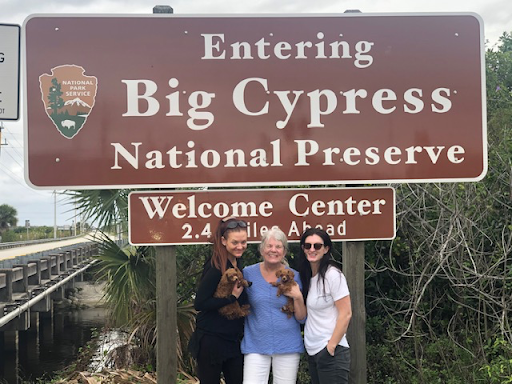
Big Cypress National Preserve
Big Cypress is not exactly a national park, but a national preserve. A national preserve allows certain traditional uses to continue while still protecting the land. When Congress established Big Cypress in 1974, it became one of the very first two national preserves in the country, Big Cypress protects nearly 729,000 acres of land, making […]
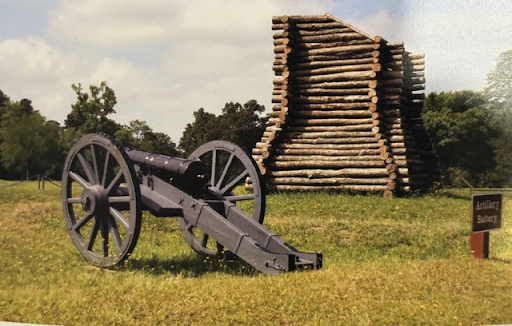
Ninety Six National Historic Site
Ninety Six National Historic Site in Ninety Six, South Carolina, preserves one of the most significant yet least-known battlefields of the American Revolution. Established as a National Historic Site in 1976, it tells the story of a frontier settlement where Native Americans, settlers, Loyalists, and Patriots all struggled for control of the South Carolina backcountry. […]
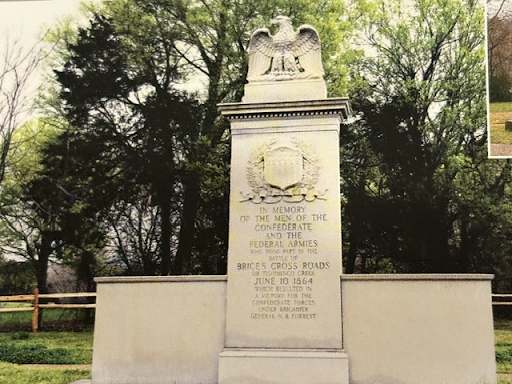
Brices Cross Roads National Battlefield
Brices Cross Roads National Battlefield Site in Baldwyn, Mississippi, preserves the location of one of the most remarkable Confederate victories of the Civil War. Established as a National Battlefield Site in 1929, this small one-acre park commemorates a battle whose outcome had consequences far beyond the crossroads where it was fought. On June 10, 1864, […]

