Poland Spring Resort
I made my way to Poland Spring to spend the night, and in many ways it felt like stepping back in time. This was not a modern luxury hotel experience. The room was plain, the towels were thin, and there was a small bar of soap waiting in the bathroom. The accommodations were simple and seemed to belong to another era.
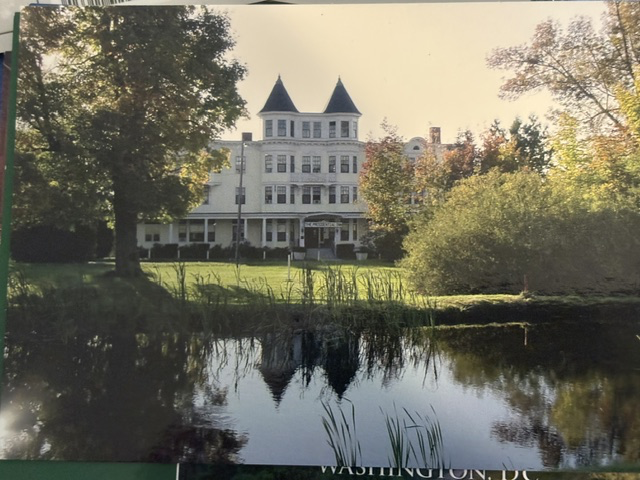
Poland Spring itself has been welcoming travelers since 1794, when the Ricker family began taking in people passing through what was then Bakerstown, Maine. In 1797, they opened the Wentworth Ricker Inn, beginning a family hospitality business that would continue for generations.
The spring eventually changed everything. In 1844, Hiram Ricker, who had suffered for years from digestive problems, began drinking water from a spring on the family’s property and became convinced that it had improved his health. The Rickers began sharing the water with others in 1845 and selling it commercially by 1859. Long before Poland Spring became a familiar bottled-water name, people were actually traveling to this hilltop in Maine to drink the water at its source.
As the reputation of the water spread, the family transformed their country inn into one of New England’s great resorts. In 1876 they opened the Poland Spring House. Eventually it had more than 350 guest rooms, a music hall, bowling alley, photography studio, writing rooms, elevators and dining facilities capable of serving hundreds of guests. Poland Spring had become a destination rather than simply a place to spend the night.
The Rickers continued adding to the experience. They purchased Maine’s pavilion from the 1893 World’s Columbian Exposition in Chicago, dismantled it, transported it to Maine and reconstructed it at Poland Spring as a library and art gallery. They developed one of Maine’s earliest golf courses in the 1890s, later redesigned and expanded by the legendary Donald Ross. In 1907 they opened an extraordinarily modern bottling plant for Poland Spring Water.
The building where I stayed was another part of that history. Originally called the Riccar Inn, it was constructed in 1913 and was the last hotel built by the Ricker family. It reflected another transformation in American travel with the arrival of the automobile. Located near the resort’s garages, it was convenient for the growing number of guests arriving in their own cars. It was later remodeled and renamed the Presidential Inn.
But Poland Spring’s great resort era eventually faded. The Depression brought financial problems, ownership changed, and the enormous Poland Spring House later became part of a Job Corps training center. After the Job Corps departed in 1969, the old hotel never operated normally again. In 1975, the once-grand Poland Spring House burned to the ground.
Remarkably, much of Poland Spring survived because people decided it was worth saving. Mel Robbins arrived in 1972 initially interested in redevelopment but instead became captivated by the property’s history. He and Cyndi Robbins eventually purchased the resort, while the Poland Spring Preservation Society worked to preserve important historic buildings including the Maine State Building and All Souls Chapel.
There was something appropriate, then, about the simplicity of my stay. I wasn’t there because I wanted luxury. I wanted the experience of sleeping in a building that had been part of Poland Spring for more than a century. For one night, I wasn’t simply visiting Poland Spring and reading about its past. I was staying within it.
Read More From Nancy
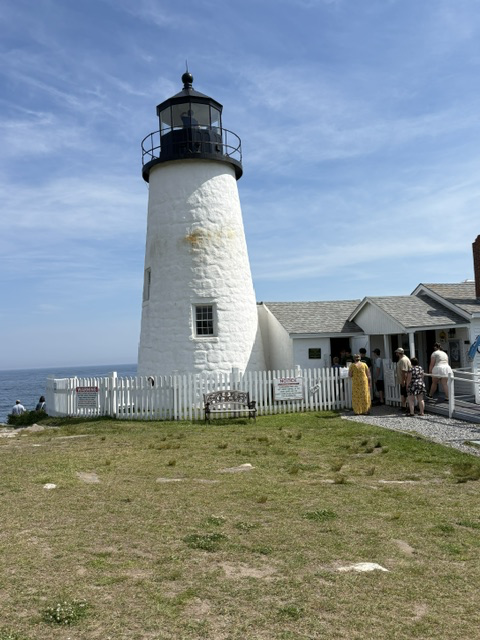
Pemaquid Point Lighthouse
One of the pleasures of traveling is discovering places you never expected to visit. Pemaquid Point Lighthouse was one of those discoveries. As we made our way home from the Canadian Maritime Provinces, we learned about this historic lighthouse on the coast of Maine and decided to make a short detour. It turned out to […]
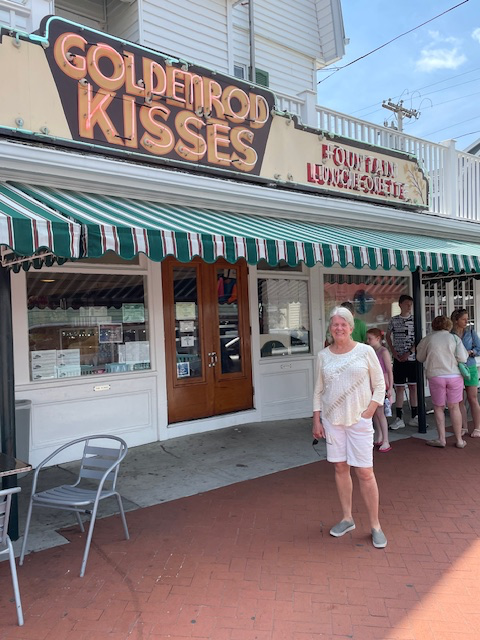
Goldenrod
Every year, I travel to York Maine, to revisit many of the usual sites. One of these places is The Goldenrod, a place that feels as timeless as the tides rolling onto Short Sands Beach. No trip to York is complete without stepping inside this landmark, where the air is sweet with the scent of […]
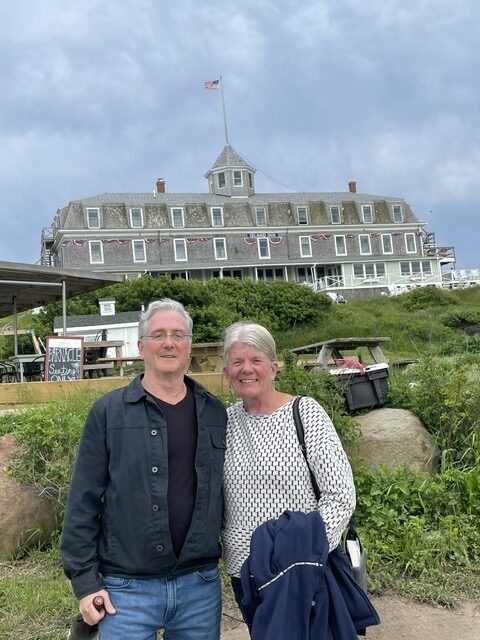
Monhegan Island
Staying at the Island Inn became an important part of our experience on Monhegan Island. Perched on a bluff overlooking the harbor, the large shingled inn seems perfectly suited to its surroundings. From the moment we arrived, there was a feeling that we had stepped into an earlier era of New England summer travel. The […]

