Sabbathday Lake Shaker Village
By far one of my favorite places to visit in Maine is the Sabbathday Lake Shaker Village. Over the years, I have visited many places associated with the Shakers, but this community is unlike any other. It is home to the last active Shaker community in the world. Today, only three Shakers continue the religious life that once attracted thousands of followers across America.
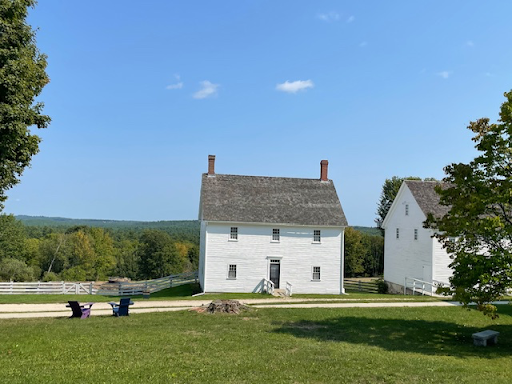
The United Society of Believers in Christ’s Second Appearing, better known as the Shakers, arrived in America in 1774 under the leadership of Mother Ann Lee. They became known for their simple lifestyle, communal living, celibacy, equality between men and women, and a deep belief that work itself was an act of worship. Their commitment to craftsmanship produced furniture, buildings, tools, seeds, and inventions whose quality is still admired today.
The Sabbathday Lake community was established in 1783 and eventually became one of nearly twenty Shaker villages stretching from Maine to Kentucky. At its peak, more than 140 believers lived and worked here. Over time, however, the movement declined. Because the Shakers practiced celibacy, their communities depended entirely on new converts. As fewer people embraced that way of life, one village after another closed.
Today, Sabbathday Lake is the only community that remains. I love walking through the village. The simple white buildings, working farm, meeting house, barns, herb gardens, and peaceful landscape reflect the Shaker belief that beauty could be found in simplicity. Every building has a purpose, every object reflects skilled craftsmanship, and every path tells the story of people who chose a very different way of life.
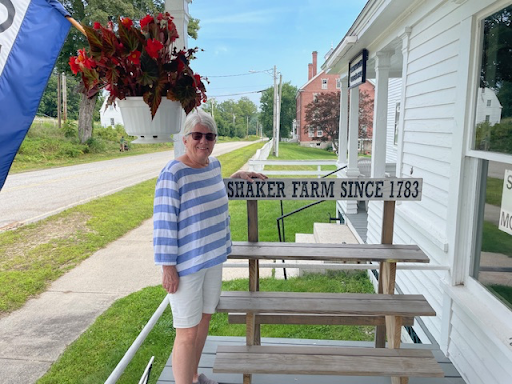
One stop I never miss is the country store. It offers many of the traditional products for which the Shakers became famous, including herbs, handcrafted goods, books, and foods inspired by generations of Shaker recipes. It is more than a gift shop, it is one of the ways this tiny community continues to support itself while sharing its traditions with visitors.
What makes each visit so meaningful is knowing that this is not simply a historic village preserved as a museum. It is still a living religious community. With only three members remaining, it is remarkable that the Shaker faith continues to be practiced here. Their daily lives preserve traditions that have survived for nearly 250 years, even as the movement itself has nearly disappeared.
One of the things I admire most about the Shakers is that many of the values they lived by remain relevant today. Their emphasis on honesty, hard work, quality craftsmanship, stewardship of the land, and equality was well ahead of its time. Although their numbers have dwindled to just a handful, their influence on American furniture, architecture, agriculture, music, and design continues to be felt throughout the country.
Walking through Sabbathday Lake Shaker Village is like stepping into another century, where simplicity, purpose, and community remain at the center of daily life. It is one of the few places in America where history is not simply remembered. It is still being lived
Read More From Nancy

The Pen That Created Frances Perkins National Monument
On December 16, 2024, President Joseph R. Biden Jr. used this pen to sign the presidential proclamation establishing Frances Perkins National Monument in Newcastle, Maine. The ceremony took place in the U.S. Department of Labor; the department Perkins led from 1933 to 1945. The photograph accompanying the pen shows Biden handing it to Frances Perkins’s […]
The Cogswell Family
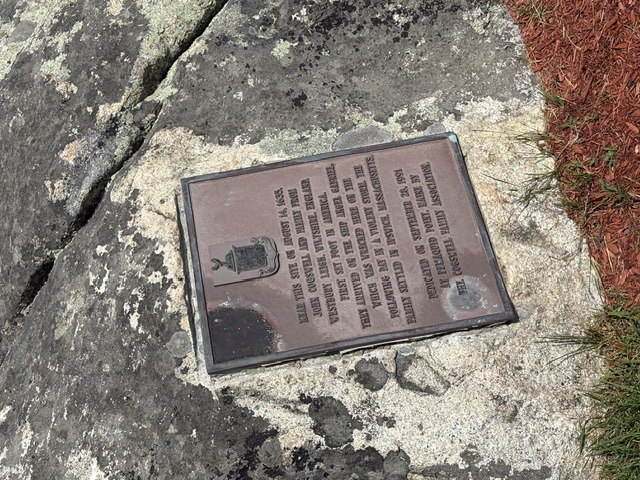
Set into the rocks at Pemaquid Point is a bronze plaque marking the place where one family’s American story began nearly four centuries ago. On August 14, 1635, John Cogswell and his family, from Westbury Leigh in Wiltshire, England, first set foot in America near this site. They had crossed the Atlantic aboard the Angel Gabriel, […]
Monhegan Island
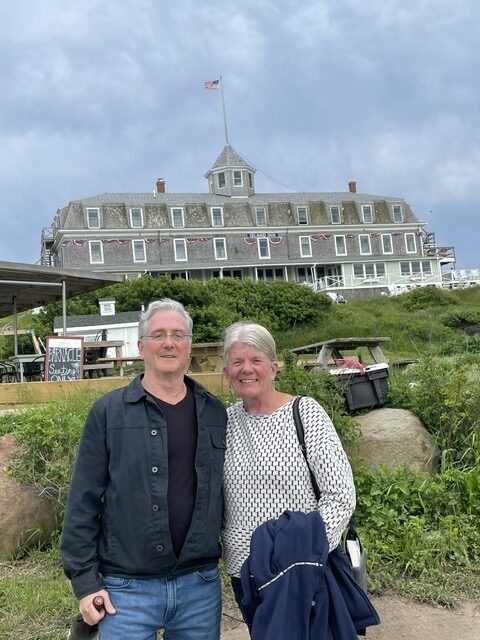
Staying at the Island Inn became an important part of our experience on Monhegan Island. Perched on a bluff overlooking the harbor, the large shingled inn seems perfectly suited to its surroundings. From the moment we arrived, there was a feeling that we had stepped into an earlier era of New England summer travel. The […]

