Fairview Lawn Cemetery
Some places become part of history not because events happened there, but because they answered history’s call when tragedy struck. Fairview Lawn Cemetery in Halifax, Nova Scotia, is one of those places.
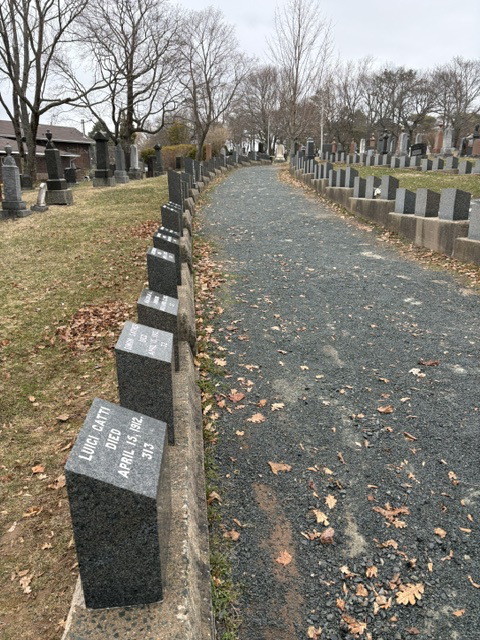
When RMS Titanic struck an iceberg and sank shortly before midnight on April 14–15, 1912, more than 1,500 people lost their lives in the icy waters of the North Atlantic. Although the disaster occurred hundreds of miles offshore, Halifax was the nearest major port with the ships, crews, and resources needed to respond.
Within days, cable ships left Halifax to recover the victims. Working in harsh conditions, they searched the vast debris field, recovering as many of the dead as possible. Some bodies were claimed by grieving families and returned home for burial, but many remained unidentified or had no relatives able to claim them. Those individuals were brought back to Halifax.
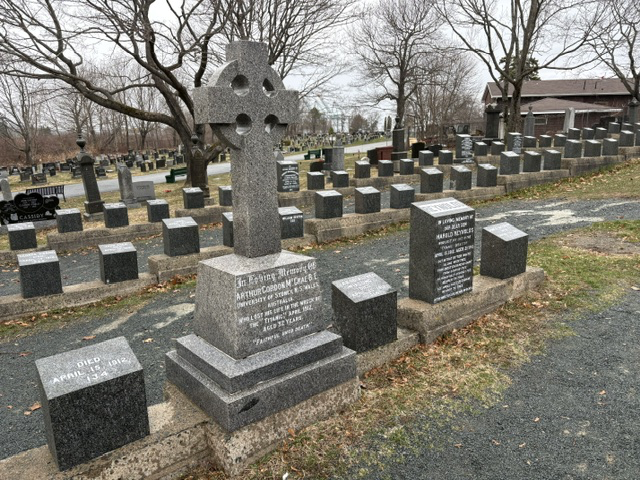
Fairview Lawn Cemetery is the final resting place of 121 victims of the Titanic, making it the largest single burial site associated with the disaster. Nearby Mount Olivet Cemetery and Baron de Hirsch Cemetery also received victims, reflecting Halifax’s Catholic and Jewish communities. Together, the three cemeteries became places of remembrance for people from many nations, backgrounds, and walks of life who shared the same tragic fate.
Walking through Fairview Lawn is a very different experience from visiting most historic cemeteries. The rows of simple granite markers are remarkably uniform, emphasizing not wealth or social standing, but a shared human loss. Some graves bear names, while others simply mark an unknown victim whose identity has never been confirmed.
The story of the Titanic is usually told in terms of the ship, the iceberg, and the passengers. Yet Halifax became an essential part of that story through compassion, duty, and recovery. The city cared for the victims, conducted identifications, comforted grieving families, and provided dignified burials for those who would never return home.
Read More From Nancy
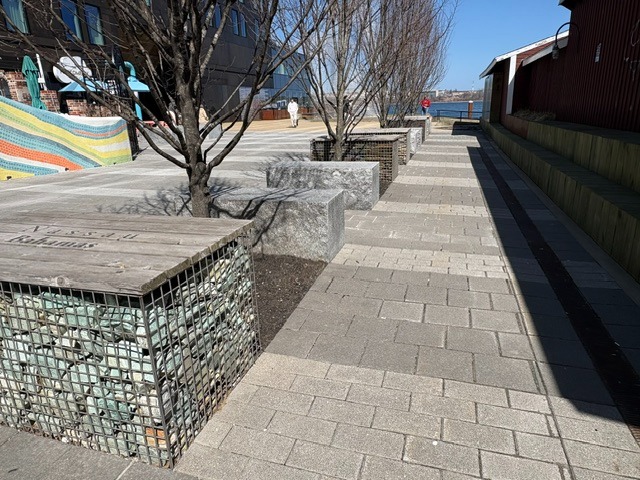
The Ballast Boxes
Along Halifax’s waterfront, stone-filled metal boxes topped with wooden seating recall an essential part of maritime trade. These ballast boxes turn a practical feature of the public landscape into a reminder of the weight that helped sailing ships travel safely across the ocean. A ship needed stability even when its hold carried little or no […]
The Halifax Town Clock
On the eastern slope of Citadel Hill, the Halifax Town Clock overlooks Brunswick Street and the downtown streets below. Its white tower, blue clock faces and copper dome form one of the city’s most recognizable landmarks. The clock began keeping time on October 20, 1803, providing a public reference for both the military garrison and […]
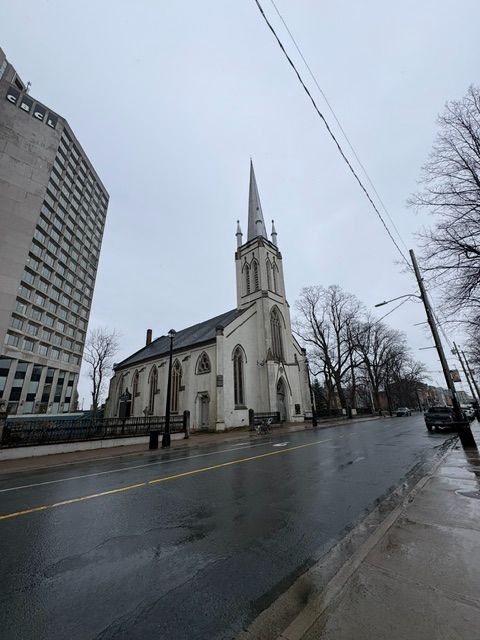
St. Matthew’s Church
On Barrington Street near Spring Garden Road, St. Matthew’s Church preserves the history of a congregation whose origins reach back to Halifax’s founding in 1749. Its tall spire, pointed windows and buttressed walls belong to a building completed in 1859, but the community that built it had already worshipped in the town for more than […]

