Lucy Maud Montgomery Museum
Standing before this wall of books at the Lucy Maud Montgomery Museum in Prince Edward Island, I found myself thinking less about Anne Shirley than about the remarkable woman who created her. The books represent far more than a successful literary career. They tell the story of a life shaped by loss, perseverance, imagination, and an enduring love for the island she always called home.
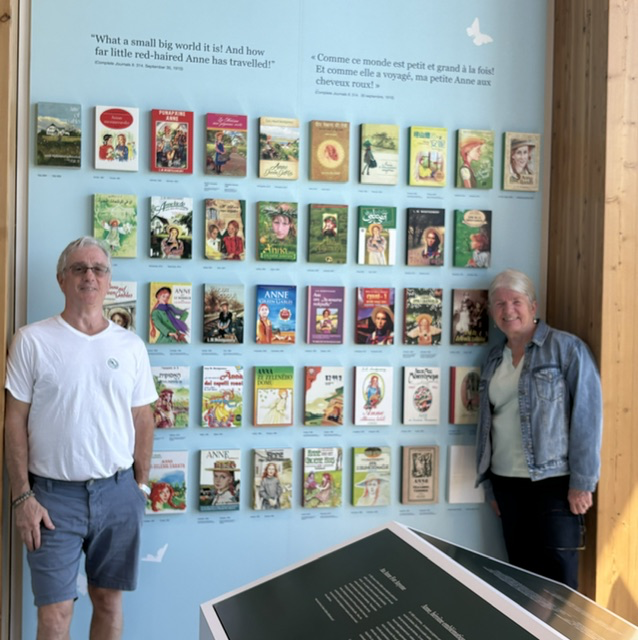
Lucy Maud Montgomery was born on November 30, 1874, in Clifton, Prince Edward Island. Before her second birthday, her mother died of tuberculosis, and Maud was sent to live with her maternal grandparents in Cavendish while her father eventually moved west. It was a lonely childhood. Her grandparents were caring but reserved, and she often turned to books, writing, and the beauty of the Island’s fields, forests, ponds, and coastline for companionship. Those quiet years became the foundation of the world readers would later know as Avonlea.
As a young woman, Montgomery dreamed of becoming a writer, but life rarely followed the path she imagined. She earned her teaching certificate, taught school, and published poems and short stories in newspapers and magazines throughout Canada and the United States. Long before she became famous, she was already a disciplined professional writer, submitting hundreds of manuscripts while helping care for her aging grandparents and working in the Cavendish post office. Success did not come quickly. It was built through years of persistence and countless rejections.
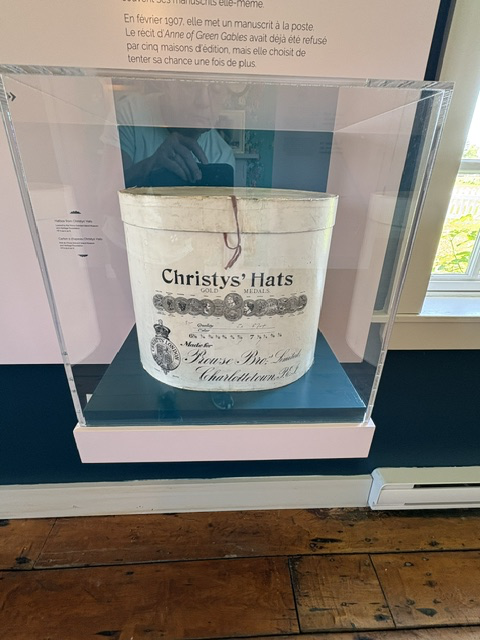
One small note in her journal would change everything. Years earlier she had written an idea about an elderly brother and sister who mistakenly received an orphan girl instead of the boy they had requested. In 1905 she returned to that idea and began writing what became Anne of Green Gables. After several publishers rejected the manuscript, she tucked it away in a hatbox. Nearly two years later she tried once more. This time the manuscript was accepted, and in June 1908 Anne of Green Gables was published. The novel became an immediate success and transformed the life of a thirty-three-year-old writer who had quietly believed in her work long before the rest of the world discovered it.
Many people assume that Montgomery’s life became easy after Anne’s success. The museum tells a very different story. Following the death of her grandmother in 1911, she married the Reverend Ewan Macdonald and left Prince Edward Island for Ontario. Although she built a successful literary career there, she also faced enormous personal challenges. She cared for a husband whose mental illness became increasingly severe, raised two sons, struggled through legal battles with her publisher, and experienced recurring periods of depression herself. Yet through all of those years she continued to write with extraordinary discipline, producing not only the beloved Anne books but also The Story Girl, The Golden Road, the Emily trilogy, The Blue Castle, and many other novels, poems, essays, and short stories. By the end of her life she had published twenty-four books and had become one of Canada’s most celebrated authors.
One quotation displayed in the museum especially caught my attention:
“I take [the blues] too—not very often but fearfully bad when I have them… I suppose our ‘blues’ are the price we pay for our temperament. They give us sensitiveness to beauty in all its forms, but the shadow of the gift goes with it.“
Those words reveal the woman behind the novels. Montgomery understood that the same imagination which allowed her to create unforgettable characters also made her deeply sensitive to disappointment and sorrow. Perhaps that is why her stories contain such warmth, hope, and compassion. She knew that joy and hardship often exist side by side.
As Marty and I stood before this display, surrounded by editions of her books translated into dozens of languages, we were reminded how extraordinary her journey had been. A lonely girl from a small farming community on Prince Edward Island created characters that have become part of the world’s literary heritage. Anne Shirley has traveled farther than Montgomery could ever have imagined, appearing in countless translations, films, television series, stage productions, and classrooms around the world. Yet every one of those stories began in the quiet landscape of Cavendish.
Perhaps the most moving part of Montgomery’s story is that, despite her international success, she never stopped thinking of Prince Edward Island as home. She once wrote that she wanted her final resting place to overlook the ponds, the dunes, the harbor, and the Gulf of St. Lawrence that had inspired her throughout her life. When she died in 1942, her wish was honored. She was buried in the Cavendish cemetery, surrounded by the landscape she had immortalized in her books.
Read More From Nancy
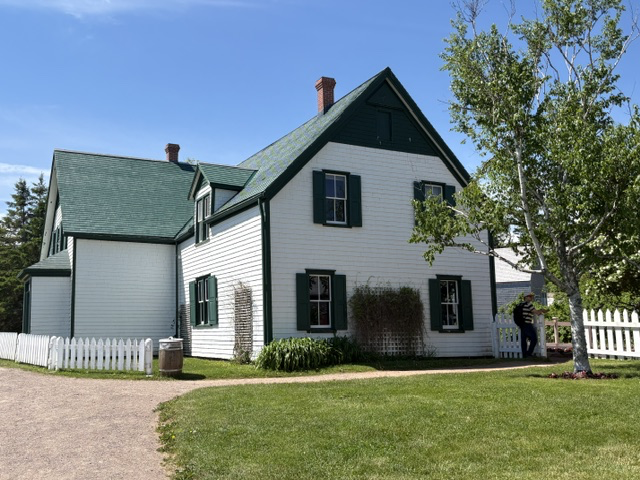
Green Gables
This year, Marty and I returned to Prince Edward Island, and a visit to Green Gables was a must. We had been here many years ago, when our daughters were young and we traveled to the Island by ferry. Anne of Green Gables and L.M. Montgomery’s Emily books were popular in our house, so coming […]
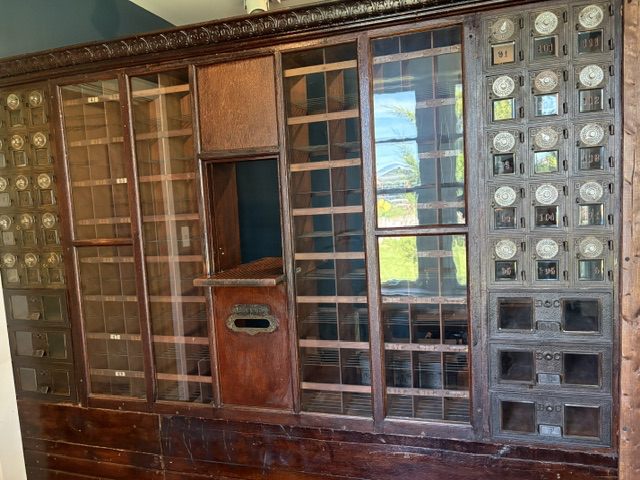
Office Sorting Case and Lockboxes
Before rural home delivery became common, receiving a letter often meant making a trip to the post office. Inside, the postmaster worked behind a wooden wall much like this one, sorting the day’s incoming mail into individual compartments and numbered boxes. The large open sorting case in the center was the working side of the […]

Canadian Postal Uniform
While visiting the historic post office at Cape Traverse, this heavy woolen postal uniform caught my attention. Today we rarely give much thought to the clothing worn by the person delivering our mail, but on Prince Edward Island a uniform like this belonged to someone whose work continued regardless of the season. The dark wool […]

