Hatbox Representing Montgomery’s Stored Manuscript
Before Anne of Green Gables traveled from Prince Edward Island to a publisher in Boston, there was a moment when the journey might never have happened at all. Lucy Maud Montgomery completed the manuscript in 1905 and began sending it to publishers. It was rejected several times. Eventually, discouraged by the responses, she stopped trying and put the manuscript away in a hatbox.
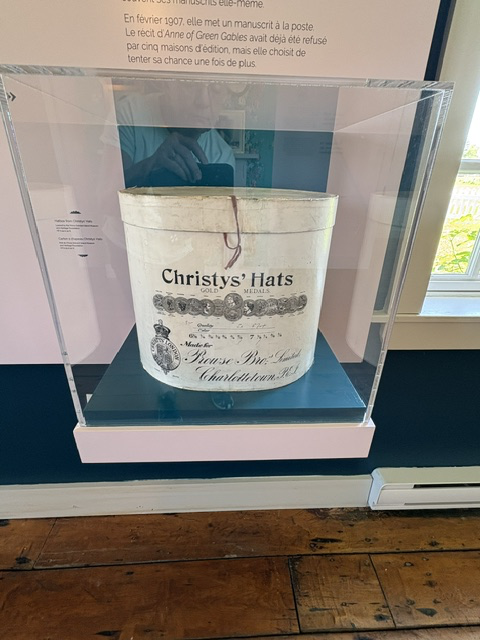
The hatbox displayed in Cavendish bears the name Christys’ Hats, an English hatmaking company whose history reaches back to 1773. Boxes like this were ordinary household objects, made to protect relatively expensive hats from dust, crushing and damage. No one looking at such a box at the beginning of the twentieth century would have imagined it as a place where an unpublished literary classic might wait to be rediscovered.
For Montgomery, putting the manuscript away did not mean that she had stopped writing. By then she had spent years developing her craft. She had been publishing poems and short stories in newspapers and magazines since the 1890s and understood both the satisfaction of publication and the disappointment of rejection. Anne of Green Gables, however, was her first novel.
Then, in 1907, Montgomery took the manuscript out again. She reread it and decided to give Anne another chance. She sent the manuscript to L. C. Page & Company in Boston. This time, instead of another rejection, she received an offer to publish it. Knowing what happened afterward makes the hatbox part of the story that I find most compelling. The hatbox represents the moment before any of that was certain.
The novel existed. Montgomery believed enough in it to submit it. Publishers rejected it. She put it away. For two years, Anne Shirley’s future was essentially contained inside a box. Anne of Green Gables did not become a classic because its path to publication was inevitable. It became possible because, after being told no, Montgomery eventually decided to try once more.

Read More From Nancy
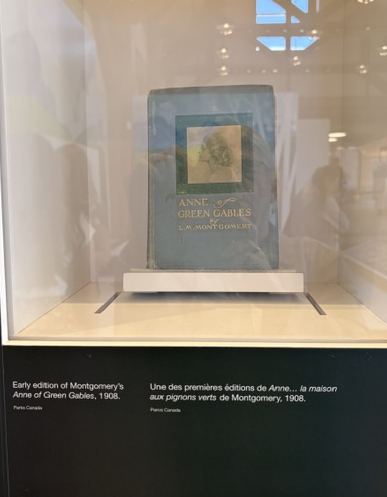
The Book That Made the Journey
This early edition of Anne of Green Gables, published in 1908, represents far more than the beginning of one of the world’s best-loved books. Looking at it after learning how Lucy Maud Montgomery’s manuscript reached her Boston publisher made me realize just how much had to happen before Anne could ever reach her readers. Montgomery […]
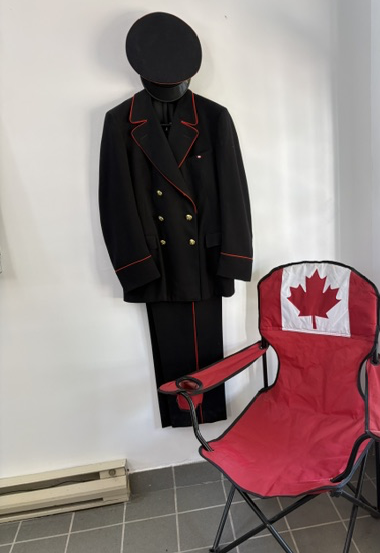
Canadian Postal Uniform
While visiting the historic post office at Cape Traverse, this heavy woolen postal uniform caught my attention. Today we rarely give much thought to the clothing worn by the person delivering our mail, but on Prince Edward Island a uniform like this belonged to someone whose work continued regardless of the season. The dark wool […]
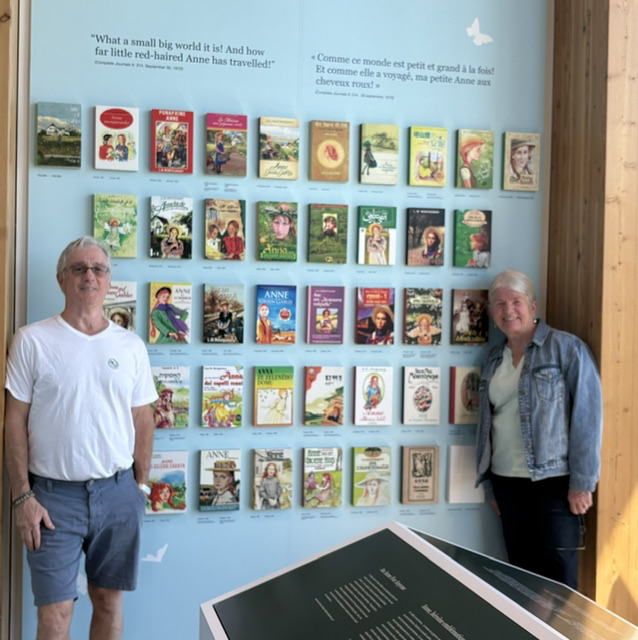
Lucy Maud Montgomery Museum
Standing before this wall of books at the Lucy Maud Montgomery Museum in Prince Edward Island, I found myself thinking less about Anne Shirley than about the remarkable woman who created her. The books represent far more than a successful literary career. They tell the story of a life shaped by loss, perseverance, imagination, and […]

