Canadian Postal Uniform
While visiting the historic post office at Cape Traverse, this heavy woolen postal uniform caught my attention. Today we rarely give much thought to the clothing worn by the person delivering our mail, but on Prince Edward Island a uniform like this belonged to someone whose work continued regardless of the season.
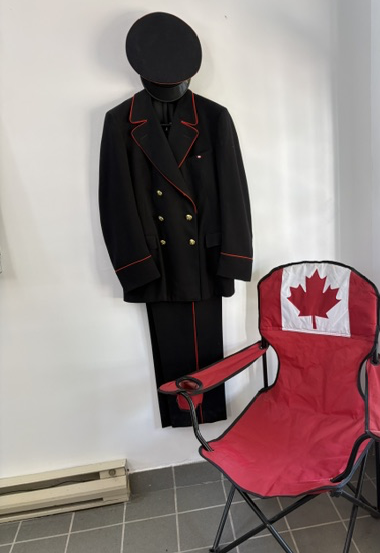
The dark wool uniform was practical for Canada’s climate. Postal employees could spend long periods outdoors, traveling between communities and carrying mail in conditions that could include rain, snow, bitter cold and wind. The red piping and brass buttons also gave the postal worker an immediately recognizable appearance. The uniform represented more than an occupation; the person wearing it was an official representative of Canada’s postal system.
On Prince Edward Island, delivering the mail presented challenges that were particularly dramatic. The Island was physically separated from the mainland, yet its residents expected to remain connected with the rest of Canada. Letters, newspapers, business correspondence and government communications all had to cross the Northumberland Strait.
Winter made that connection especially difficult. Before reliable year-round ferry service, ice could prevent ordinary vessels from crossing between Prince Edward Island and New Brunswick. Mail still had to move. Special iceboats could be pushed and pulled across sections of ice and rowed through stretches of open water, allowing people, supplies and mail to continue across the Strait.
Once the mail reached the Island, another network of people had to carry it to individual communities. Horses, wagons and sleighs were part of that system. Rural post offices such as Cape Traverse became the final link, where letters were sorted and waited for residents to collect them.
The postal system began changing again in the early twentieth century. Beginning in 1912, mail on Prince Edward Island increasingly began to be delivered directly to rural homes and farms. Small community post offices became less essential, and the Cape Traverse post office closed in August 1913.
Looking at this woolen uniform made me think less about the mail itself and more about the people who carried it. A letter could travel hundreds or thousands of miles, but every part of that journey ultimately depended upon individuals willing to carry it through whatever conditions stood between sender and recipient.

Read More From Nancy

Lucy Maud Montgomery Museum
Standing before this wall of books at the Lucy Maud Montgomery Museum in Prince Edward Island, I found myself thinking less about Anne Shirley than about the remarkable woman who created her. The books represent far more than a successful literary career. They tell the story of a life shaped by loss, perseverance, imagination, and […]
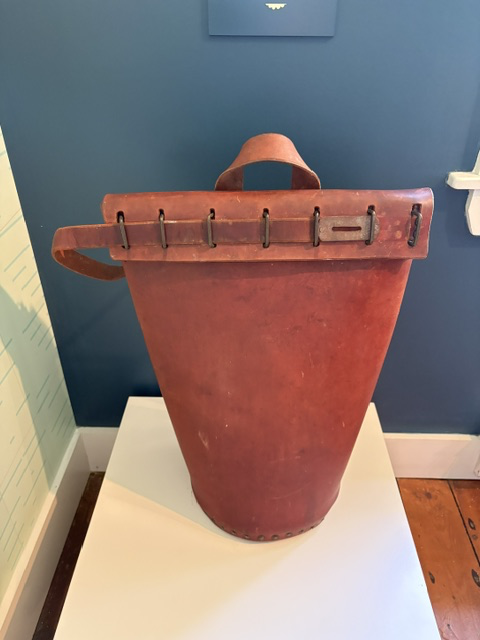
Registered Mail Leather Mailbag
Before valuable or important mail could be tracked electronically, the postal service needed a physical system for protecting it. Registered mail provided that additional security, and a heavy leather bag like this was part of the process. Registered mail was intended for correspondence and packages considered too important simply to travel with ordinary mail. Money, […]
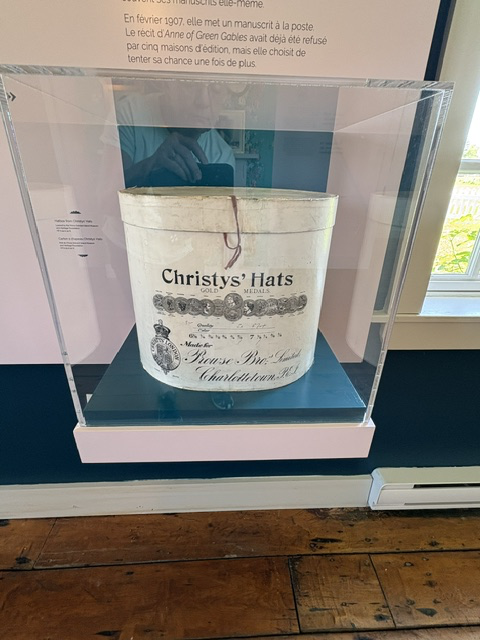
Hatbox Representing Montgomery’s Stored Manuscript
Before Anne of Green Gables traveled from Prince Edward Island to a publisher in Boston, there was a moment when the journey might never have happened at all. Lucy Maud Montgomery completed the manuscript in 1905 and began sending it to publishers. It was rejected several times. Eventually, discouraged by the responses, she stopped trying […]

