Office Sorting Case and Lockboxes
Before rural home delivery became common, receiving a letter often meant making a trip to the post office. Inside, the postmaster worked behind a wooden wall much like this one, sorting the day’s incoming mail into individual compartments and numbered boxes.
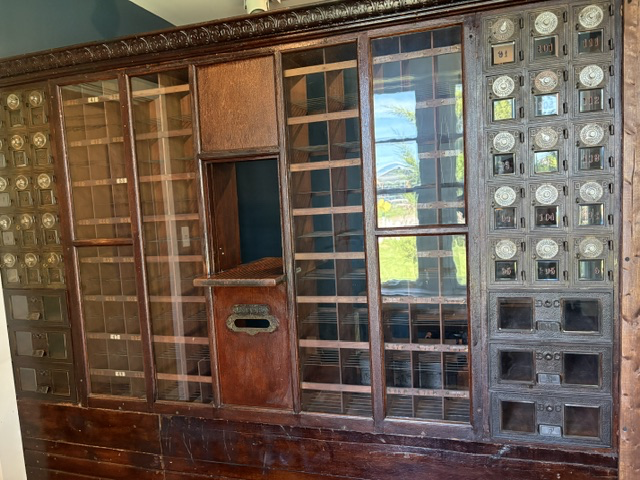
The large open sorting case in the center was the working side of the system. Letters arriving in bundles and mailbags had to be separated by hand and placed into the appropriate compartments. There were no barcodes, automated sorting machines or computerized addresses. The accuracy of the system depended upon the postmaster knowing the community and carefully placing each piece of mail where it belonged.
The small, numbered doors along the sides allowed residents to have their own postal boxes. A person could come into the post office, unlock a numbered compartment and see whether anything had arrived. Other customers received their mail directly from the postmaster through the service opening in the center.
There was also a social dimension to this arrangement. Going to the post office was part of the rhythm of community life. People stopped for their mail and inevitably encountered neighbors doing the same thing. News could arrive in two ways—inside an envelope and through conversation across the counter.
In a rural community, the postmaster could therefore occupy an unusually important position. The post office connected residents with family members living far away, newspapers brought news from beyond the Island, businesses conducted transactions through correspondence, and official documents passed through these little wooden compartments.
Then came rural mail delivery. Beginning in 1912 on Prince Edward Island, mail increasingly traveled directly to farms and homes. The convenience was enormous, but it gradually eliminated the need for hundreds of small local post offices. That makes this wooden wall of boxes more than an interesting piece of old postal equipment. It represents an earlier way of organizing a community around a central place.
Read More From Nancy
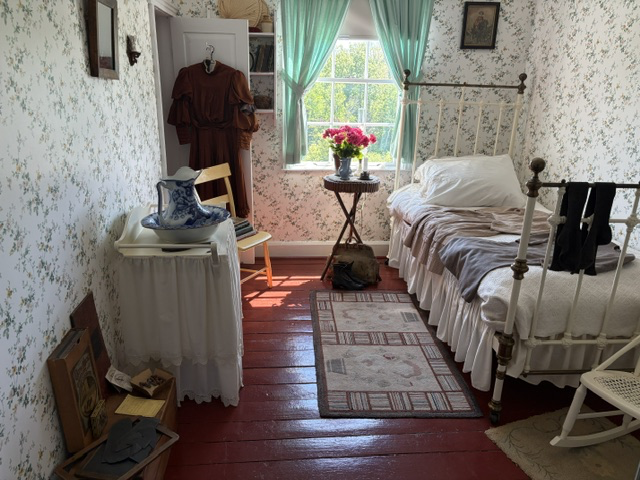
Anne’s East-Gable Bedroom
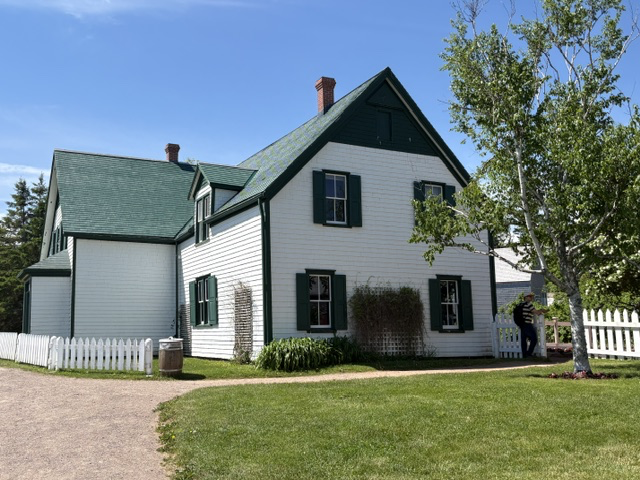
This small bedroom at Green Gables did not belong to Lucy Maud Montgomery, nor did a real girl named Anne Shirley ever sleep here. Instead, it has been arranged according to Montgomery’s descriptions of the east-gable room that became Anne’s first true bedroom in Anne of Green Gables. It is one of the places where […]
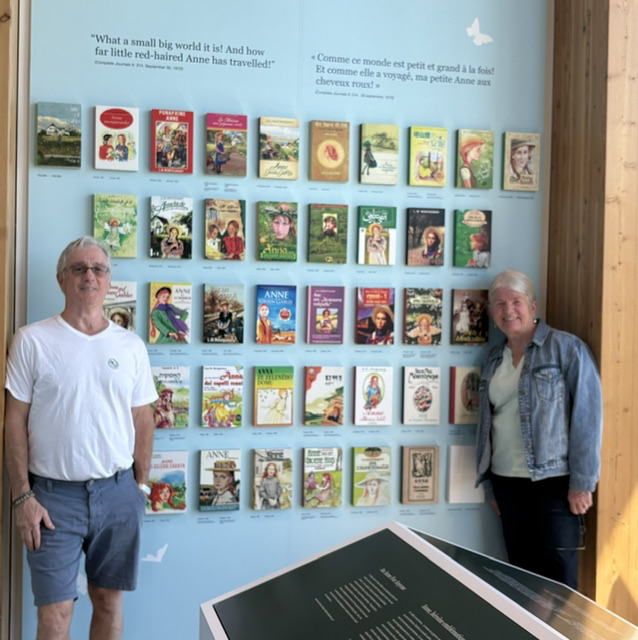
Lucy Maud Montgomery Museum
Standing before this wall of books at the Lucy Maud Montgomery Museum in Prince Edward Island, I found myself thinking less about Anne Shirley than about the remarkable woman who created her. The books represent far more than a successful literary career. They tell the story of a life shaped by loss, perseverance, imagination, and […]
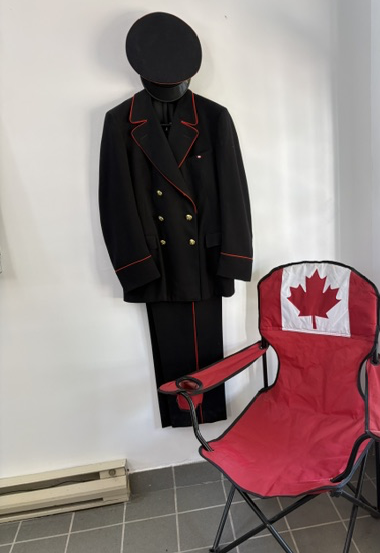
Canadian Postal Uniform
While visiting the historic post office at Cape Traverse, this heavy woolen postal uniform caught my attention. Today we rarely give much thought to the clothing worn by the person delivering our mail, but on Prince Edward Island a uniform like this belonged to someone whose work continued regardless of the season. The dark wool […]

