Town Hall
Standing in the center of Belfast is this enormous Baroque Revival building, crowned by its great green copper dome. Belfast City Hall seems almost oversized for a municipal building, but its scale tells an important story about what was happening in Belfast when it was created.
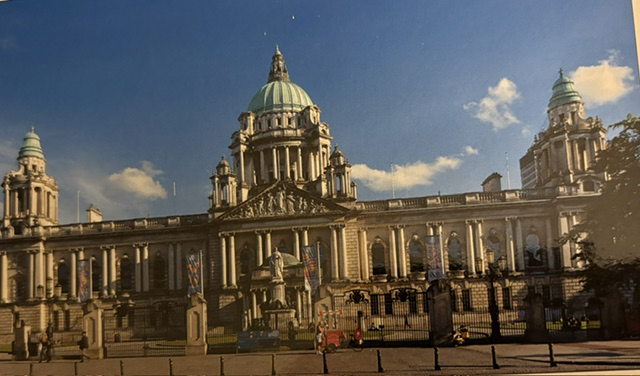
Belfast had expanded dramatically during the nineteenth century. Linen manufacturing, engineering, tobacco production and especially shipbuilding transformed it into one of the great industrial cities of the British Empire. Its population grew from roughly 20,000 at the beginning of the nineteenth century to hundreds of thousands by its end. Queen Victoria granted Belfast city status in 1888, and the decision was soon made to construct a city hall worthy of its new position.
The building was designed by architect Alfred Brumwell Thomas. Construction began in 1898 on the site of the former White Linen Hall, itself a reminder of the linen industry that had contributed so much to Belfast’s prosperity. City Hall officially opened on August 1, 1906.
Portland stone covers the exterior, while the building’s elaborate design includes towers, columns, pediments and extensive sculpture. Rising above everything is the central dome, approximately 173 feet high. The green color we see today comes from the copper covering that has naturally developed its distinctive patina with age.
The lavish interior was equally intended to demonstrate Belfast’s importance. Marble from several countries was used throughout the building, along with stained glass, carved woodwork and elaborate plasterwork. The Grand Staircase, Great Hall and Council Chamber created a civic building that reflected the wealth and confidence of Edwardian Belfast.
The grounds surrounding City Hall became another important part of the site. Statues and memorials accumulated there over time, commemorating people and events connected with Belfast’s history. Among the best known is the Titanic Memorial, particularly appropriate in a city whose Harland & Wolff shipyard built Titanic and her sister ships.
But City Hall has also witnessed the more difficult chapters of Belfast’s history. Political demonstrations, celebrations, protests and public gatherings have taken place around it through periods of enormous social and political change. The building has remained at the physical center of a city whose identity has been repeatedly debated and reshaped.
Belfast was announcing itself through its architecture. This was no longer simply a growing industrial town. By the time City Hall opened in 1906, Belfast had become a major industrial city, and this building was intended to make that achievement visible.
More than a century later, Belfast City Hall still dominates the center of the city. The industries that created the wealth of Victorian Belfast have changed enormously, but the building they helped make possible remains. It is one of the clearest architectural reminders of the period when Belfast emerged as one of the great industrial cities of the British Isles.
Read More From Nancy
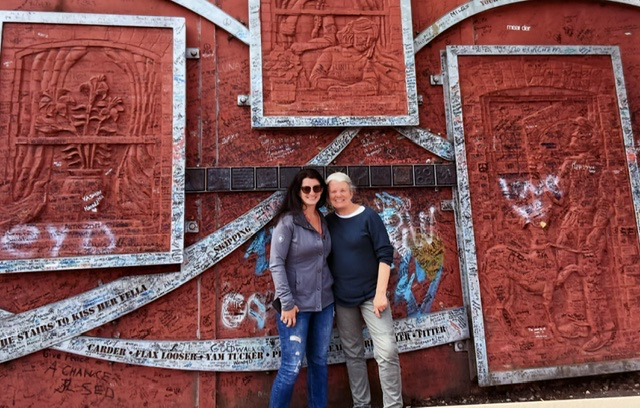
The Peace Wall
One of the places Erin and I visited in Belfast was the Peace Wall, a landmark that tells the story of Northern Ireland’s long journey from conflict toward peace. It is one thing to read about the decades of conflict known as The Troubles, but quite another to stand before a wall that still divides neighborhoods and […]
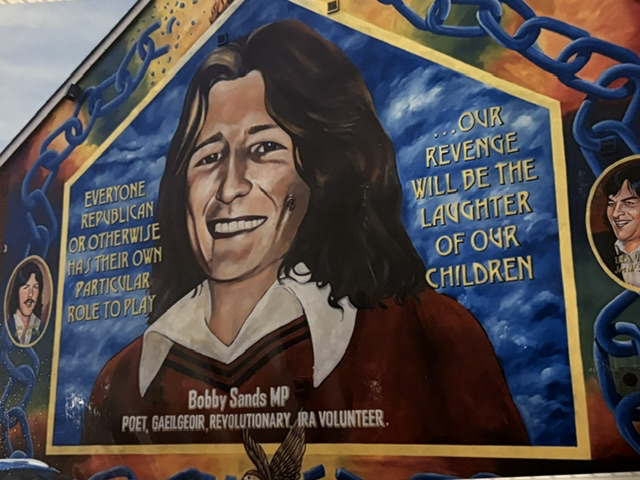
Bobby Sands Mural
While exploring Belfast, I photographed this mural of Bobby Sands on the Falls Road. One of the things that struck me about Belfast was how much of its history is written directly on its walls. The murals are not simply public art. They reflect the political divisions, losses, loyalties and memories of communities that lived […]
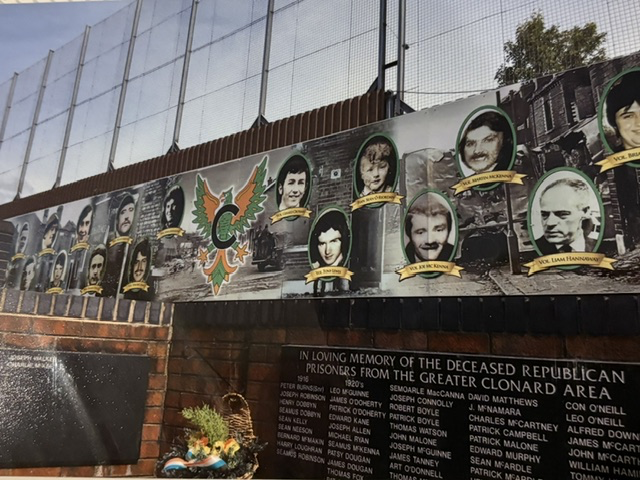
Greater Clonard Martyrs Memorial
Walking through Belfast, you quickly realize that the history of “The Troubles” is still deeply woven into the landscape of the city. Murals, memorial, peace walls and neighborhood tributes appear throughout different sections of Belfast, reminding us that this conflict is part of a living memory for many people who call this city home. This memorial wall […]

