Fort Vancouver National Historic Site
Fort Vancouver was once the administrative headquarters and principal supply depot for the Hudson’s Bay Company’s vast Columbia Department. From this location on the north bank of the Columbia River, the company directed an enormous fur-trading network that stretched from the Rocky Mountains to the Pacific and from Russian Alaska south toward California and Hawaii.
The Hudson’s Bay Company established Fort Vancouver in 1825. The man most closely associated with its development was Dr. John McLoughlin, who served as chief factor of the Columbia Department. Under his leadership, Fort Vancouver grew far beyond a simple fur-trading post. It became the political, economic, agricultural, and cultural center of the Pacific Northwest during the years before the boundary between British and American territory was finally settled.
Inside the tall wooden stockade stood warehouses, workshops, residences, offices, and the large Chief Factor’s House. Blacksmiths, carpenters, coopers, clerks, tradesmen, and laborers worked here. Furs collected throughout the Northwest arrived at Fort Vancouver before being shipped to markets around the world. At the same time, supplies arriving by ship were distributed from the fort to the company’s distant trading posts.
Fort Vancouver was also surprisingly international. People of English, Scottish, French Canadian, Hawaiian, Métis, and numerous Indigenous backgrounds lived and worked in and around the fort. The community that developed here reflected the extensive trading network that connected the Pacific Northwest to the wider world.
Agriculture was another important part of the operation. Large fields, orchards, gardens, and livestock herds surrounded the fort. The farms produced food not only for those living at Fort Vancouver but also for other Hudson’s Bay Company posts and ships operating along the Pacific Coast.
The fort also became an important stopping place for American settlers arriving over the Oregon Trail during the 1840s. Many reached the end of their long journey exhausted and short of supplies. Although the growing American presence would eventually threaten British control of the region, McLoughlin became known for providing newly arriving emigrants with food, supplies, and credit. His assistance to American settlers contributed to his later reputation as the “Father of Oregon.”
The Oregon Treaty of 1846 established the international boundary at the 49th parallel, placing Fort Vancouver firmly within the United States. The U.S. Army soon established Vancouver Barracks nearby, and the Hudson’s Bay Company eventually abandoned the fort in 1860. The original buildings disappeared, leaving archaeological evidence beneath the ground.
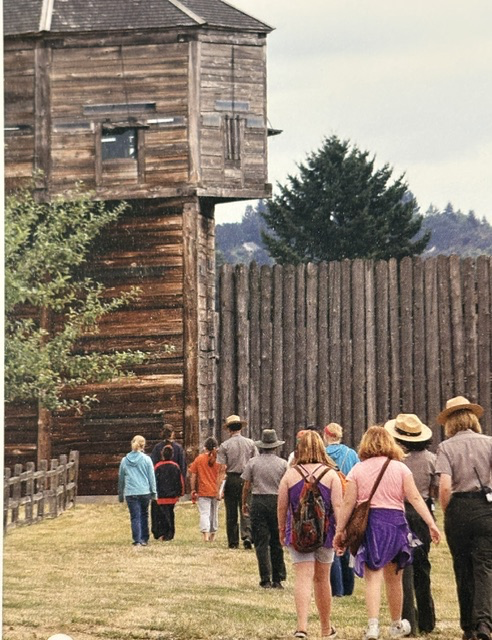
Fort Vancouver National Monument was established in 1948 and was redesignated Fort Vancouver National Historic Site in 1961. Today the National Park Service preserves not only the reconstructed Hudson’s Bay Company fort but also other resources associated with the later military and aviation history of the area.
Fort Vancouver preserves that earlier chapter of the Northwest—a time when the fur trade, Indigenous communities, British interests, American migration, and international commerce all came together at this one important place.
Read More From Nancy
Whitman Mission National Historic Site
I had known the story of Narcissa Whitman long before I visited this site. I remember reading about her to my daughters when they were growing up—the young missionary who crossed the continent with her husband, Marcus, in 1836 to establish a mission among the Cayuse people in what was the Oregon Country. Visiting Whitman […]
John Day Fossil Beds National Monument
I took this ride to eastern Oregon solo, and what I remember is the isolation. The roads stretched on without interruption, the landscape opening wider with every mile. This is a different part of Oregon, far removed from the coastal side that most people know. There is no ocean here, not dense forest. I stayed […]
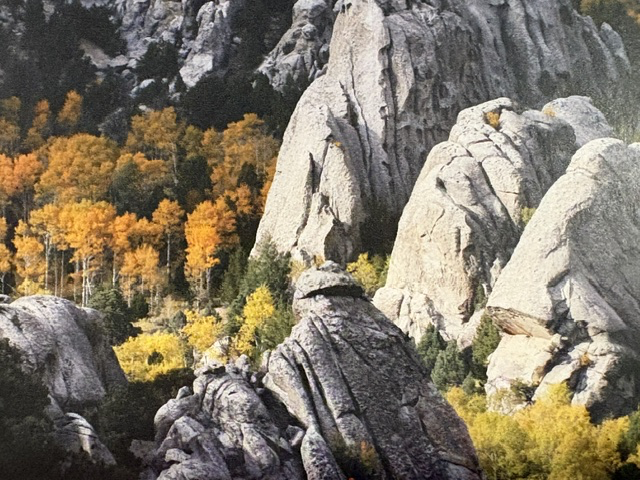
City of Rocks National Reserve
City of Rocks National Reserve in southern Idaho preserves a landscape of enormous granite formations, towering spires, narrow passages, and weathered rock walls that seem to rise unexpectedly from the surrounding countryside. The unusual formations inspired the name “City of Rocks,” because early travelers thought the rocks resembled the ruins of an ancient stone city. […]

