The Palau de la Musica Catalana
Walking through the narrow streets of Barcelona’s old city, it would be easy to pass by without realizing that one of the world’s great concert halls lies just ahead. Then, almost unexpectedly, the Palau de la Música Catalana comes into view, its colorful façade rising above the surrounding buildings. Unlike the stone churches and Gothic architecture found throughout the city, this building immediately announces itself with color, texture, and extraordinary detail.
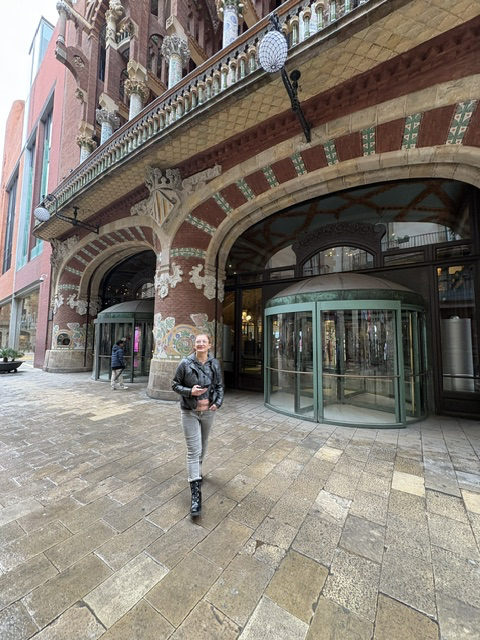
The Palau de la Música Catalana was designed by the Catalan architect Lluís Domènech i Montaner and built between 1905 and 1908 as the home of the Orfeó Català, a choral society founded to promote Catalan music and culture. It is considered one of the finest examples of Catalan Modernisme, an architectural movement that blended traditional craftsmanship with innovative design. In 1997, UNESCO recognized its significance by designating it a World Heritage Site.
Standing before the entrance, it is difficult to know where to look first. The lower level is framed by broad brick arches leading into the building through revolving glass doors. Above them, slender columns are covered with brilliantly colored ceramic mosaics, each displaying its own intricate pattern. Delicate stone carvings decorate the capitals, while balconies stretch across the façade, their railings adding another layer of ornamentation.
As your eyes move upward, the building becomes even more elaborate. Large mosaic panels depict musical themes, while sculpted figures seem to emerge from the architecture itself. Brick, stone, glazed ceramics, wrought iron, and stained glass are combined so seamlessly that the entire façade feels like a single work of art rather than a collection of individual architectural elements.
Every surface reflects the philosophy behind Catalan Modernisme that architecture should unite all of the decorative arts. Instead of leaving the walls plain, Domènech and the artisans who worked with him filled the building with mosaics, sculpture, carved stone, decorative tile, and intricate ironwork. The result is a façade that reveals new details every time you stop and look.
The Palau remains an active concert hall, welcoming audiences from around the world to performances ranging from classical orchestras and opera to contemporary music. More than a century after it opened, it continues to serve the purpose for which it was built, making it both a living cultural center and one of Barcelona’s architectural treasures.
Standing beneath its entrance, I found myself looking upward far more than forward. Every glance uncovered another carved figure, another colorful column, or another carefully placed mosaic. The photographs capture only a small portion of the façade, yet even that small section reveals the extraordinary craftsmanship that defines the entire building.
Read More
Read More From Nancy
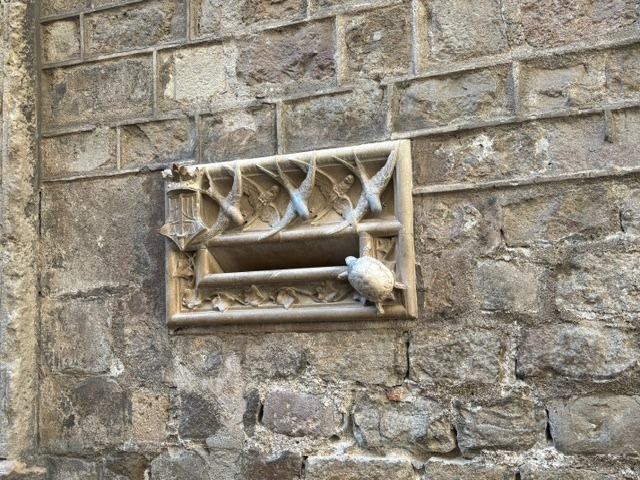
The Mailbox at Casa de l’Ardiaca
Beside the entrance to Casa de l’Ardiaca, a marble mailbox brings an unexpected detail to the streets of Barcelona’s Gothic Quarter. Birds spread their wings above curling ivy, while a tortoise rests below. Created for a lawyers’ association, its decoration has long been interpreted as a commentary on the workings of justice. The Barcelona Bar […]
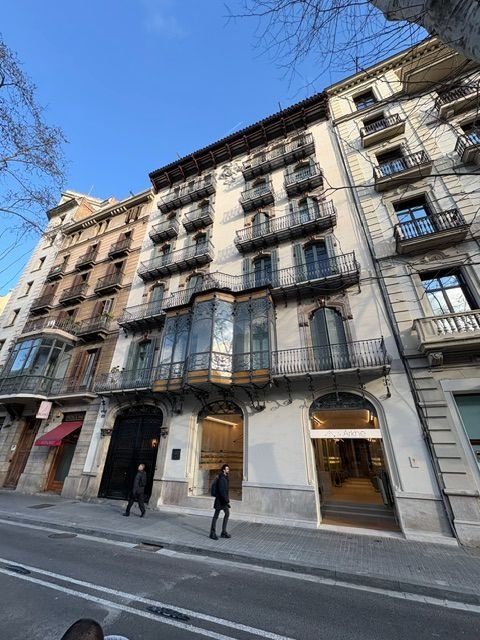
Casa Dolors Calm
At 54 Rambla de Catalunya, Casa Dolors Calm reveals how an existing building could be transformed through architecture and decorative craftsmanship. Its projecting wooden bay windows give the façade a distinctive character, bringing together glass, patterned woodwork, and ornamental details. The original house was constructed in 1879 by master builder Josep Déu i Busquets. Between […]
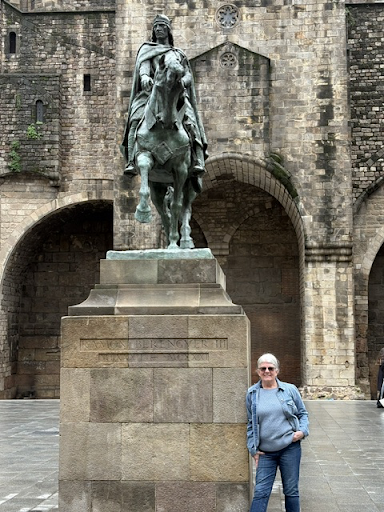
Statue of Ramon Berenguer III
As we explored the streets of Barcelona, I stopped in front of this impressive equestrian statue to learn more about the man it honored. One of the things I enjoy most when traveling is discovering the people who shaped the places I visit. Every monument has a story, and this one led me to one […]

