Unitarian Parish Church
Constructed between 1898 and 1901, the Unitarian Parish Church was a gift from brothers George A. and Eben S. Draper in memory of their parents, George and Hannah Draper. Built of locally quarried granite in the Romanesque Revival style, its imposing tower and solid stone walls were designed to reflect both strength and permanence. Yet its greatest significance lies not in its architecture, but in what it represents.
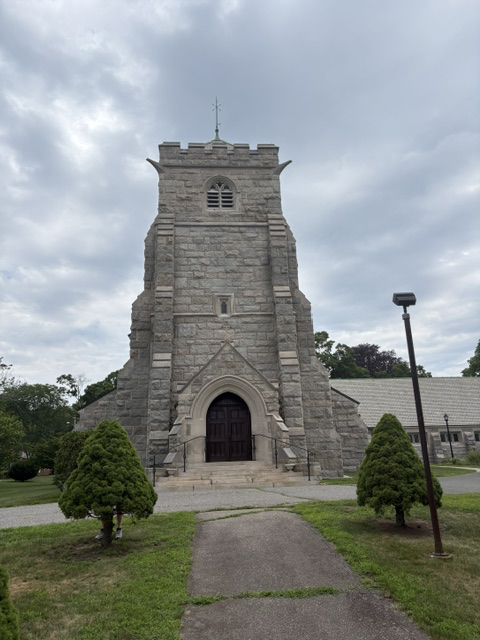
The Draper family had built the Hopedale Machine Company into one of the world’s leading manufacturers of textile machinery, helping transform the textile industry during the late nineteenth and early twentieth centuries. Their success brought prosperity to Hopedale, but they believed that a thriving town should offer more than employment. They invested in schools, parks, public buildings, and places where people could gather, worship, and build lasting relationships.
The church became one of the finest expressions of that philosophy. Its roots, however, reach back even further.
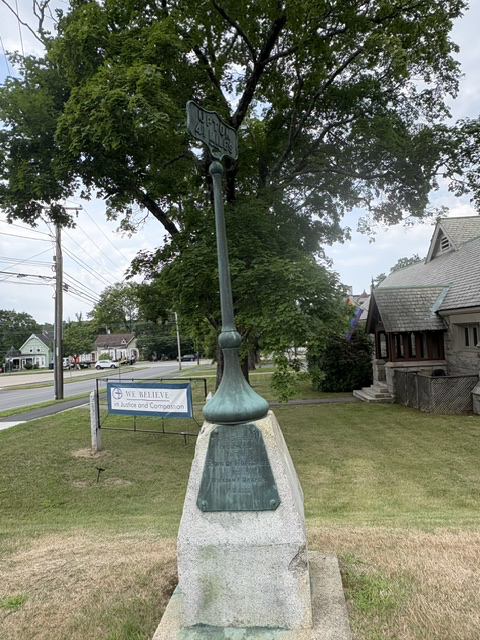
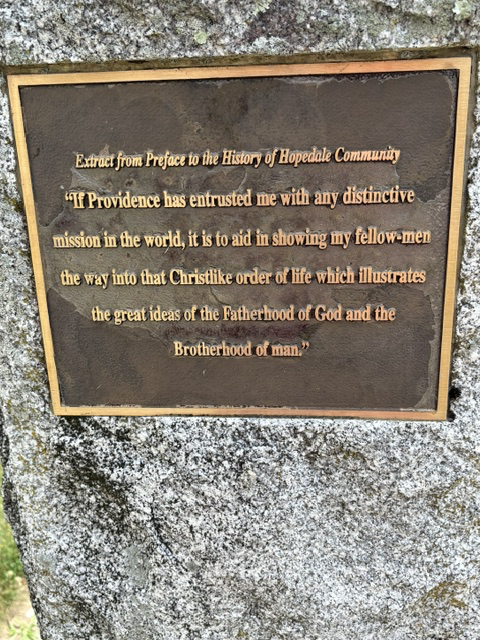
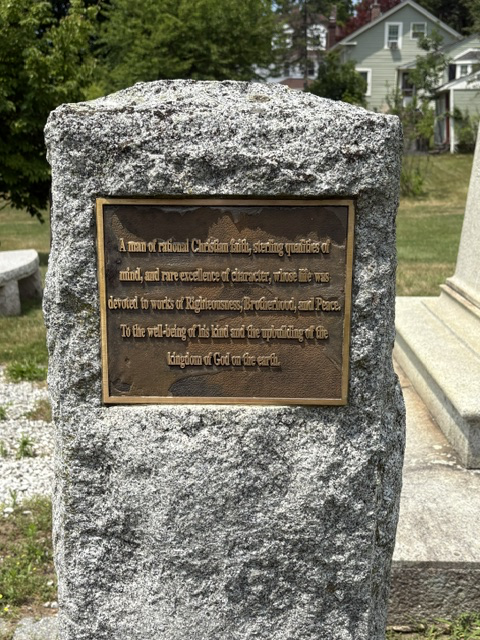
When minister Adin Ballou founded the Hopedale Community in 1842, he envisioned a cooperative society founded on Christian principles of peace, equality, mutual responsibility, and service to others. Although the utopian community itself lasted only until the 1850s, its ideals continued to influence the character of the town long after the experiment had ended.
The Drapers did not recreate Ballou’s commune, but they preserved something equally important: his belief that a community should care for the well-being of its people. The church became a place not only for worship, but for fellowship, music, education, and service. For more than a century it has witnessed baptisms, weddings, funerals, and countless moments that have shaped the lives of Hopedale families.
I realized this church is more than a historic landmark. It reflects the evolution of Hopedale itself. The dream of creating an ideal community may have changed over time, but it never completely disappeared. Instead, it found new expression through the generosity of those who believed that success carries with it a responsibility to strengthen the lives of others.
Together with the Community House, the Hopedale Unitarian Parish Church tells the story of a town unlike any other in Massachusetts. Hopedale began as a bold social experiment, grew into an internationally recognized industrial center, and never entirely lost sight of the values on which it was founded. Walking through town today, it becomes clear that Hopedale’s greatest achievement was not simply the machinery it produced, but the enduring belief that a successful community is measured by how well it serves the people who call it home.
Read More From Nancy
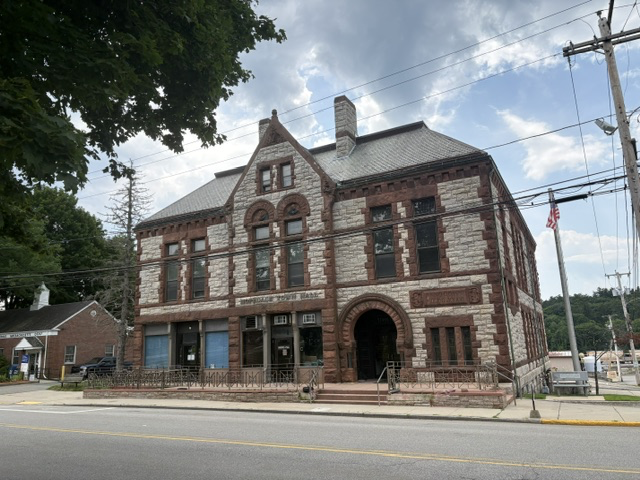
Town Hall
Few buildings better represent Hopedale’s transition from a utopian community to an independent town than its Town Hall. Standing proudly across from the community’s civic center, this impressive Romanesque building reflects both the confidence of a growing town and the generosity of the Draper family, whose vision extended far beyond the walls of their factories. […]
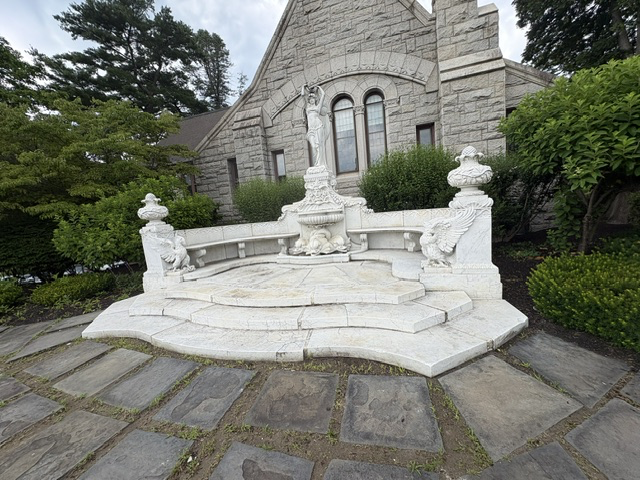
Hopedale Fountain
Some communities preserve their history in books or museums. Hopedale preserves its history in stone. Standing in front of the Bancroft Memorial Library is the Statue of Hope Fountain, one of the town’s most treasured landmarks. More than a beautiful work of art, it is a symbol of the ideals upon which Hopedale was founded. […]
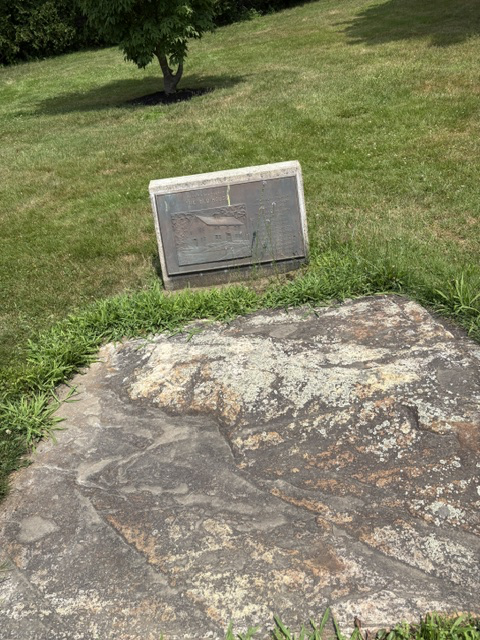
The Front Doorstep of the Old House
Sometimes the smallest pieces of history tell the biggest stories. At first glance, this weathered stone appears to be little more than an old granite slab resting in the grass. In reality, it is the original front doorstep of one of the oldest homes in Hopedale, a house that stood for more than two centuries […]

