Town Hall
Few buildings better represent Hopedale’s transition from a utopian community to an independent town than its Town Hall. Standing proudly across from the community’s civic center, this impressive Romanesque building reflects both the confidence of a growing town and the generosity of the Draper family, whose vision extended far beyond the walls of their factories.
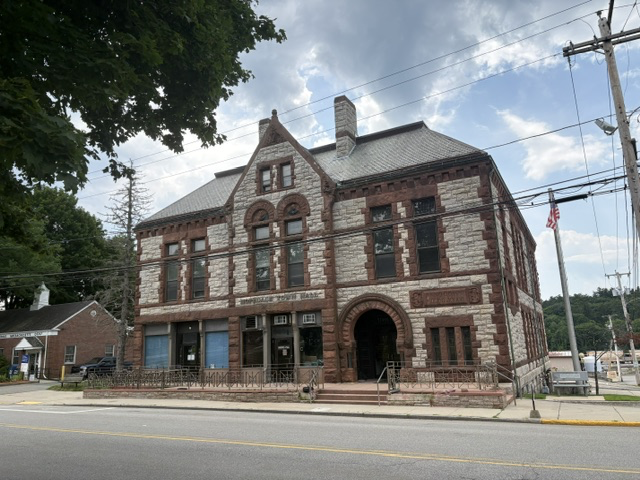
When Hopedale was incorporated as an independent town in 1886 after separating from Milford, there was an immediate need for a municipal building worthy of the new community. George Draper, recognizing the importance of this milestone, financed the construction of the Town Hall as a gift to the people of Hopedale. Although he died before the building was completed, it was dedicated in 1887 by his children as a memorial to their father, ensuring that his commitment to the town would be remembered for generations
Designed by architect Frederick Swasey, the building was constructed of locally quarried Milford granite accented with Longmeadow brownstone, creating the striking contrast that still catches the eye today. Its Richardsonian Romanesque design, with broad arches, massive stonework, and carefully carved architectural details, gave the young town a civic building that conveyed permanence, stability, and pride. More than a century later, it remains one of the finest examples of this architectural style in central Massachusetts.
The Town Hall was designed to serve many purposes. Street-level storefronts brought commerce into the heart of town, municipal offices conducted the business of local government, and a large auditorium provided space for town meetings, lectures, concerts, theatrical performances, banquets, and community celebrations. In many ways, it became Hopedale’s living room, a place where civic life unfolded and neighbors gathered to celebrate milestones, debate important issues, and strengthen the bonds of community.
Today, the Hopedale Town Hall is more than a beautiful historic building. It is a reminder that strong communities are built not only through industry and prosperity but also through places where citizens gather, participate, and shape their future together. It stands as one of the enduring gifts of the Draper family and an important chapter in the remarkable story of Hopedale.
Read More From Nancy
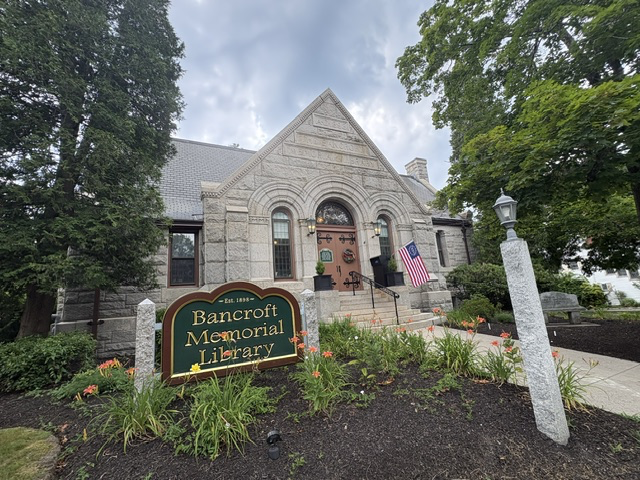
Bancroft Memorial Library
Standing in the center of Hopedale, the Bancroft Memorial Library is much more than a public library. It is the keeper of the town’s memory, preserving the stories of the people whose ideas, industry, and generosity shaped this remarkable community. Completed in 1898, the library was a gift from George and Eben Draper in memory […]
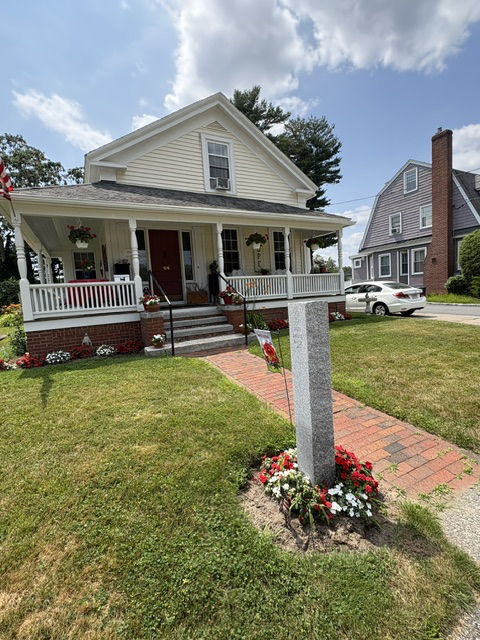
The Adin Ballou House
Every town has a founder. Few can still point to the home of the person whose ideas shaped its very identity. This modest house on Dutcher Street was the home of Reverend Adin Ballou, the visionary minister who founded the Hopedale Community in 1842. Although the house stands in a different location today, it originally […]
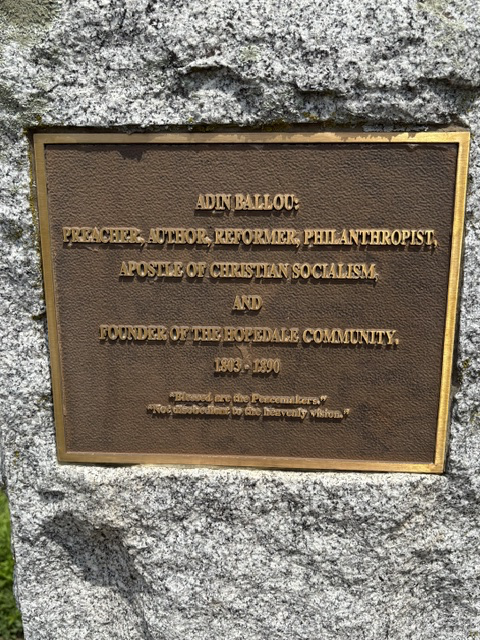
The Founder
The first plaque introduces us to the man whose vision gave birth to Hopedale. It identifies Adin Ballou as a preacher, author, reformer, philanthropist, “Apostle of Christian Socialism,” and founder of the Hopedale Community. Those titles reflect a remarkable life devoted not simply to preaching, but to putting faith into practice. Ballou believed Christianity should […]

