Leonardo’s Grave
High above the Loire River, within the grounds of the Château Royal d’Amboise, stands the elegant Chapel of Saint-Hubert. It is here that visitors come to remember Leonardo da Vinci, not in his native Italy, but in France, where he spent the final years of one of history’s most remarkable lives.
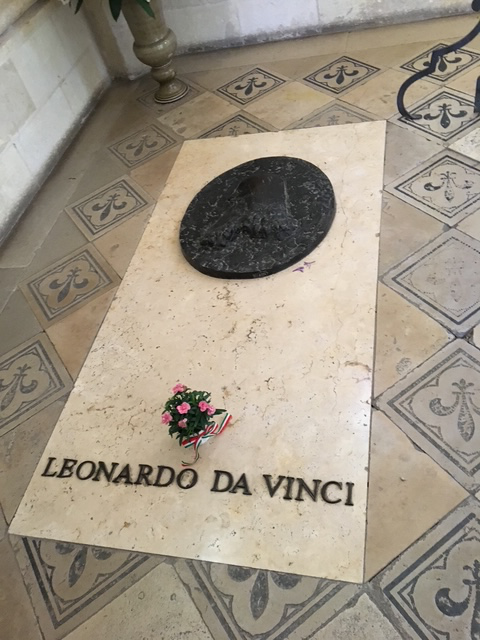
By the time Leonardo accepted the invitation of King Francis I in 1516, he was in his sixties and already celebrated throughout Europe. He had painted masterpieces that would define the Renaissance, filled thousands of notebook pages with observations and inventions, and pursued an endless curiosity that ranged from anatomy and engineering to architecture, mathematics, and flight. Yet he was growing older, and the political instability of Italy made France an attractive refuge.
Francis I admired Leonardo not simply as a painter, but as the embodiment of Renaissance learning. He invited him to live at the nearby Château du Clos Lucé, only a short walk from the royal castle. There, Leonardo was given the freedom to think, design, teach, and create without the pressures of commissions that had occupied much of his earlier career. He brought with him several of his favorite paintings, including the Mona Lisa, Saint John the Baptist, and The Virgin and Child with Saint Anne—works he continued refining until the end of his life.
Although advancing age and illness limited his ability to paint, Leonardo never stopped imagining. He sketched plans for canals, royal celebrations, ideal cities, mechanical devices, and architectural projects. King Francis often visited him, valuing not only his artistic talent but also his wisdom and conversation. It has even been said that the king considered Leonardo one of his closest advisors, a man whose greatest gift was not simply what he created, but the way he thought.
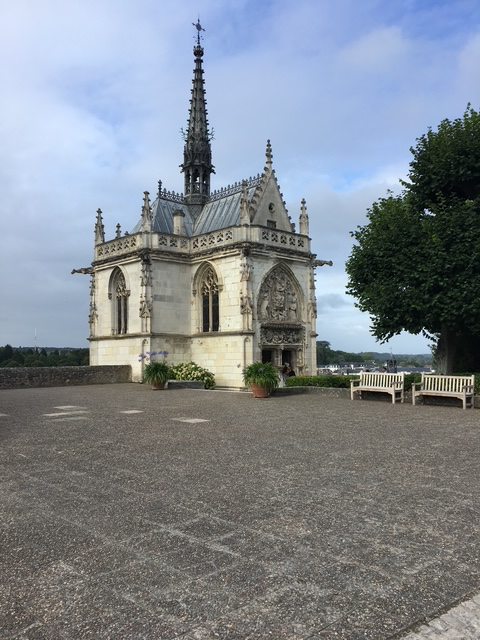
Leonardo died at Clos Lucé on May 2, 1519. He was originally buried in the nearby Church of Saint-Florentin, but after that church was destroyed during the French Revolution, remains believed to be his were moved to the Chapel of Saint-Hubert, where they rest today. While historians acknowledge that absolute certainty about the remains is impossible, this chapel has become the place where the world comes to honor his memory.
Leonardo’s genius was not confined to a single achievement. His life reminds us that curiosity itself can become a life’s work. Even in his final years, he continued asking questions, exploring new ideas, and imagining possibilities that others could scarcely comprehend.
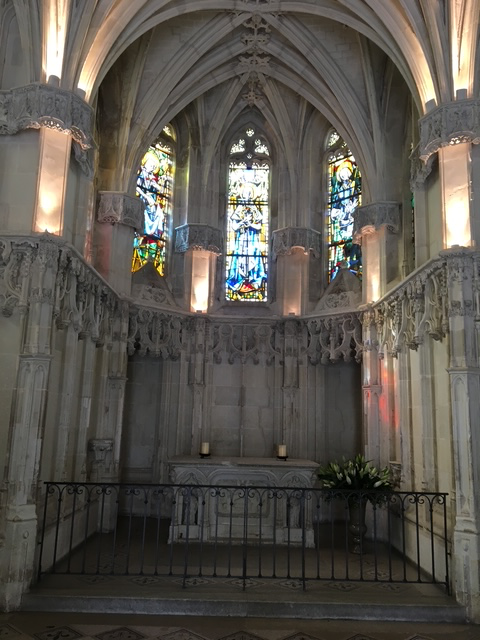
More than five centuries after his death, people still travel from around the world to stand in this quiet chapel, not simply to visit the grave of a famous artist, but to honor a mind that refused to stop wondering. It is a reminder that our greatest contribution may not be a single accomplishment, but a lifetime spent pursuing knowledge, creativity, and the endless possibilities of the human imagination.
Read More From Nancy
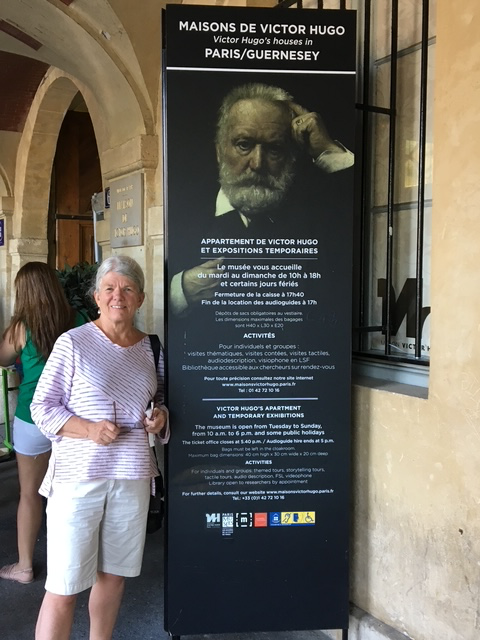
Home of Victor Hugo
The home of Victor Hugo offers a rare opportunity to step directly into the life of one of France’s greatest literary figures. This apartment is where Hugo lived from 1832 to 1848, some of his most productive and significant periods of his career. It was here that he wrote, entertained and lived as a central figure in […]
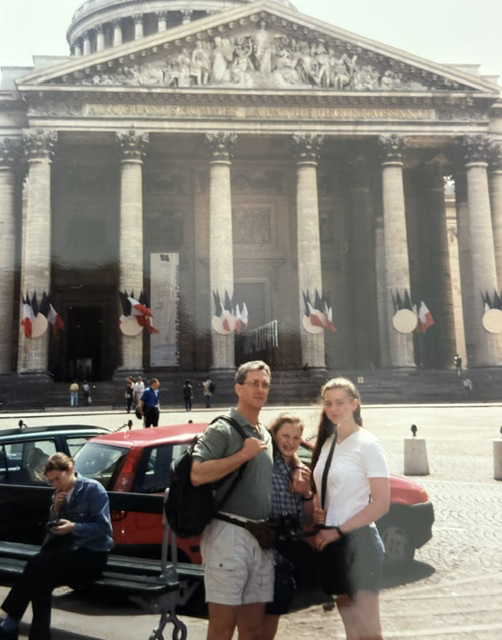
The Panthéon
During our family vacation to France, we visited the Panthéon in the Latin Quarter of Paris. Its massive columns, triangular pediment, and soaring dome give it the appearance of an ancient temple standing in the middle of the modern city. The building was commissioned by King Louis XV as a church dedicated to Saint Geneviève, […]
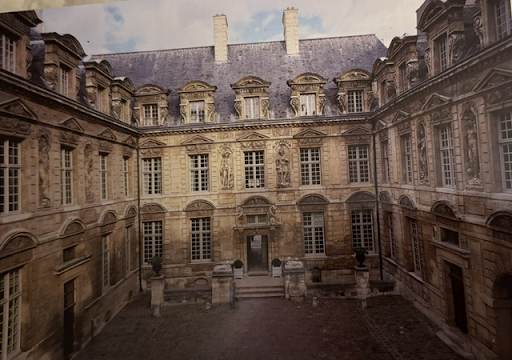
Hotel de Sully
While exploring the historic Marais district of Paris, I wandered into the quiet courtyard of the Hôtel de Sully. Hidden behind an elegant entrance on the bustling Rue Saint-Antoine, this seventeenth-century mansion offers a peaceful retreat from the crowds and provides a glimpse into the lives of the French aristocracy before the Revolution. The Hôtel […]

