Hotel de Sully
While exploring the historic Marais district of Paris, I wandered into the quiet courtyard of the Hôtel de Sully. Hidden behind an elegant entrance on the bustling Rue Saint-Antoine, this seventeenth-century mansion offers a peaceful retreat from the crowds and provides a glimpse into the lives of the French aristocracy before the Revolution.
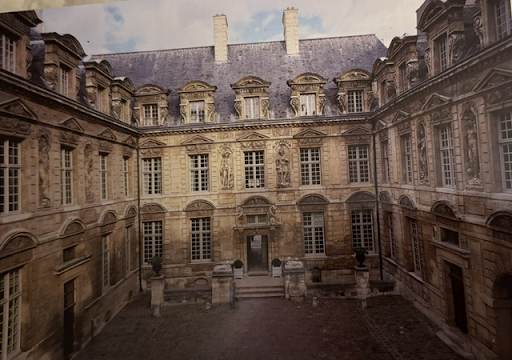
The Hôtel de Sully was built between 1625 and 1630 for the wealthy financier Mesme Gallet. A few years later, it was purchased by Maximilien de Béthune, Duke of Sully, one of the closest advisers and trusted ministers of King Henry IV. Sully played a vital role in restoring France’s finances after the Wars of Religion, encouraging agriculture, improving roads and canals, and helping lay the foundation for France’s economic recovery. Although he owned the mansion for only a portion of his life, his name became permanently associated with the residence.
The architecture reflects the elegance of early French Baroque design. The richly decorated façade, carved stone figures, ornate dormer windows, and beautifully proportioned courtyard demonstrate the craftsmanship of seventeenth-century Paris. Like many of the grand hôtels particuliers built during this period, the mansion was designed around an interior courtyard, providing both privacy and an impressive setting for receiving guests.
One of the things I found especially interesting is that the Hôtel de Sully serves as a gateway to the Place des Vosges, one of the oldest planned public squares in Paris. A passage through the rear of the mansion leads directly into the square, allowing visitors to move seamlessly from one remarkable historic site to another. It is easy to imagine members of the French nobility using the same passage nearly four hundred years ago.
Today, the Hôtel de Sully is owned by the French government and serves as the headquarters of the Centre des Monuments Nationaux, the organization responsible for preserving many of France’s most important historic landmarks. Rather than functioning simply as a museum, the building continues to play an active role in protecting the nation’s architectural heritage.
Standing in this courtyard, surrounded by centuries-old stonework, I was reminded that Paris is filled with places like this—quiet corners tucked behind busy streets, each with its own remarkable story. While many visitors focus on the city’s famous landmarks, discovering hidden treasures such as the Hôtel de Sully provides a deeper appreciation for the history, beauty, and enduring character of Paris.
Read More From Nancy
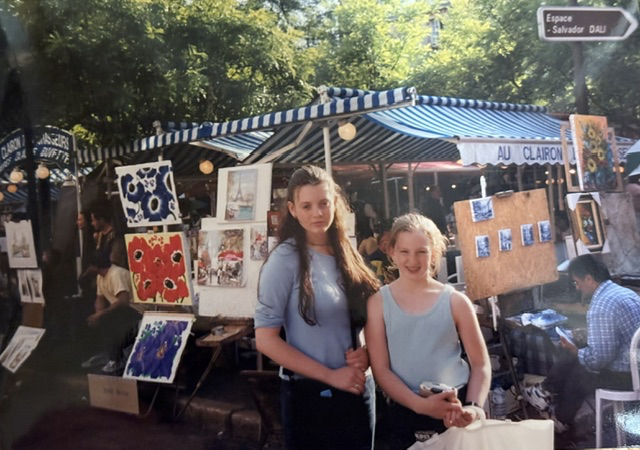
The Artists of Montmartre
During our family visit to Paris, we explored Montmartre, the historic neighborhood that rises above the city on its northern side. This photograph of our daughters was taken among the artists’ stalls near the Place du Tertre, not far from the Basilica of Sacré-Cœur. By the late nineteenth century, Montmartre had become home to a […]
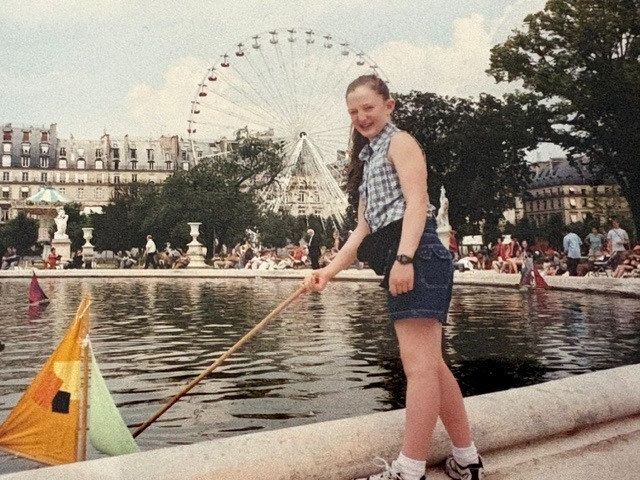
Sailboats of the Tuileries
At the edge of a basin in the Tuileries Garden, children launch small wooden sailboats and watch the wind carry them across the water. A long stick helps push a boat away from the stone rim or send it off again when it returns. This simple activity has been part of the garden’s life for […]
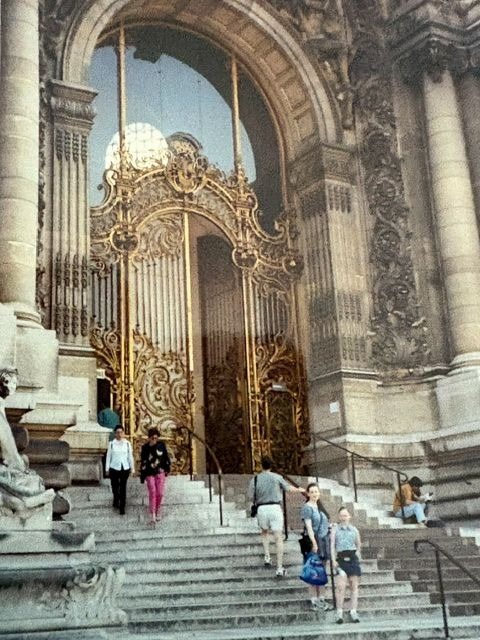
Petit Palais
A sweeping staircase, monumental stone arch, and elaborate gilded gate mark the entrance to the Petit Palais. Designed by architect Charles Girault for the Paris Universal Exposition of 1900, the building made architecture and craftsmanship part of the exhibition itself. Girault also designed the entrance gate. Its curling metalwork and intricate ornament fill the archway […]

