Hopewell Culture National Historical Park
Hopewell Culture National Historical Park in Chillicothe, Ohio, preserves one of the most fascinating archaeological landscapes in North America. Established as a National Historical Park in 1992, the site protects the enormous earthworks and burial mounds built by the Hopewell people, who lived throughout the Ohio River Valley from about 200 BC to AD 500.
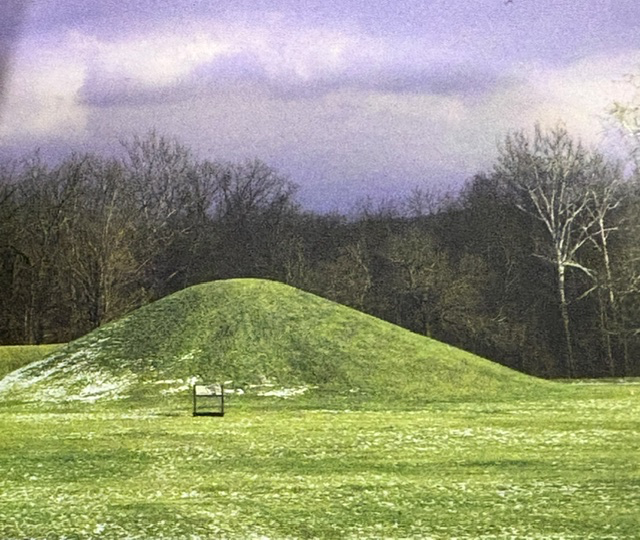
Unlike many ancient cultures, the Hopewell did not build great cities or leave behind written records. Instead, they created vast ceremonial landscapes, constructing massive earthen walls in precise geometric shapes, circles, squares, and octagons, using only simple hand tools and baskets. Some of these enclosures covered hundreds of acres and required the movement of thousands of tons of earth.
Standing beside one of the burial mounds, I found myself wondering how people nearly two thousand years ago could have designed and built these remarkable structures with such precision. The earthworks remind us that sophisticated societies existed in North America long before European settlement, developing complex religious beliefs, extensive trade networks, and impressive engineering skills.
One of the discoveries that fascinated me most was the extent of the Hopewell trade network. Archaeologists have found obsidian from Yellowstone, copper from the Great Lakes, mica from the Appalachian Mountains, shells from the Gulf Coast, and even shark teeth from the Atlantic Coast among the artifacts buried here. These findings reveal that the Hopewell people were connected to communities across much of North America centuries before roads or modern transportation existed.
Visiting Hopewell Culture National Historical Park reminded me that much of America’s history began long before the nation’s founding. Places like this encourage us to broaden our understanding of the people who first inhabited this land and the remarkable achievements they left behind. These quiet earthworks may appear simple at first glance, but they preserve the story of a civilization whose accomplishments continue to inspire curiosity and respect today.
Read More From Nancy
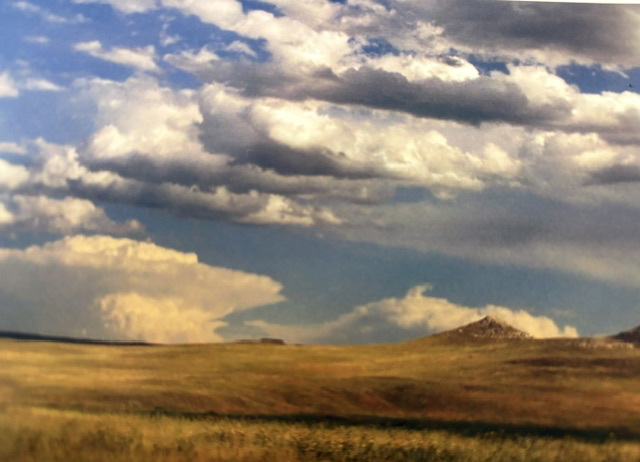
Agate Fossil Beds National Monument
Agate Fossil Beds National Monument protects one of the world’s richest windows into life nearly 20 million years ago. Agate Fossil Beds National Monument was established on June 5, 1965, to preserve one of the finest Miocene fossil sites in the world. The monument protects an extraordinary collection of ancient mammals whose remarkably preserved remains […]
Fort Larned National Historic Site
Along our coasts and across the vast interior of our country, we have built military forts. They rise not in settled times, but in moments of change, when boundaries shift, when commerce pushes outward, when cultures meet in tension. Fort Larned stands as one of those witnesses to transition. In 1859, along the corridor of the […]
George Washington Carver National Monument
The George Washington Carver National Monument in Diamond, Missouri, honors the life of a man born into slavery who would become one of the most respected agricultural scientists and educators in American history. Visiting this site is about a beginning. George Washington Carver was born in the early 1860s on a small farm owned by […]

