Jack Kerouac Memorial
Born in Lowell in 1922, Jean-Louis Lebris de Kérouac was the son of French-Canadian immigrants and grew up speaking French before learning English. His working-class upbringing and the close-knit ethnic neighborhoods of Lowell would later appear throughout his writings. Although he became famous for his travels across America, he never lost his
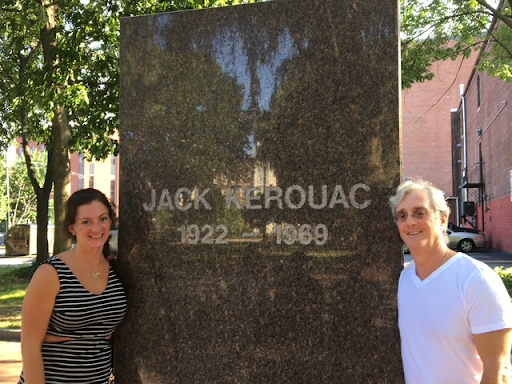
During a visit to Lowell, Massachusetts, we stopped at the memorial honoring Jack Kerouac, one of the most influential American writers of the twentieth century. Standing beside the monument, I was reminded that some of the most remarkable stories begin in places that might otherwise seem ordinary. For Kerouac, Lowell was not simply his hometown, it was the source of many of his memories, characters, and inspirations.
Born in Lowell in 1922, Jean-Louis Lebris de Kérouac was the son of French-Canadian immigrants and grew up speaking French before learning English. His working-class upbringing and the close-knit ethnic neighborhoods of Lowell would later appear throughout his writings. Although he became famous for his travels across America, he never lost his connection to the city where he spent his youth.
Kerouac achieved literary fame with the publication of On the Road in 1957. Written in a spontaneous and energetic style, the novel became a defining work of the Beat Generation and captured the spirit of freedom, adventure, and self-discovery that characterized postwar America. Along with writers such as Allen Ginsberg and William S. Burroughs, Kerouac helped shape a new literary movement that challenged traditional ideas and inspired generations of readers and writers.
Yet despite his travels and fame, Lowell remained central to his identity. Several of his books, including Doctor Sax, Maggie Cassidy, and Visions of Gerard, drew heavily on his childhood experiences and the people of his hometown. Today, Lowell embraces that connection with memorials, walking tours, and annual events celebrating one of its most famous sons.
The monument itself is simple, bearing only his name and the years of his life—1922–1969. It serves as a reminder that behind the cultural icon was a man whose roots remained firmly planted in Massachusetts. I was struck by the irony that a writer celebrating life on the road spent much of his life looking back toward home.
In many ways, Jack Kerouac’s story reminds us that while travel may broaden our horizons, the places that shape us in our youth continue to live within us. For Kerouac, no matter how far the journey carried him, Lowell was always part of the road.

Read More From Nancy
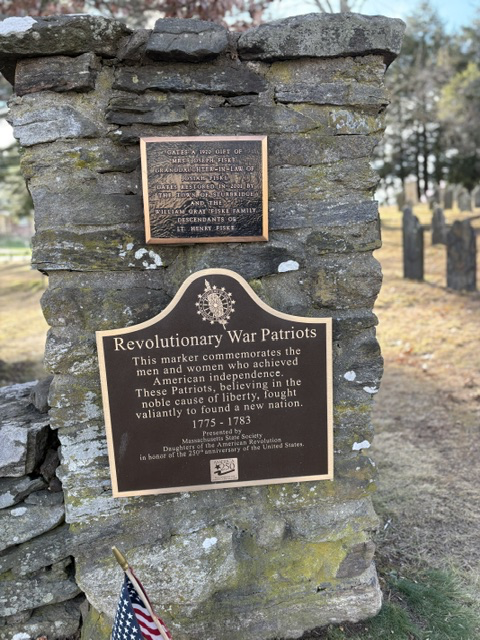
The Old Burial Ground
Long before modern cemeteries were carefully landscaped parks, New England towns established simple burial grounds at the heart of their communities. The Old Burial Ground in Sturbridge is one of those places. Established in 1740, only two years after the town itself was incorporated, it became the final resting place for generations of the men, […]

World War II Air Raid Siren
While visiting the Needham History Center and Museum, one artifact caught my attention. Standing quietly in the corner was a World War II air raid siren that once occupied the steeple of the First Baptist Church on Great Plain Avenue. It is not a large or ornate object, yet it represents a time when communities […]
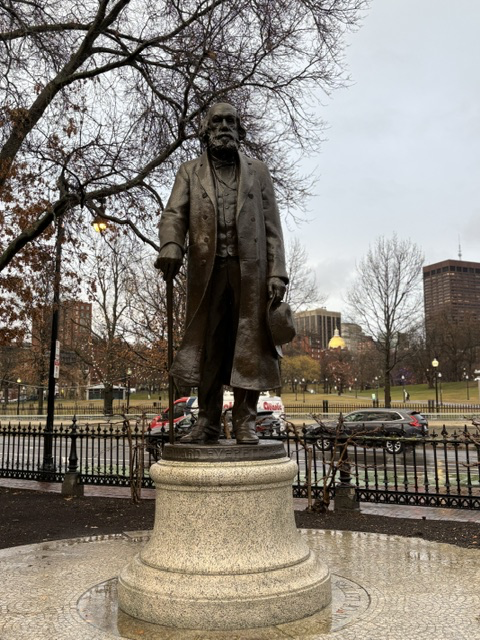
Edward Everett
Standing on Boston Common is a statue of a man whose name is no longer familiar to many Americans, yet during the nineteenth century he was one of the nation’s most admired public figures. This monument honors Edward Everett, a Massachusetts scholar, educator, diplomat, governor, U.S. senator, Secretary of State, and one of the greatest […]

