Chicken Bone Beach
There are layers of history in Atlantic City, and one I was not familiar with was Chicken Bone Beach.
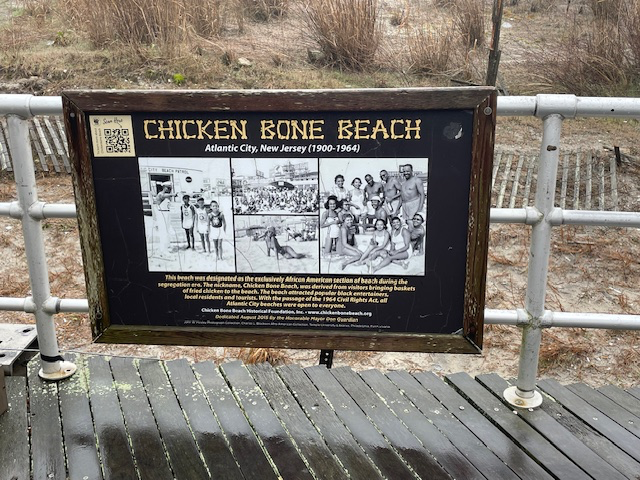
Located near Missouri Avenue, the stretch of shoreline carries a story that is not immediately visible when you first arrive. In the early 20th century, during a time when segregation shaped daily life, African American visitors were largely restricted to this area of the beach. While Atlantic City was known for its energy and entertainment, access to that experience was not the same for everyone.
The name “Chicken Bone Beach” is said to have come from families who gathered here, bringing picnics, often including fried chicken. Over time, what may have begun as a casual or even dismissive label became something reclaimed, tied to community and shared experience.
During the height of Atlanta City’s entertainment era, many of the greatest African American performers, who were often not allowed to stay in the hotels where they performed, found their way to the beach. It became a place where they could relax, gather and connect. Chicken Beach evolved to become a cultural gathering place, filled with music, conversation and community.
Today, the beach looks much like any other stretch of the shoreline. But once you know the story, it changes how you see it.
As with history, there are layers here, of exclusion, resilience, and culture, all held withing a stretch of sand along the Atlantic.
Read More From Nancy
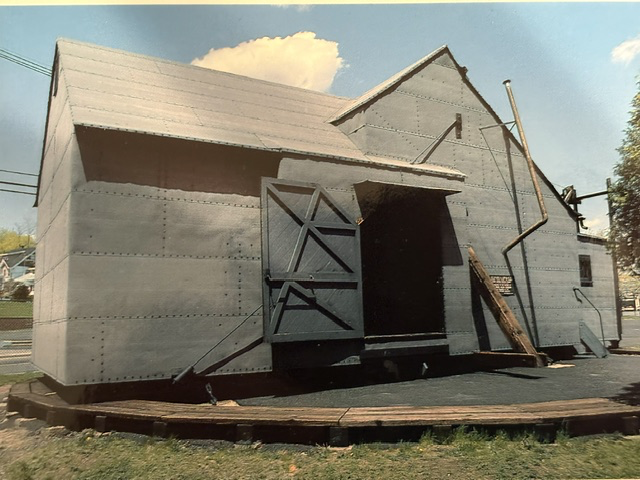
The Black Maria Motion Picture Studeo
While exploring the Thomas Edison National Historical Park, one exhibit immediately caught my attention. This unassuming black building is a replica of the Black Maria, the world’s first motion picture production studio. Although simple in appearance, it represents the birthplace of an industry that would forever change entertainment, communication, and popular culture. The original Black […]
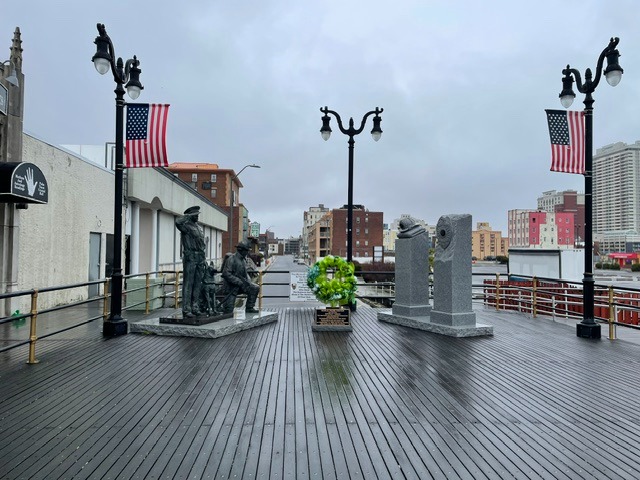
Remembering First Responders
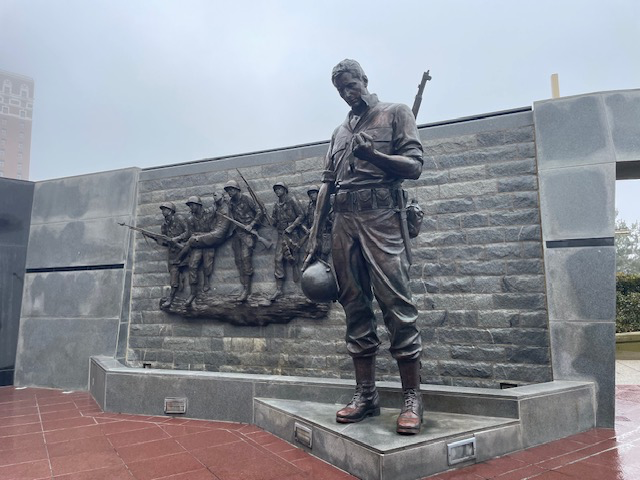
Along Atlantic City’s Boardwalk, a memorial brings the work and sacrifice of first responders into a setting usually associated with entertainment and recreation. A standing police officer, a kneeling firefighter, and a police dog form one sculptural group. Nearby, two granite towers recall the World Trade Center. Dedicated on December 5, 2014, the memorial honors […]

