Brown v. Board of Education National Historical Park
While teaching in Kansas, I made a point of visiting the Brown v. Board of Education National Historical Park. Housed in the former Monroe Elementary School, this site commemorates the landmark 1954 Supreme Court decision that declared racial segregation in public schools unconstitutional and helped launch the modern Civil Rights Movement.
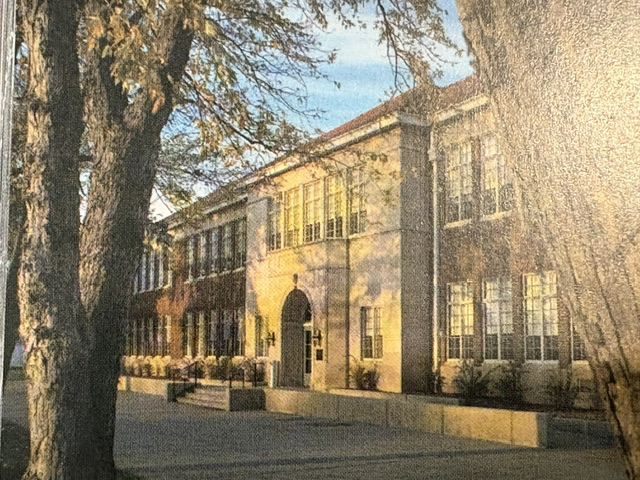
There was so much I learned during my visit. One of my biggest takeaways was discovering that this historic case originated in Kansas rather than in one of the Deep South states more commonly associated with segregation. While Kansas entered the Union as a free state and is often remembered for its anti-slavery history, it still permitted segregated elementary schools in cities such as Topeka. The challenge brought by local families ultimately became one of the most important constitutional cases in American history.
What also surprised me was learning that Monroe Elementary School was not a run-down or inferior facility. Built in 1926 in the Italian Renaissance Revival style, it was one of the newest and most modern schools in Topeka. It had spacious classrooms, a library, an auditorium, and many of the same amenities found in schools attended by white children. Yet the issue was never simply the quality of the building. African American children were required to attend separate schools solely because of their race. The Brown case challenged the very principle of segregation, arguing that separating children by race created inequality regardless of the condition of the facilities.
Standing in the halls of Monroe Elementary brought this history to life in a way that reading a textbook never could. The exhibits tell the stories of the students, parents, attorneys, and community leaders who challenged a system they believed was unjust. Their efforts culminated in the unanimous Supreme Court decision of May 17, 1954, which declared that “separate educational facilities are inherently unequal.” That ruling forever changed American education and became one of the defining milestones of the Civil Rights Movement.
The story of the school did not end with the Court’s decision. Monroe Elementary continued to operate until 1975 before closing because of declining enrollment. The building later faced an uncertain future and came close to being lost. Local preservation efforts saved it, and on October 26, 1992, President George H. W. Bush signed the Brown v. Board of Education National Historic Site Act, making Monroe Elementary a unit of the National Park System. The site officially opened to the public on May 17, 2004, the fiftieth anniversary of the Supreme Court decision. In 2022, it was redesignated as a National Historical Park and expanded to tell the broader story of the related school desegregation cases across the country.

Read More From Nancy

Apostle Island National Lakeshore
There are places in the National Park System that offer a different kind of experience. The Apostle Island National Lakeshore is one of those places. Reaching the Apostles is part of the experience. Located along the northern edge of Wisconsin on Lake Superior. The inland roads give way to water, and the sense of direction […]
Pullman National Monument
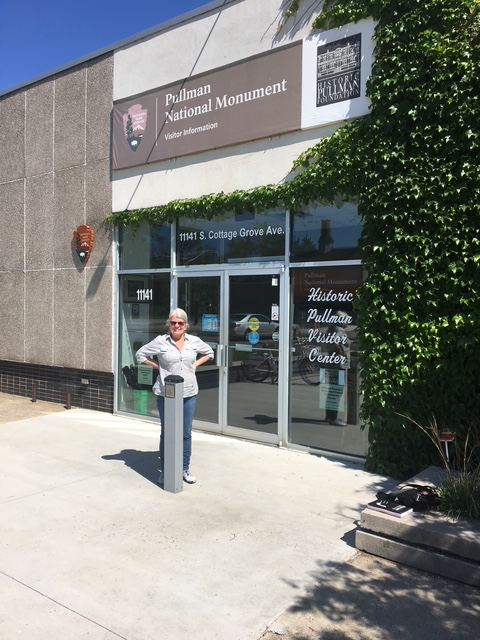
While teaching in Chicago in 2018, we took a trip to Pullman National Monument, a relatively new addition to the National Park Service at the time. The Pullman community was a grand idea. It was created in the 1880s by George Pullman, founder of the Pullman Palace Car Company. His vision was to create a […]
Herbert Hoover National Historic Site
At the Herbert Hoover National Historic Site, I saw not just the resting place of a president, but also the beginning of his life. Located in the small town of West Branch, Iowa, the site preserves the humble Quaker community where Herbert Hoover was born in 1874. Hoover’s grave site one a quiet hillside overlooking […]

