Voltaire in Pantheon
During our visit to the Pantheon in Paris, I took this photo of Voltaire, one of the leading figures of the French Enlightenment. Born in 1694, he was a writer, philosopher and outspoken advocate for freedom of thought and religious tolerance. His ideas challenged the institutions of his day.
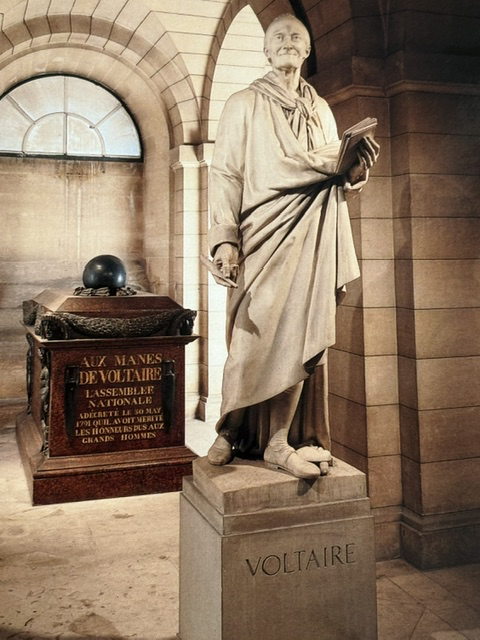
The statue stands near the entrance to the crypt and a monument bearing the inscription honoring him. In 1791, only thirteen years after his death, the French National Assembly ordered that his remains be brought to the Pantheon, making him one of the first individuals to be interned in this building after it was transformed from a church into a mausoleum for France’s most distinguished citizens. The inscription on the monument pays tribute to the man who “prepared us to become free”
The Pantheon was originally commissioned by King Louis XV as a church dedicated to Saint Genevieve, the patron saint of Paris. It was completed in 1790, just as the French Revolution was beginning. During the nineteenth century, the building alternated several times between a church and a secular monument. Following the funeral of Victor Hugo in 1885, the French Republic permanently established it as a national mausoleum honoring those who had made extraordinary contributions to France. Its’ inscription reads: “To great men, from a grateful nation”
The Pantheon is more than an architectural masterpiece crowned by one of the most recognizable domes in Paris. It is a monument to the enduring influence of ideas, literature and science.
Read More From Nancy
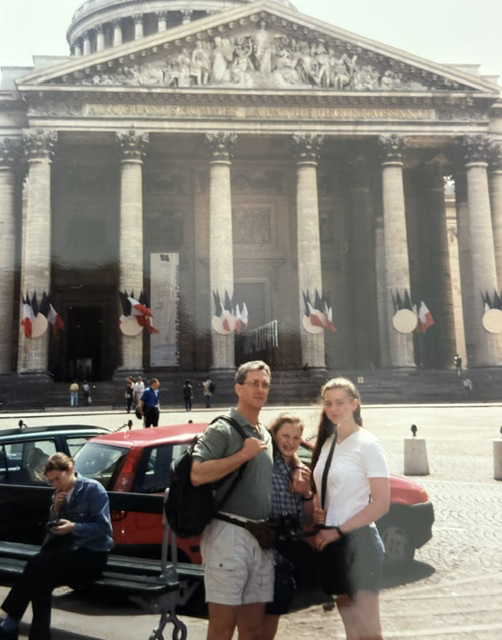
The Panthéon
During our family vacation to France, we visited the Panthéon in the Latin Quarter of Paris. Its massive columns, triangular pediment, and soaring dome give it the appearance of an ancient temple standing in the middle of the modern city. The building was commissioned by King Louis XV as a church dedicated to Saint Geneviève, […]
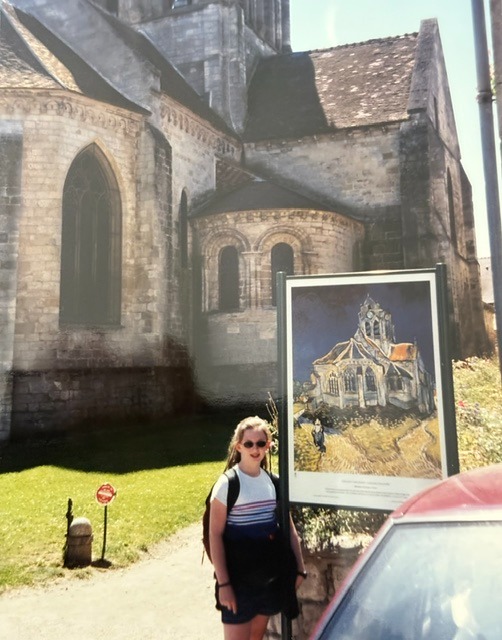
The Church at Auvers-sur-Oise
Erin stands outside the church at Auvers-sur-Oise, beside a reproduction of the painting Vincent van Gogh made of it in 1890. The building and its painted interpretation share the same setting, offering an opportunity to compare the place with the artist’s vision. Van Gogh painted the church in June 1890, shortly after settling in the […]
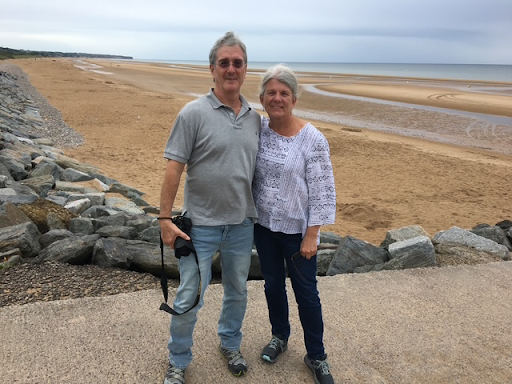
Omaha Beach
When we stood on the sands of Omaha Beach at Colleville-sur-Mer, it is hard to grasp the sheer scale of what occurred here on June 6, 1944. The shoreline is now peaceful, but on D-Day it was one of the most violent and deadly battlegrounds in modern history. In the early hours of that morning, […]

