Algonquien Bible
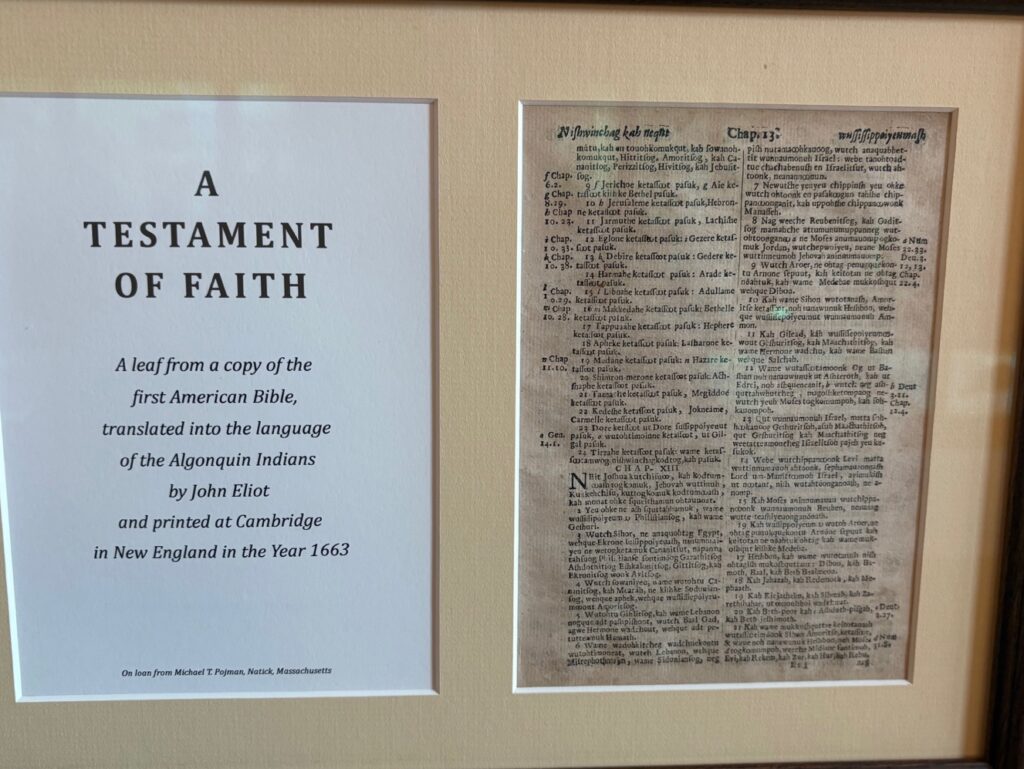
A testament of faith and history, the Natick Historical Society preserves two artifacts tied to the earliest years of printing in North America and to the cultural crossroads that defined this town.
The single leaf from the 1663 first edition of the Algonquien Bible was a page from the earliest Bible printed in America and the first complete Bible translated and printed in an indigenous language. The Bible was created through the work of the missionary John Eliot and printed at the Harvard College Press and is an extraordinary achievement in linguistics and printing. This was the result of the cultural exchange between the English colonists and the Algonquin-speaking peoples of Massachusettts.
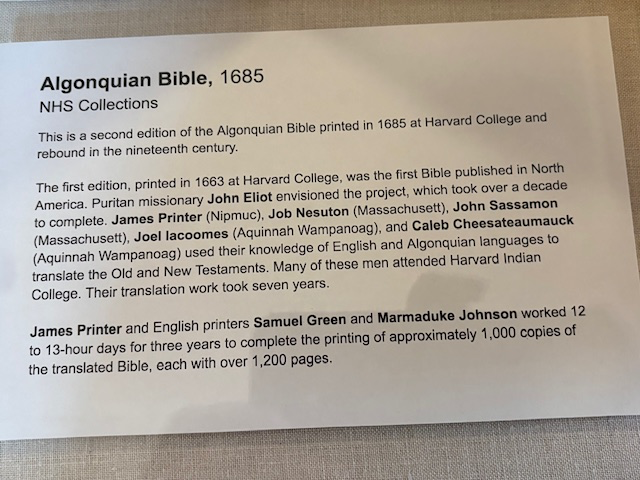
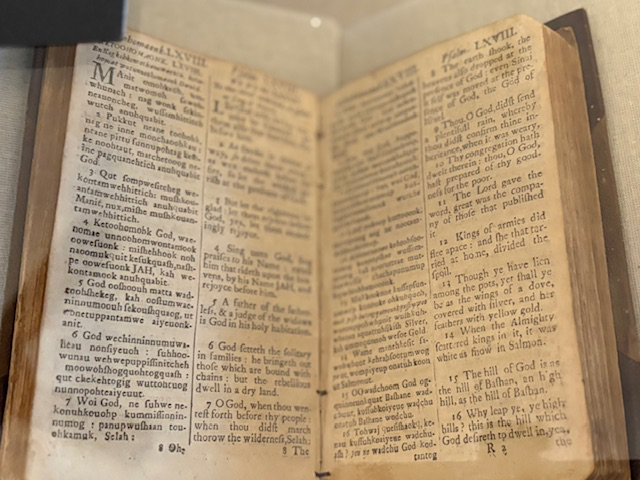
The Society also holds a full second edition of the Algonquin Bible, printed at Harvard College in 1685. This second printing was produced only 22 years after the original. To have a complete second edition copy in Natick gives this community a personal connection to its earliest history.
Natick holds a unique place in American history as one of the first Praying Indian towns founded in 1651 under the leadership of John Eliot. Natick was envisioned as a community where Christianized indigenous families could live and worship and blend their own traditions and the new religious structure introduced by Eliot. It became the model for the network of Praying Indian towns that would spread across Massachusetts.
Held in trust by the Natick Historical Society, these artifacts remind us how language and culture intertwined more than 350 years ago. These texts were created in the language spoken by the indigenous families who lived in this land and shaped the identity of Natick. They are part of Natick’s living memory.
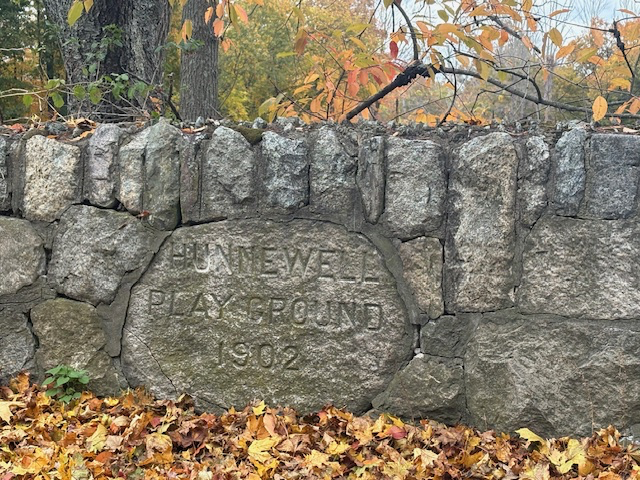
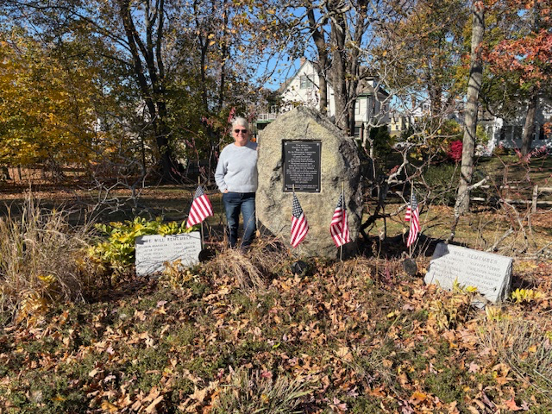
Read More From Nancy
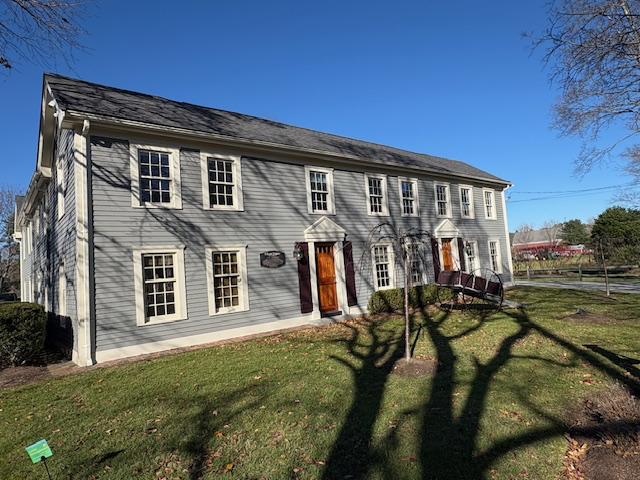
Georgia Colonial 1700’s
I love the connection to Colonial America that is still evident on my daily walks around Natick. Here is another example of a Georgian Colonial that dates back to the 1700s. The land was originally purchased from the Praying Indian community of Natick in 1730. South Natick itself was one of the earliest Praying Towns, founded by […]
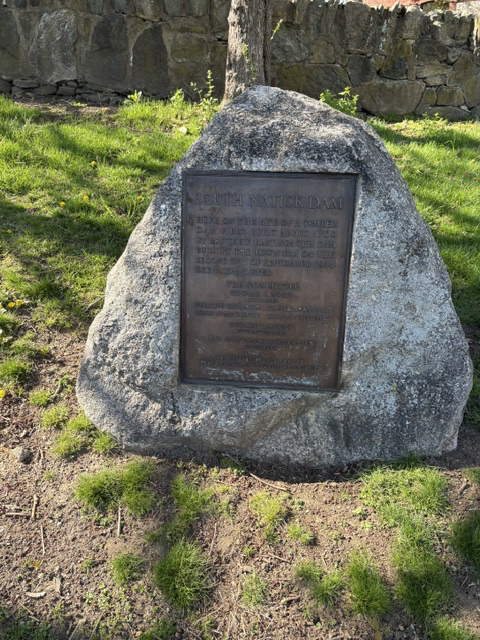
The South Natick Dam
Historic places do not always disappear because they are forgotten. Sometimes they disappear because communities decide how to balance preserving the past with meeting the needs of the future. The South Natick Dam, which has stood on the Charles River for well over a century, is one of those places. Constructed during the nineteenth century, […]
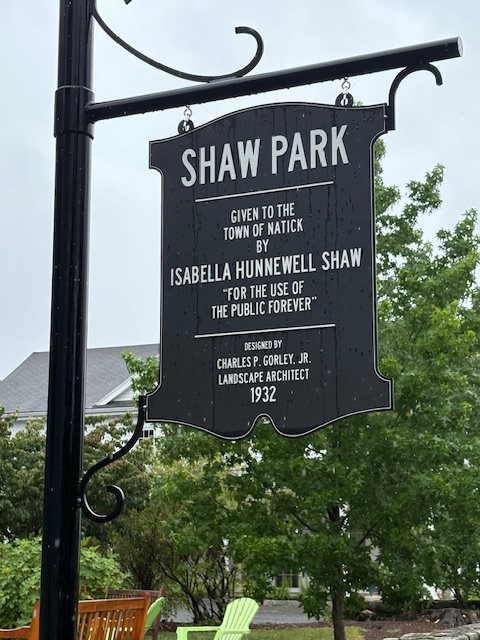
Shaw Park
Shaw Park, located in South Natick, is not a grand park in the monumental sense. Yet, it is a space with a profound sense of intention as captured in the words that accompanied its gift to the town of Natick: “For the use of the Public Forever” These words were written by Isabella Hunnewell Shaw. […]

