Mary Baker Eddy’s House
This house in Concord is part of Mary Baker Eddy’s earlier life, long before her broader recognition. When she lived here in the 1870s, she was not yet the established leader of a global religious movement. She was in a period of rebuilding, personally, financially and professionally.
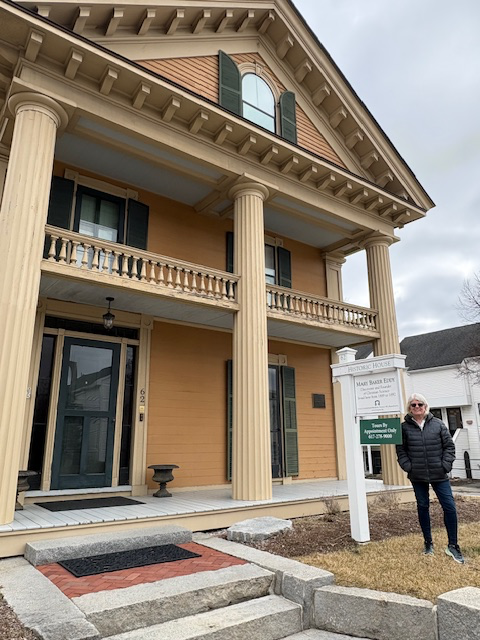
Born in nearby Bow in 1821, Mary Baker Eddy returned to Concord after years marked by loss, illness and uncertainty. By the time she settled here, she had already been widowed and had spent much of her life searching for answers to her own health challenges. It was during this era that she began to shape the ideas that would later define Christian Science.
She did not live in the house alone. During these years, she often relied on the support of others: students, friends and early followers who believed in her work. At times, she took in borders,and at other times she depended on shared living arrangements. These relationships were essential, both for financial support and for the exchange of ideas that helped her refine her teachings.
It was also during the Concord period that she wrote and published Science and Health, the book that would become the foundation of her teachings. This is where Mary Baker Eddy moved from searching to defining, from uncertainty to direction.
This house tells the earlier story – the one that had to come first.
Read More From Nancy
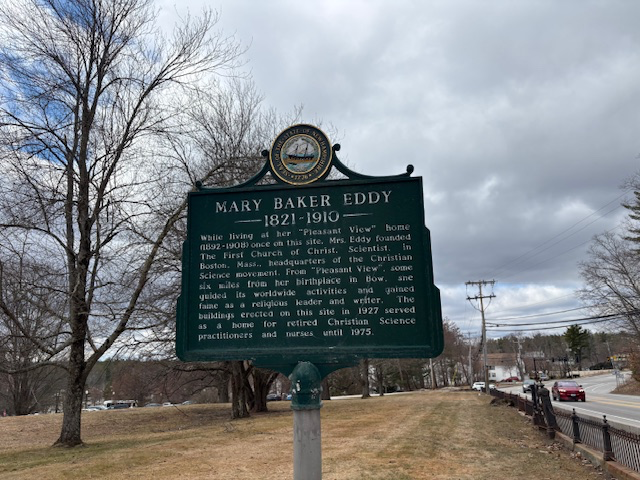
Pleasant View and Mary Baker Eddy
After her earlier years in Concord, Mary Baker Eddy’s story moves here: Pleasant View. This is where everything changes In 1889, she moved to this property, and it became more than a residence. This was the center of her work during the most influential period of her life. From here, she led and organized the Church […]
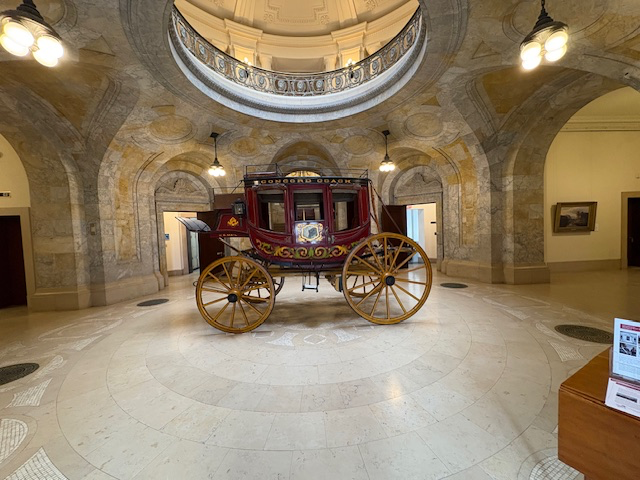
Concord Coach
Inside the Historic Museum is this beautifully preserved Concord coach, an object representing one of the most important contributions Concord made to the wider world. The Concord Coach was developed and built in the 19th century by the Abbot-Downing Company, a firm founded in the early 1800s. From this small New England city came a vehicle that would become […]
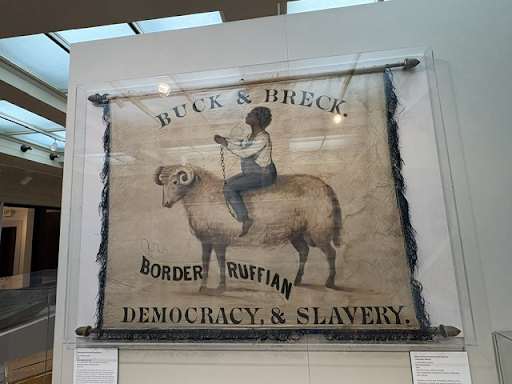
Campaign Banner from the Election of 1860
One of the exhibits that caught my attention was this colorful campaign banner from the presidential election of 1860. While political campaigns often seem like a modern phenomenon, Americans have been using banners, posters, and political imagery to influence voters for generations. This banner was created by members of the Republican Party in New Hampshire […]

