Harriet Tubman’s Childhood
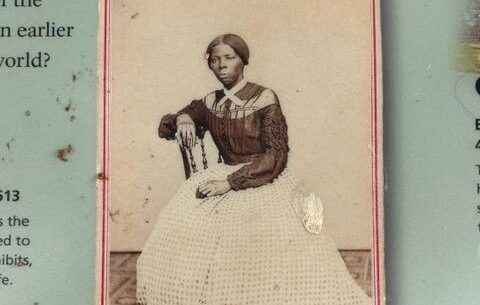
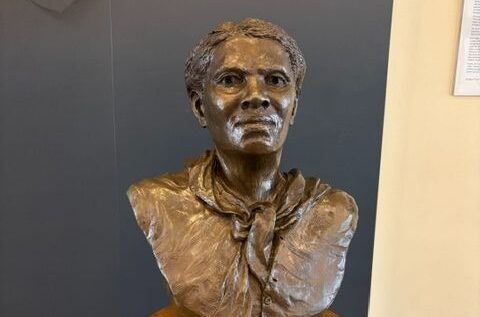
At the Harriet Tubman Underground Railroad Visitor Center in Church Creek, the story begins with the child who would later become known for leading others to freedom. Born enslaved in Dorchester County around 1822, she was named Araminta Ross and called “Minty.” Her parents were Harriet “Rit” Green Ross and Ben Ross, and she was one of nine children.
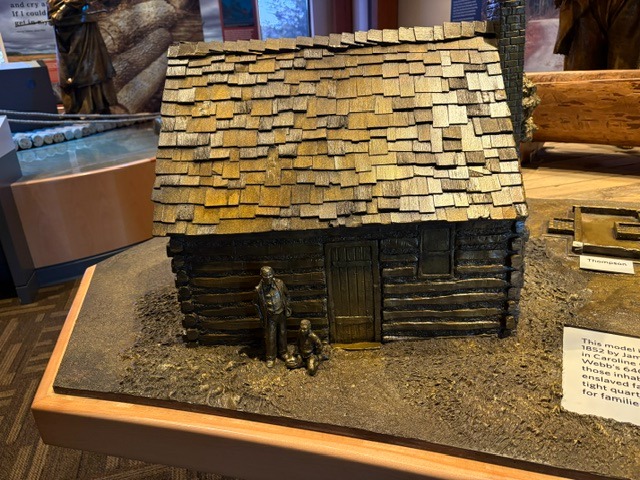
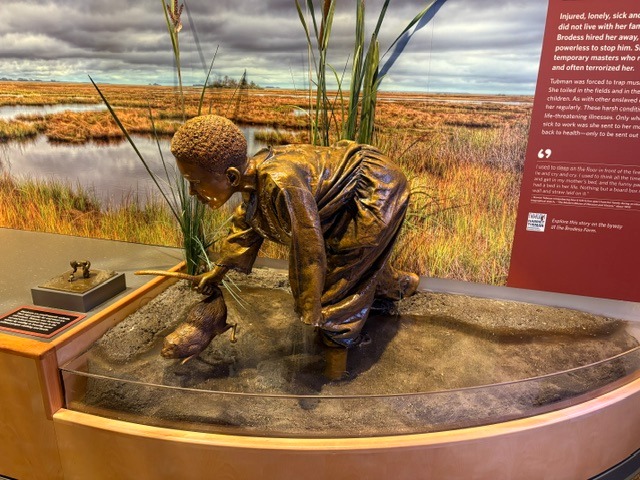
By about six years old, she was hired out to other households, separated from her mother and required to work. Her tasks included caring for children and checking muskrat traps in the cold marshes of the Little Blackwater River. Illness did not necessarily release her from those demands. The National Park Service records her recollection of being expected to wade into the swamps even when she was sick.
The exhibits describe the hunger, beatings, and loneliness she experienced. When she became too ill to work, she was returned to her mother to recover, then sent out again. Her parents had limited power to protect their children within a system that treated family members as property. Three of her sisters were sold away, permanently separating them from the household.
Family and community also provided knowledge that she carried into adulthood. Through work and experience, she learned the waterways, forests, and marshes of the Eastern Shore. She developed skills in finding food, using plants, and moving through difficult terrain—knowledge that later helped her guide people escaping slavery.
Beginning with her childhood gives greater depth to the familiar account of Harriet Tubman. Before her escape and rescue journeys came years of forced labor, separation, and survival. Church Creek provides a place to learn that early history within the Eastern Shore landscape where her life began.
Read More From Nancy
The People Who Helped Along the Way
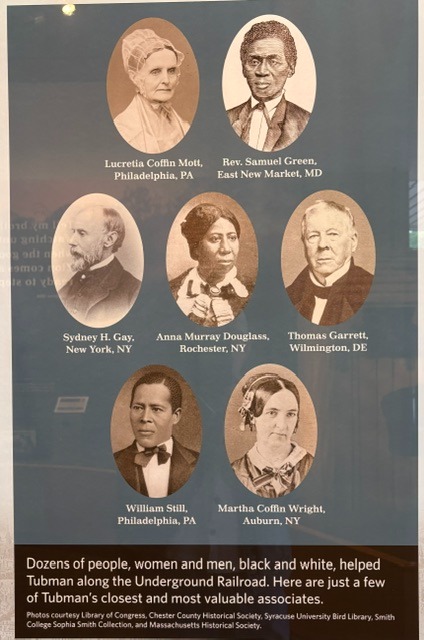
Harriet Tubman’s journeys depended on courage, judgment, and knowledge of the people and places along the route. They also depended on help. At the Harriet Tubman Underground Railroad Visitor Center in Church Creek, an exhibit introduces several of the people who worked with her: Black and white, women and men, living in communities from Maryland […]
A Home for Family and Others
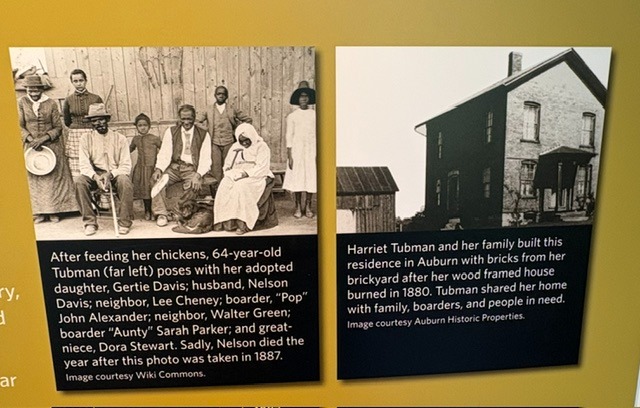
The exhibits at the Harriet Tubman Underground Railroad Visitor Center in Church Creek follow her story beyond escape journeys and Civil War service to the home she established in Auburn, New York. There, her commitment to helping others continued through family life, hospitality, and care for people who needed a place to live. In 1859, […]
Escaping Slavery and Returning for Others
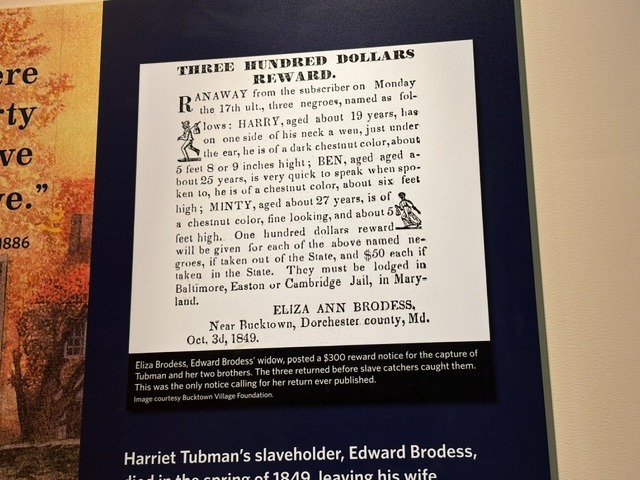
In October 1849, a newspaper notice offered a reward for the capture of three people who had escaped slavery: Harry, Ben, and their sister, identified as “Minty.” She would become widely known as Harriet Tubman. The notice listed their physical characteristics and placed a monetary value on their return, documenting the pursuit they faced when […]

