Scout, Spy, and Nurse
Harriet Tubman’s work for freedom continued during the Civil War, when she served the Union as a nurse, cook, scout, and spy. The exhibits at the Harriet Tubman Underground Railroad Visitor Center in Church Creek follow this part of her life beyond Maryland to the South, where her experience and judgment became valuable to military operations.
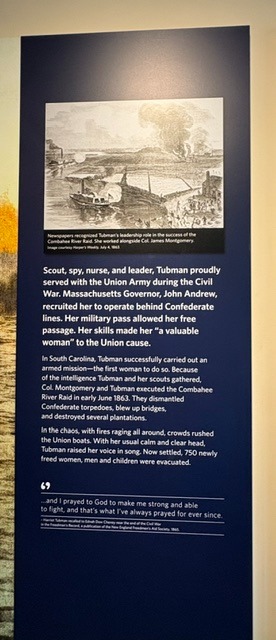
Tubman arrived in Port Royal, South Carolina, in 1862. She cared for people who were sick or wounded and became involved in gathering information behind Confederate lines. Her ability to move discreetly, establish trust, and work with people familiar with local conditions supported this intelligence work.
Her best-known wartime operation was the Combahee River Raid of June 1–2, 1863. Working with Colonel James Montgomery and Black Union soldiers of the 2nd South Carolina Volunteers, Tubman helped plan and guide an expedition into Confederate-held territory. Information collected by her network helped the boats navigate waters containing Confederate mines.
The raid damaged plantations and Confederate supplies while creating an opportunity for enslaved people to escape. More than seven hundred men, women, and children reached the Union boats and freedom. Their movement from the plantations to the river made emancipation an immediate, physical act: leaving the places where they were held and boarding vessels that could carry them away.
Tubman’s wartime service brought together several kinds of work. Nursing required sustained care for individuals; scouting and intelligence gathering required observation, reliable contacts, and careful decisions. At the Combahee River, those skills contributed to an operation that freed hundreds of people in a single expedition.
This chapter expands the familiar account of Tubman as an Underground Railroad conductor. During the war, she continued helping people reach freedom while also contributing directly to the Union campaign against the Confederacy. Her service belongs within both the history of emancipation and the military history of the Civil War.
Read More From Nancy
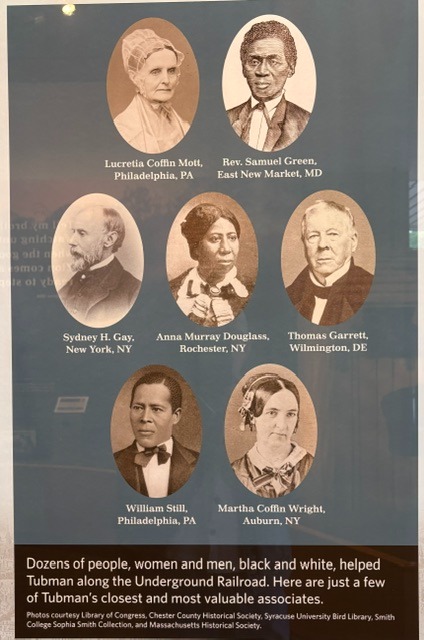
The People Who Helped Along the Way
Harriet Tubman’s journeys depended on courage, judgment, and knowledge of the people and places along the route. They also depended on help. At the Harriet Tubman Underground Railroad Visitor Center in Church Creek, an exhibit introduces several of the people who worked with her: Black and white, women and men, living in communities from Maryland […]
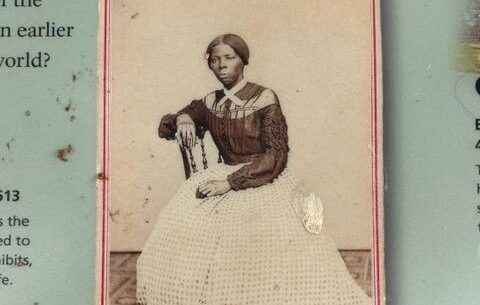
A Rediscovered Portrait
This portrait shows Harriet Tubman in her forties, seated beside a chair in a patterned dress. Photographer Benjamin F. Powelson made it in Auburn, New York, around 1868–1869, after her Underground Railroad journeys and Civil War service. It presents an earlier view of a woman often recognized through photographs taken in old age. The photograph […]
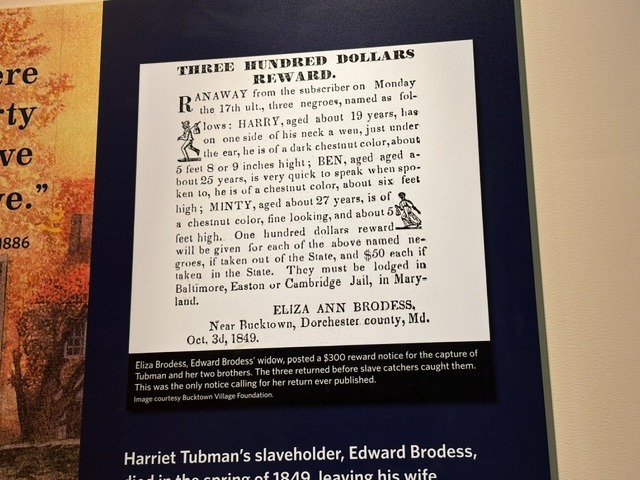
Escaping Slavery and Returning for Others
In October 1849, a newspaper notice offered a reward for the capture of three people who had escaped slavery: Harry, Ben, and their sister, identified as “Minty.” She would become widely known as Harriet Tubman. The notice listed their physical characteristics and placed a monetary value on their return, documenting the pursuit they faced when […]

