The People Who Helped Along the Way
Harriet Tubman’s journeys depended on courage, judgment, and knowledge of the people and places along the route. They also depended on help. At the Harriet Tubman Underground Railroad Visitor Center in Church Creek, an exhibit introduces several of the people who worked with her: Black and white, women and men, living in communities from Maryland to New York.
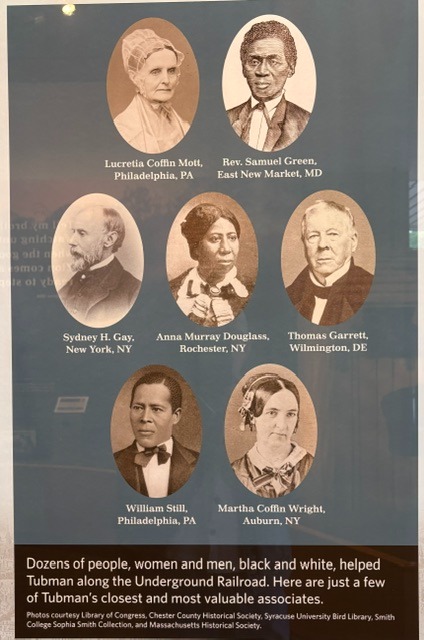
The names include Lucretia Coffin Mott, the Reverend Samuel Green, Sydney Howard Gay, Anna Murray Douglass, Thomas Garrett, William Still, and Martha Coffin Wright. Their portraits give individual identities to a network often described simply as the Underground Railroad.
Two important connections were Thomas Garrett in Wilmington, Delaware, and William Still in Philadelphia. Their surviving correspondence documents arrangements for people traveling with Tubman. In December 1854, Garrett reported sending her onward with a group of seven freedom seekers, asking that they be helped along the next stage of their journey.
The letters also preserve concern for Tubman herself. In March 1857, Garrett wrote to Still that he had been anxious to hear what had become of her. Another letter warned of increased danger following recent escapes. These exchanges reveal people coordinating assistance while waiting for news and assessing the risks ahead.
This cooperation required trust. A journey could involve several households and communities, with each person knowing how to reach someone able to provide the next assistance. Shelter, transportation, supplies, and reliable information helped turn a possible route into one that people could travel.
Learning about these associates adds depth to Tubman’s story. Her leadership remained essential, as did the determination of those escaping slavery. Around them were people who committed their homes, resources, and effort to helping those journeys succeed. The exhibit preserves some of their names and reminds us how many people contributed to the work of reaching freedom.
Read More From Nancy
Escaping Slavery and Returning for Others
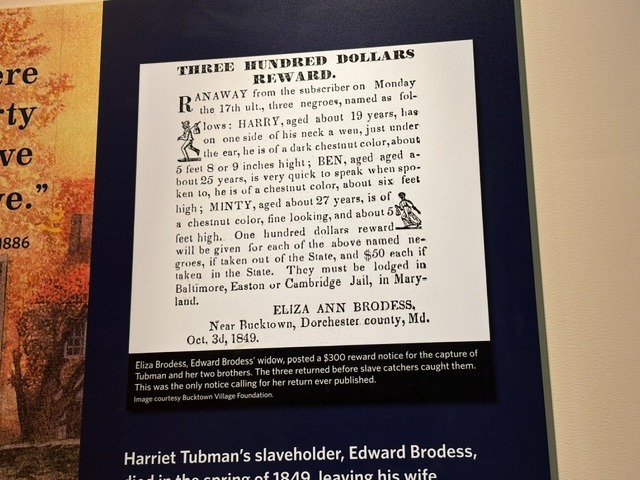
In October 1849, a newspaper notice offered a reward for the capture of three people who had escaped slavery: Harry, Ben, and their sister, identified as “Minty.” She would become widely known as Harriet Tubman. The notice listed their physical characteristics and placed a monetary value on their return, documenting the pursuit they faced when […]
A Home for Family and Others
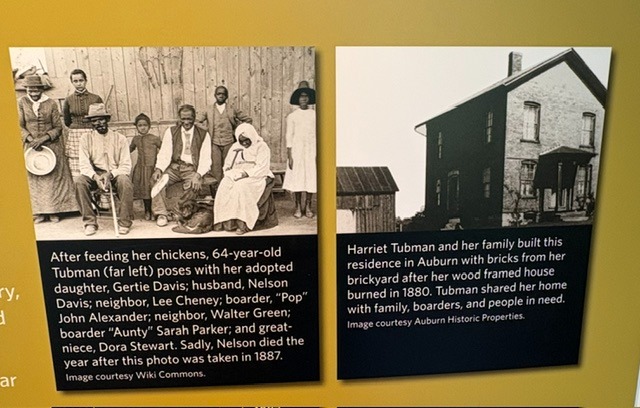
The exhibits at the Harriet Tubman Underground Railroad Visitor Center in Church Creek follow her story beyond escape journeys and Civil War service to the home she established in Auburn, New York. There, her commitment to helping others continued through family life, hospitality, and care for people who needed a place to live. In 1859, […]
A Rediscovered Portrait
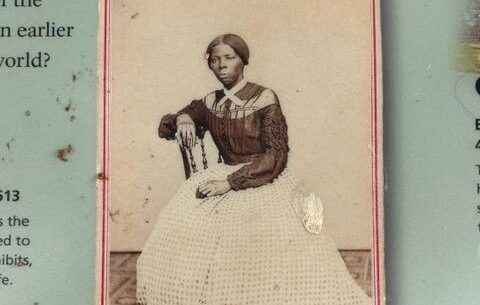
This portrait shows Harriet Tubman in her forties, seated beside a chair in a patterned dress. Photographer Benjamin F. Powelson made it in Auburn, New York, around 1868–1869, after her Underground Railroad journeys and Civil War service. It presents an earlier view of a woman often recognized through photographs taken in old age. The photograph […]

