Concord Fight Monument
Near the North Bridge, a bronze tablet set into a granite boulder bears the heading “Concord Fight”. Erected by the Town of Concord in 1955, it replaced a wooden sign installed in 1925. The account was written by Concord historian Allen French, whose words preserved the names, decisions, and remembered declarations of the men who advanced toward the bridge on April 19, 1775.
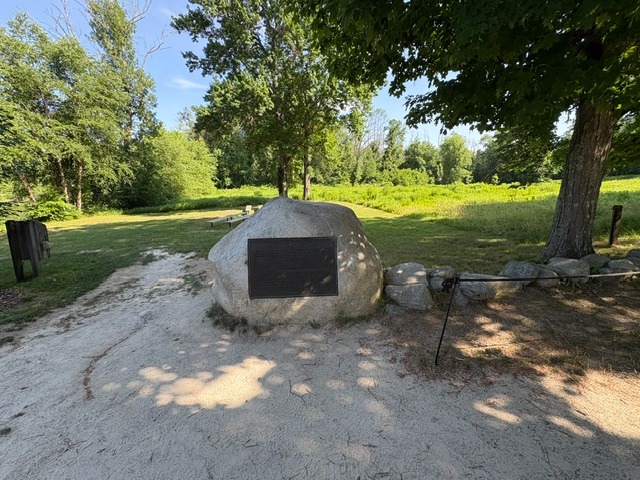
The plaque begins with the colonial companies gathering on the hill across the river while British soldiers held the crossing. Its narrative gives particular attention to the officers confronting a difficult decision: whether to remain on the heights or march toward the troops below. It names Concord adjutant Joseph Hosmer, Lincoln captain William Smith, Acton captain Isaac Davis, and Colonel James Barrett, reminding readers that the response involved several towns and several voices.
Smoke rising from Concord helped bring the question to a head. The militia feared that British troops were burning the town. Following a council, the officers decided to advance across the bridge toward the center of Concord. Barrett instructed the men not to fire unless fired upon. That order reveals the uncertainty of the moment: they were prepared to confront the regulars, but their advance did not begin with permission to open fire.
Major John Buttrick and Lieutenant Colonel John Robinson of Westford led the column, followed by Captain Davis and the Acton minutemen. Approximately four hundred colonial soldiers moved toward roughly ninety-six British troops guarding the bridge. When the British fired, Davis was among those killed. Buttrick then ordered the colonial soldiers to return fire, and the British withdrew toward town.
French’s account compresses those events into a short, forceful narrative. Yet its most distinctive feature may be its ending. After describing the British retreat, it looks beyond the conflict to the later relationship between Britain and the United States, calling them “two kindred nations, now happily long united in peace.”
Those closing words give the memorial a different emphasis from an account concerned only with victory. The separation remained central to the story, but so did the peace that followed. By retaining French’s earlier wording when it replaced the wooden sign with bronze, Concord preserved both the battle narrative and that expression of reconciliation.
The plaque also illustrates how a battlefield’s history reaches later generations. The events themselves lasted only minutes; explaining them has occupied historians, townspeople, and visitors for centuries. Here, a local historian’s account became part of the landscape, placing the decisions of individual people alongside the larger national story.
Read More From Nancy
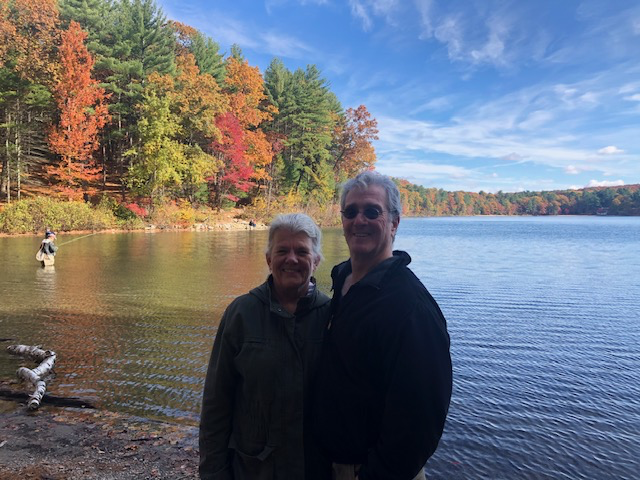
Walden Pond
Where do I even begin with a town like Concord, a place so steeped in history that nearly every road, field and footpath seems to carry a story. This is a community that does not shy away from its past. Concord remembers, it marks, it preserves, and it invited visitors to slow down long enough […]
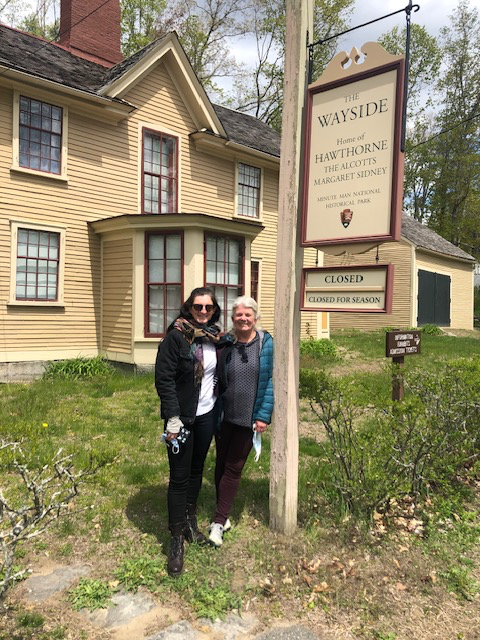
The Wayside
There are houses that preserve history, and then there are houses that helped shape it. The Wayside in Concord, Massachusetts, is one of those extraordinary places. This house has always held a special place in our family’s story. Both of our daughters gave tours here, sharing the remarkable history of the people who lived within […]
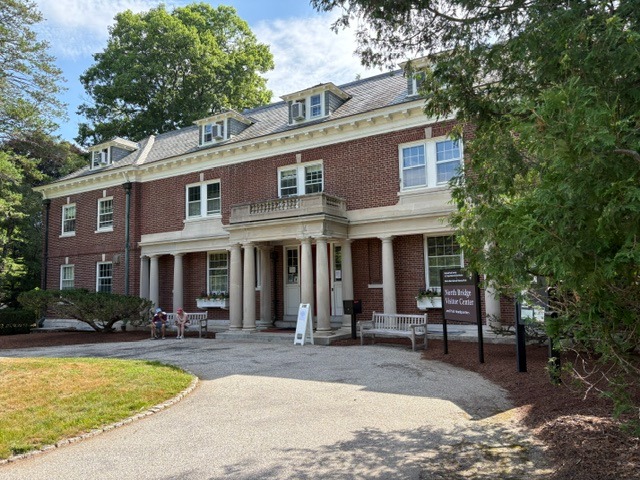
The Buttrick Homestead
The red-brick house overlooking Concord’s North Bridge was once the home of the Buttrick family, whose connection to this landscape stretched back to the seventeenth century. Although visitors now enter it as the North Bridge Visitor Center, its columns, balustraded balcony, and broad façade belong to its earlier life as a substantial private residence. Construction […]

