Sugarloaf
Before sugar commonly arrived in bags of loose granules, refined cane sugar was often sold as a hard, solid cone called a sugarloaf. Its distinctive shape came from the molds used during refining, when liquid drained away as the sugar hardened.
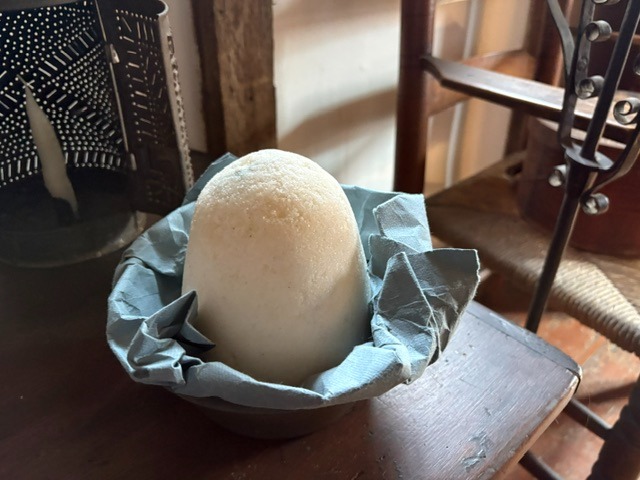
Preparing it for use required effort. Household members broke the loaf into manageable pieces, then used strong metal sugar nippers to cut smaller portions. Pieces could be dissolved in tea or other liquids, while sugar needed for baking could be crushed more finely with a mortar and pestle.
An 1850 household guide described sugar nippers as indispensable, recommending their use after the loaf had first been cracked with a stout knife and a mallet or hammer. Sweetening food involved tools and preparation that are largely absent from kitchens today.
The sugarloaf also connects domestic life with a much wider commercial world. Cane sugar reached households through networks of growers, refiners, merchants, and shipping routes. The familiar act of adding sweetness depended on a product that had traveled through several stages of processing and trade.
Displayed in a historic household setting, the sugarloaf makes an ordinary ingredient look unfamiliar. Its form reveals how much the packaging, preparation, and use of everyday foods have changed.
Read More From Nancy

Massachusetts Vietnam Veterans Memorial
Some memorials ask you to stop and reflect. The Massachusetts Vietnam Veterans Memorial in Worcester is one of those places. Unlike many war memorials that focus on statues or monuments, this memorial invites visitors to walk quietly through the landscape. Granite monuments surround a peaceful reflecting pond, each bearing words that tell the story of […]
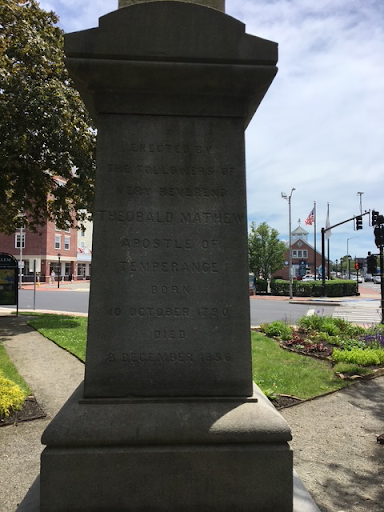
Theobald Mathew Monument
History often reveals itself in unexpected ways. Walking through Salem, I noticed only the base of this monument. The inscription immediately caught my attention: “Erected by the followers of the Very Reverend Theobald Mathew, Apostle of Temperance.“ Until that moment, I knew very little about Father Theobald Mathew or why the people of Salem believed […]
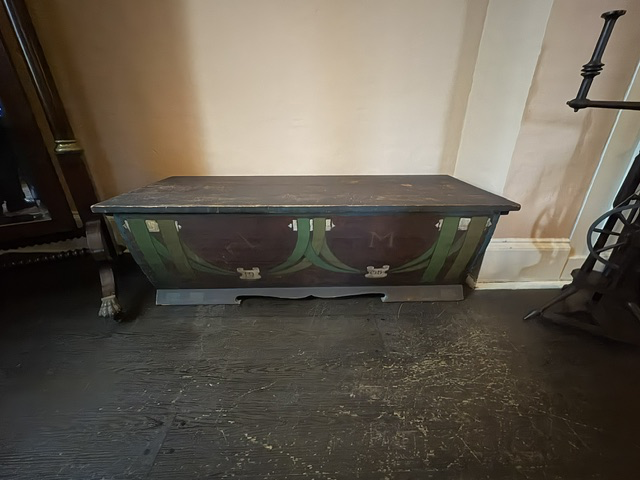
The Dowry Chest
This painted wooden chest at the Nichols House Museum in Boston is more than an attractive piece of antique furniture. Dating from the late 17th century, it is an English oak dowry, or dower, chest that would originally have been used to hold a woman’s personal possessions as she prepared for marriage and the establishment […]

