Bronson Alcott’s Daily Duties
A child’s education, in Bronson Alcott’s view, extended throughout the day. Lessons mattered, but so did meals, household responsibilities, recreation, rest, and the ways children treated others. His “Order of In-door Duties for Children,” displayed at Orchard House, offers a glimpse into how he attempted to put those beliefs into practice.
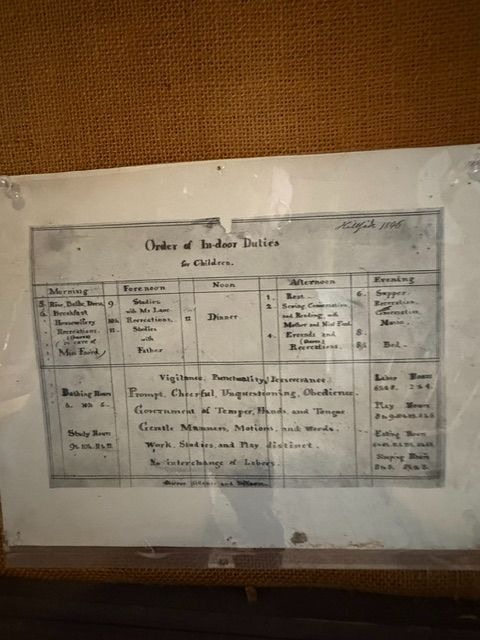
The schedule divides the day into morning, forenoon, noon, afternoon, and evening. It includes study, meals, errands, recreation, music, and bedtime. Alongside these activities are expectations concerning punctuality, perseverance, cheerfulness, obedience, manners, and self-control. The arrangement joins practical routines with the cultivation of character.
Alcott’s approach reflected his broader work as an educational reformer. During the nineteenth century, he introduced art, music, nature study, and physical education into his classrooms. He believed teachers should help children develop their own understanding through conversation and thoughtful questions.
The household schedule also reveals the demanding side of his ideals. Its attention to conduct, order, and the use of time shows how closely children’s daily behavior could be guided and evaluated. Learning involved both intellectual exploration and considerable expectations about how a child should act.
For the Alcott daughters, education was woven into family life. Their father’s interests in moral development and independent thought existed alongside the ordinary responsibilities and pressures of the household. The schedule preserves one expression of that effort to make home itself a place of instruction.
Seen today, the document invites consideration of how much children learn outside formal lessons. The routines adults establish, the responsibilities they share, and the behavior they encourage all communicate values. Alcott’s plan belongs to its nineteenth-century setting, but the question behind it remains familiar: how does everyday family life help shape the person a child becomes?
Read More From Nancy
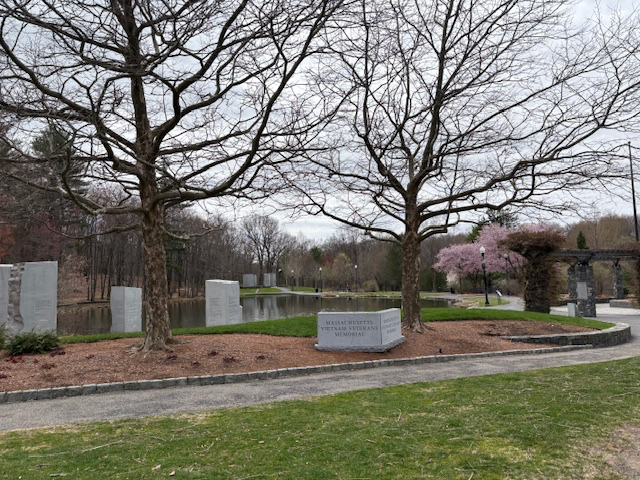
Massachusetts Vietnam Veterans Memorial
Some memorials ask you to stop and reflect. The Massachusetts Vietnam Veterans Memorial in Worcester is one of those places. Unlike many war memorials that focus on statues or monuments, this memorial invites visitors to walk quietly through the landscape. Granite monuments surround a peaceful reflecting pond, each bearing words that tell the story of […]
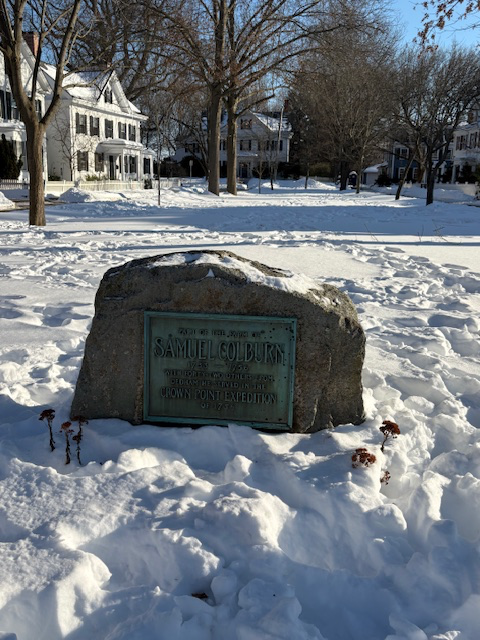
Samuel Colburn
As I was walking through downtown Dedham, I came across a simple rock monument honoring Samuel Colburn. I must admit I was not aware of the Crown Point Expedition. That unfamiliar name immediately caught my attention. I was excited to take a photo and look up more information later. There is something satisfying about discovering a small marker and realizing it opens […]
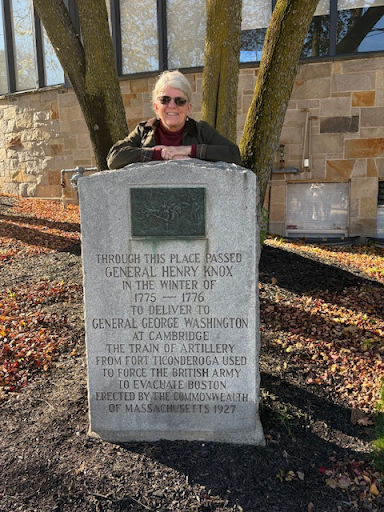
Henry Knox in Framingham
In Framingham, Massachusetts, there stands a granite block bearing an inscription that is easy to pass by without a second glance. Yet the words carved into this stone marks one of the most daring feats of the American Revolution: “Through this place passed Henry Knox in the winter of 1775–1776 to deliver to General George Washington […]

