Diana Fountain
At the intersection of Gran Via de les Corts Catalanes and Carrer de Roger de Llúria, the Diana Fountain brings a figure from Roman mythology into Barcelona’s everyday streetscape. Seated above the fountain, the goddess holds the bow that identifies her as Diana, traditionally associated with hunting and the natural world.
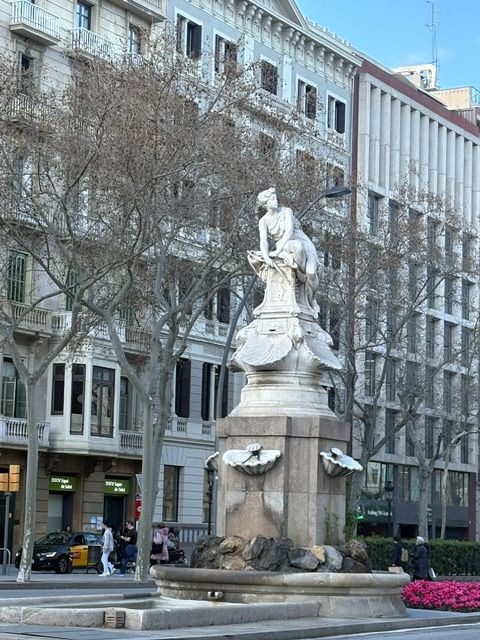
The sculpture is the work of Barcelona-born artist Venanci Vallmitjana i Barbany. Together with his brother Agapit, Vallmitjana helped renew Catalan sculpture during the nineteenth century, combining established artistic traditions with close attention to the human figure.
The fountain’s development extended over many years. Vallmitjana presented a proposal at Barcelona’s Fine Arts Exhibition in 1898, but the monument was not installed at its present location until 1919. Its completion belonged to the final year of the sculptor’s life.
Diana appears in a quiet pose rather than in pursuit of an animal. Her turned head and accompanying bow suggest attention and readiness, while the draped clothing and pale marble connect the figure with classical sculptural traditions. Below her, shell-shaped basins and the surrounding pool establish the monument’s purpose as a fountain.
The setting places this classical figure among the buildings and traffic of the Eixample. Here, public sculpture became part of the expanding city, bringing artistic detail into spaces used for ordinary journeys.
The Diana Fountain preserves a quieter strand of Barcelona’s artistic history. Alongside its celebrated architecture, the city’s streets contain works by sculptors whose monuments connect mythology, craftsmanship, and the development of public space.
Read More From Nancy
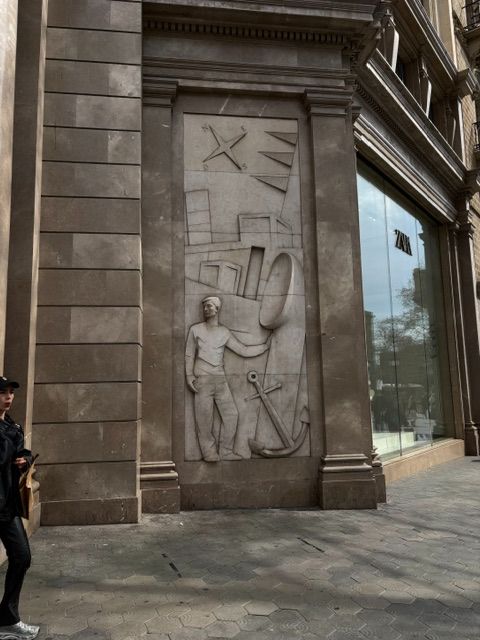
The Sailor in Stone
Walking through Barcelona, I noticed a carved stone panel beside a storefront entrance. A sailor stood next to a large anchor, with the outline of a ship rising behind him and a star above. The relief was incorporated into the building itself, an architectural detail that could easily be overlooked while passing the shop windows. […]
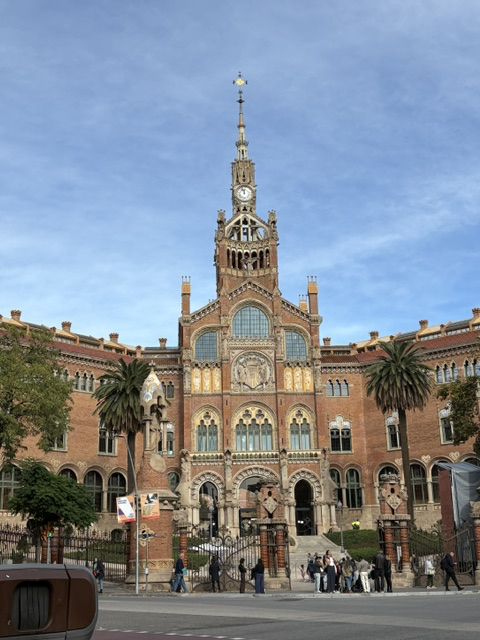
Sant Pau Art Nouveau Site
Standing in front of the Hospital de Sant Pau in Barcelona, it is difficult at first to believe that this extraordinary building was created as part of a working hospital. With its towers, elaborate brickwork, mosaics, sculptures, arched windows and decorative details, it looks more like a palace or cathedral than a place designed for […]
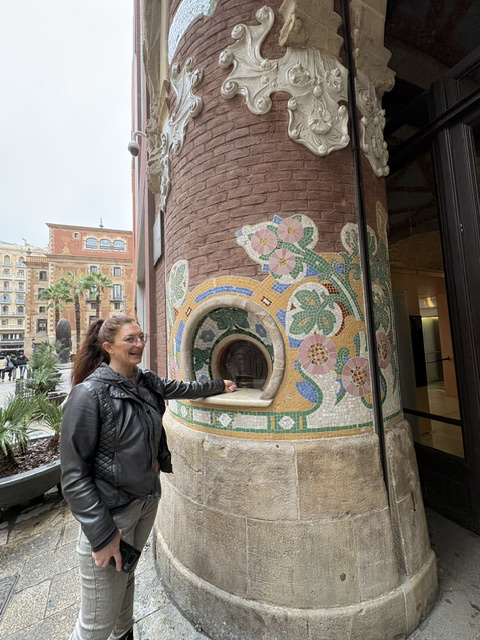
The Original Ticket Windows
Built between 1905 and 1908, the Palau de la Música Catalana was designed by architect Lluís Domènech i Montaner as the home of the Orfeó Català choral society. Its original entrance was formed by two large arches opening directly from the narrow street into the vestibule. Between them stood a substantial brick column containing two […]

