Casa de l’Ardiaca
Beside Barcelona’s cathedral, Casa de l’Ardiaca preserves centuries of changes within a single building. Its name means “Archdeacon’s House,” recalling its long association with a senior member of the cathedral’s clergy. Roman masonry, Gothic architecture, and Renaissance details reflect the successive generations that adapted the property.
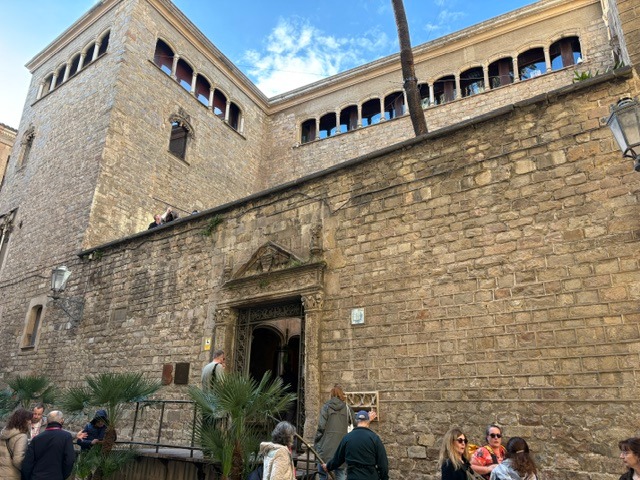
The residence has origins in the twelfth century and was built against Barcelona’s ancient Roman wall, incorporating portions of its defensive structures. As the medieval city developed, these substantial remains became part of homes and other buildings, allowing ancient construction to survive through continued use.
One of the house’s most influential residents was Lluís Desplà i d’Oms, an archdeacon and president of the Generalitat of Catalonia. In the late fifteenth and early sixteenth centuries, he reshaped the residence into a more imposing house. The work combined Gothic forms with emerging Renaissance design, including the classically inspired entrance dated to around 1510.
Later owners continued to alter the property. During the nineteenth century, it was joined with the neighboring dean’s house, and the courtyard was transformed into a two-level cloister-like space. Its appearance therefore developed over several periods rather than belonging entirely to the Middle Ages.
In 1921, Casa de l’Ardiaca became the headquarters of Barcelona’s Historical Archive. The institution preserves records of municipal government reaching back to the thirteenth century, providing evidence of how the city was governed and how it changed.
The building’s present purpose adds another chapter to its history. A former ecclesiastical residence now safeguards the documents through which Barcelona studies its past, while its own walls preserve part of that history in stone.
Read More From Nancy

The Door of the Passion Façade
While most visitors are naturally drawn to the soaring towers of the Sagrada Família, I found myself stopping to study one of its bronze entrance doors. At first, it appears to be nothing more than a collection of letters, but looking more closely, I realized that every letter has been carefully placed to tell a […]
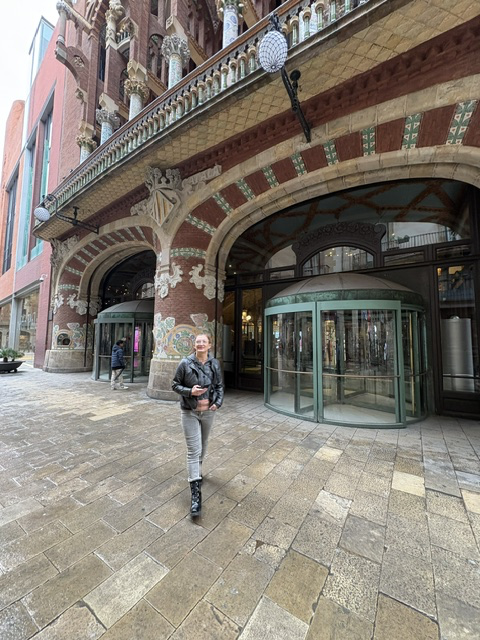
The Palau de la Musica Catalana
Walking through the narrow streets of Barcelona’s old city, it would be easy to pass by without realizing that one of the world’s great concert halls lies just ahead. Then, almost unexpectedly, the Palau de la Música Catalana comes into view, its colorful façade rising above the surrounding buildings. Unlike the stone churches and Gothic […]
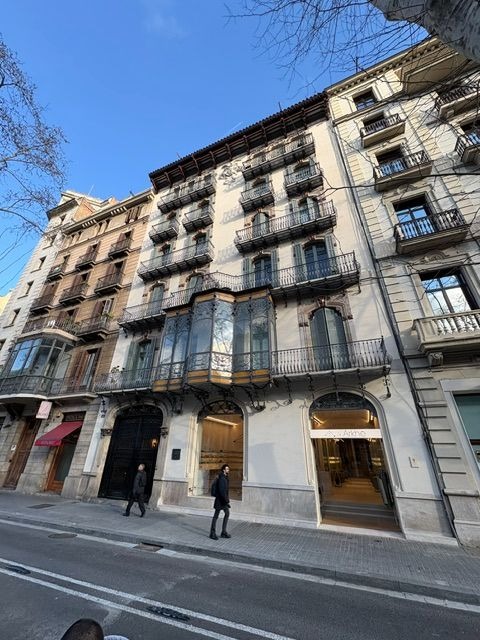
Casa Dolors Calm
At 54 Rambla de Catalunya, Casa Dolors Calm reveals how an existing building could be transformed through architecture and decorative craftsmanship. Its projecting wooden bay windows give the façade a distinctive character, bringing together glass, patterned woodwork, and ornamental details. The original house was constructed in 1879 by master builder Josep Déu i Busquets. Between […]

