The Congregational Church
The Congregational Church on Front Street traces its beginnings to Exeter’s founding in 1638. Reverend John Wheelwright and his followers established both the congregation and the settlement after his expulsion from Massachusetts Bay Colony. Religious disagreement was therefore part of the community’s history from its beginning.
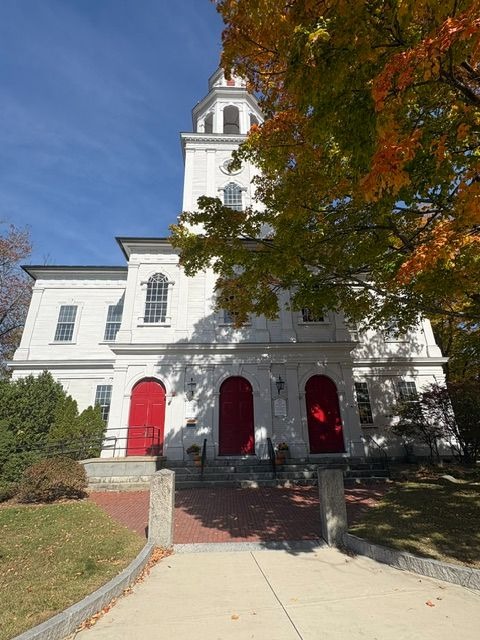
The present meetinghouse dates to the late 1790s and is Exeter’s oldest surviving church building. Its white exterior, arched entrances and clock tower give it a prominent place along Front Street. Built for a congregation already more than 150 years old, it replaced an earlier meetinghouse on the site.
The congregation’s history includes division as well as continuity. During the eighteenth-century Great Awakening, disagreements over religious revival and worship led members to establish a separate Second Parish. For generations, Exeter supported two Congregational communities, each with its own meetinghouse and minister.
The church also provided space for political debate. In February 1845, Amos Tuck and fellow opponents of slavery’s expansion met in its vestry to challenge their Democratic Party’s position, particularly over the annexation of Texas. Their organizing formed part of the political realignment that eventually contributed to the emergence of the Republican Party.
In 1920, the two Congregational parishes reunited. Members of Second Parish returned to the First Parish meetinghouse, and the combined congregation adopted the name Congregational Church in Exeter. Their former church building subsequently became Phillips Church at Phillips Exeter Academy.
The building preserves a history extending beyond its architecture. Its story encompasses colonial religious dissent, changing relationships between church and town, antislavery organizing and reconciliation between divided congregations. Together, those developments connect this enduring meeting place with several important chapters of Exeter’s past.
Read More From Nancy
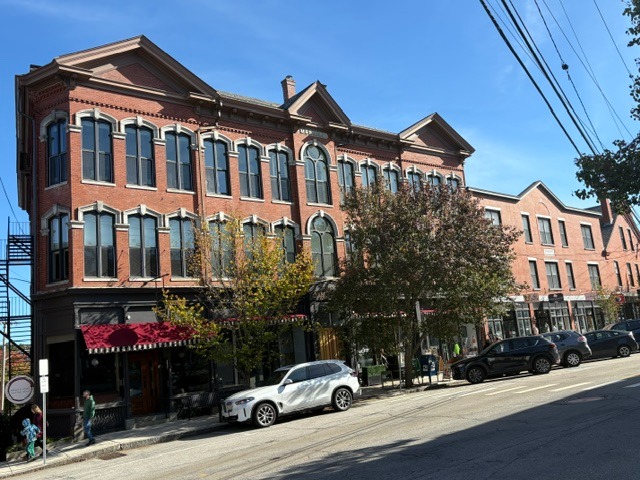
The Merrill Block: An Exeter Apothecary
The Merrill Block on Water Street preserves a chapter of Exeter’s history shaped by local enterprise, medicine and everyday commerce. Dating to the early 1870s, the substantial brick building is recognized in the town’s Waterfront Commercial Historic District nomination as one of its outstanding commercial buildings. Its name remains prominently displayed above the street. The […]
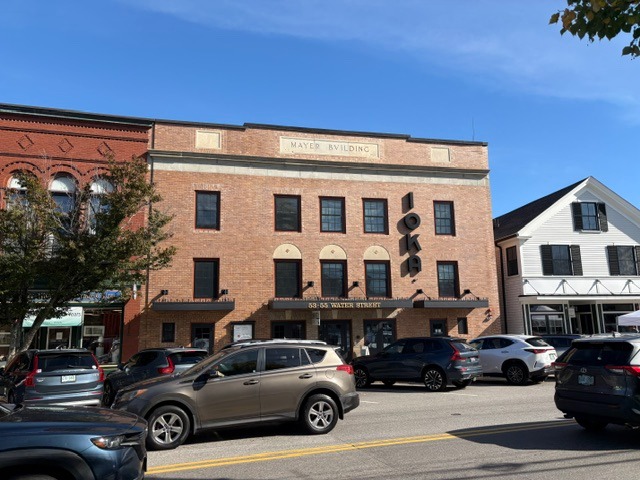
The Ioka Theatre and Mayer Building
The Mayer Building on Water Street preserves the setting of a new form of entertainment that arrived in Exeter during the early twentieth century. Built in 1915 for the Ioka Theatre, it brought a purpose-built moving-picture venue to the commercial heart of town. The building’s name and surviving IOKA lettering recall that original role. Judge […]
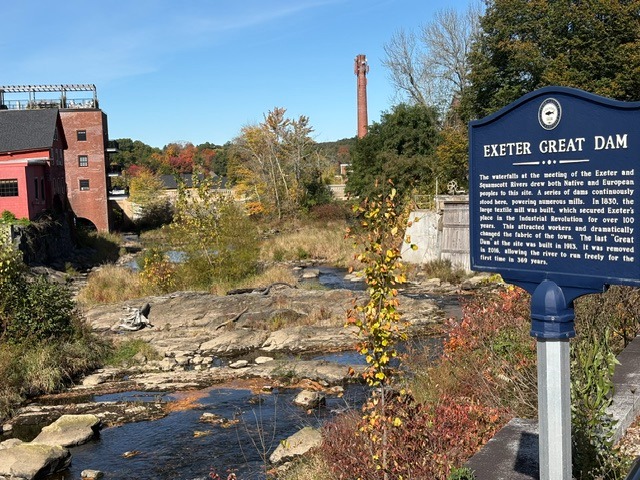
The Great Dam
At the meeting of the freshwater Exeter River and the tidal Squamscott River, a rocky channel marks a place that helped shape the town’s development. For centuries, dams harnessed the river’s power here. The removal of the Great Dam in 2016 opened another chapter, restoring the river’s flow through a landscape long altered for industry. […]

