The Long Block: Housing Exeter’s Mill Workers
At the corner of Franklin and Water streets, the Long Block preserves a residential side of Exeter’s industrial history. Its extended wooden façade, repeated entrances and substantial chimneys distinguish it from a single-family house. Built around 1826 as a four-unit tenement, it provided homes for workers employed in nearby mills.
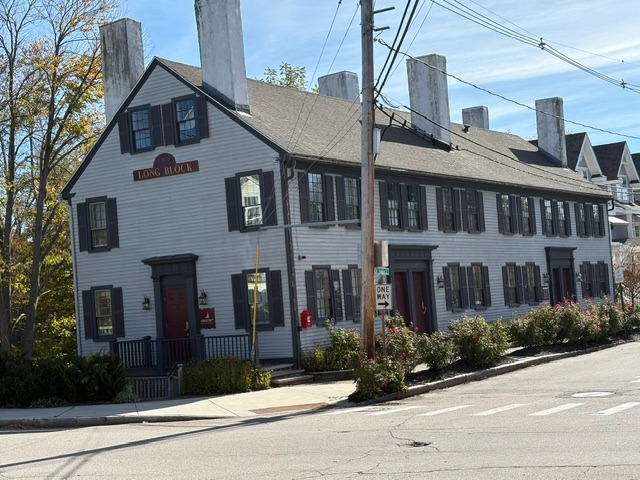
The building occupies the site of an earlier starch factory. Its Federal-style architecture reflects the period when Exeter’s riverfront was developing beyond small workshops into larger manufacturing enterprises. For many years, the Exeter Manufacturing Company owned the property and used it to house mill workers.
Established in 1827, the company constructed its cotton factory between 1828 and 1830. Industrial growth created a need for housing within walking distance of employment. Franklin and South streets offered relatively level land close to downtown and within a quarter-mile of the mill, making this neighborhood a practical location for workers’ residences.
The Long Block helps explain how manufacturing shaped more than Exeter’s workplaces. A factory required a workforce, and that workforce needed somewhere to live. Company ownership connected employment and housing, extending the mill’s influence into the surrounding neighborhood. The building makes that relationship visible at the scale of a home.
Its significance rests in the ordinary lives it accommodated. Alongside Exeter’s prominent merchants’ houses and public buildings, the Long Block preserves evidence of people whose labor sustained the town’s manufacturing economy. It provides a place to tell their part of Exeter’s history, even where the individual stories of its occupants remain less fully documented.
Read More From Nancy
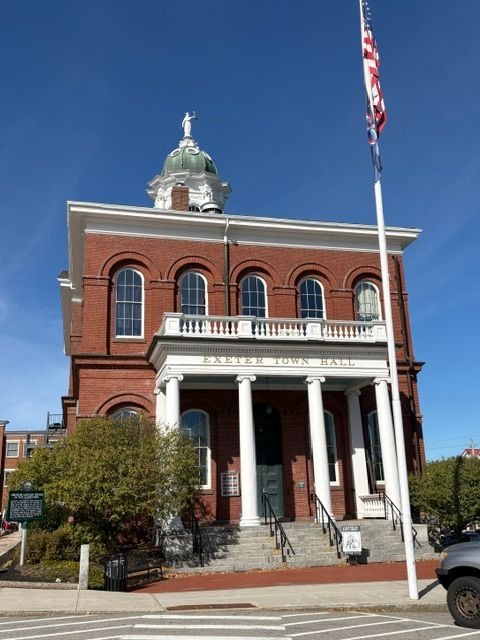
Exeter Town Hall
At the corner of Front and Water Streets, Exeter Town Hall has been a center of public life since 1855. Architect Arthur Gilman designed the red-brick building to accommodate town meetings, court proceedings, and community gatherings. Its prominent location and substantial architecture reflected the importance of these responsibilities within a growing New England town. The […]
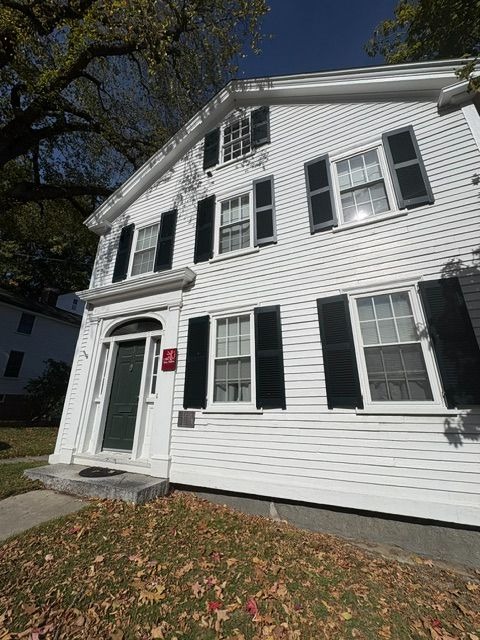
Lewis Cass House
A plaque commemorating Lewis Cass connects this Exeter house with a statesman whose career reached across the expanding United States. Born in Exeter on October 9, 1782, Cass attended Phillips Exeter Academy before leaving New England. He became a territorial governor, cabinet secretary, diplomat, senator, and presidential candidate. Cass established a legal career in Ohio […]
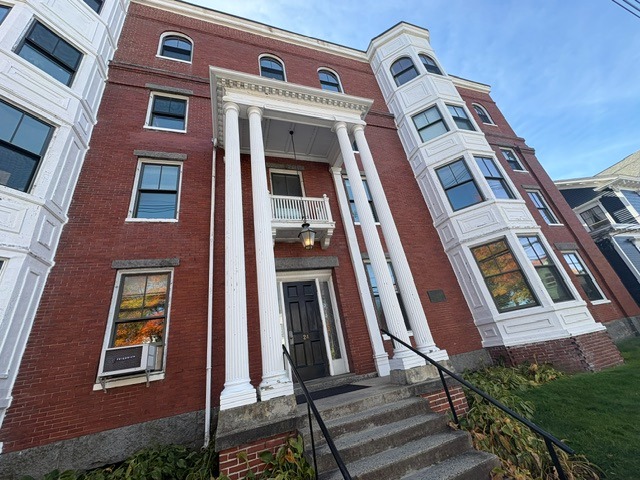
The Squamscott House
The substantial brick building at 24 Front Street has served Exeter as a hotel, student residence and place of political gathering. Known historically as the Squamscott House and later as Gorham Hall, it connects the town with the organizing efforts that preceded the emergence of the Republican Party. The present building dates to 1851. Abraham […]

