New Hampshire’s Revolutionary Capital
The “Revolutionary Capital” marker in downtown Exeter recalls a time when the town became the center of New Hampshire’s emerging government. As royal authority weakened, representatives gathered here to organize resistance, direct military support and establish a government that could function without a British governor.
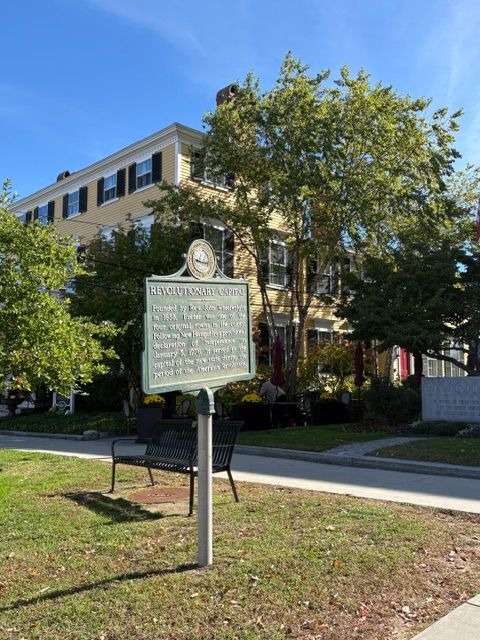
Exeter’s political importance grew in July 1774, when delegates met to discuss the escalating conflict with Britain. The town offered both practical accommodations and an inland location less vulnerable to British naval intimidation than Portsmouth. This gathering, later called the First Provincial Congress, arranged representation at the Continental Congress and established a Committee of Correspondence to exchange information among the colonies.
After fighting began at Lexington and Concord in April 1775, another Provincial Congress assembled in Exeter to organize assistance for Massachusetts. That summer, Royal Governor John Wentworth fled Portsmouth, and the royal Provincial Assembly ceased meeting. The congress in Exeter increasingly assumed responsibility for governing New Hampshire.
On January 5, 1776, delegates meeting in Exeter adopted the first written constitution established by an American colony during the Revolution. It created a House of Representatives and a separate legislative council, providing a framework for public appointments, taxation and military leadership. This step toward self-government preceded the Continental Congress’s Declaration of Independence by six months.
The January constitution also reveals how uncertain the future remained. Its authors described their government as a response to an emergency and expressed hope for an acceptable reconciliation with Britain. They were building institutions to protect public order while the larger question of independence was still unresolved.
Exeter served as New Hampshire’s capital during the Revolution. The marker preserves the significance of decisions made here: resistance required governing institutions as well as soldiers, and this town became a place where colonial opposition developed into the practical work of self-government.
Read More From Nancy
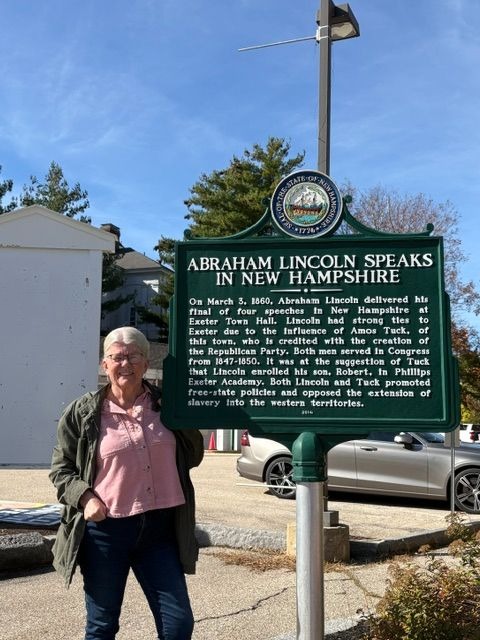
Abraham Lincoln Speaks in New Hampshire
On March 3, 1860, Abraham Lincoln addressed a packed audience at Exeter Town Hall. He was not yet president or his party’s presidential nominee. His appearance came during an eastern speaking tour that brought his arguments about slavery and the nation’s future before new audiences. Exeter was the final stop in a series of four […]
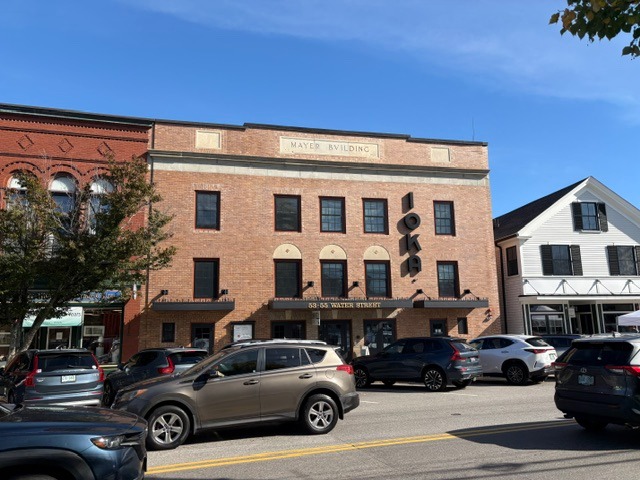
The Ioka Theatre and Mayer Building
The Mayer Building on Water Street preserves the setting of a new form of entertainment that arrived in Exeter during the early twentieth century. Built in 1915 for the Ioka Theatre, it brought a purpose-built moving-picture venue to the commercial heart of town. The building’s name and surviving IOKA lettering recall that original role. Judge […]
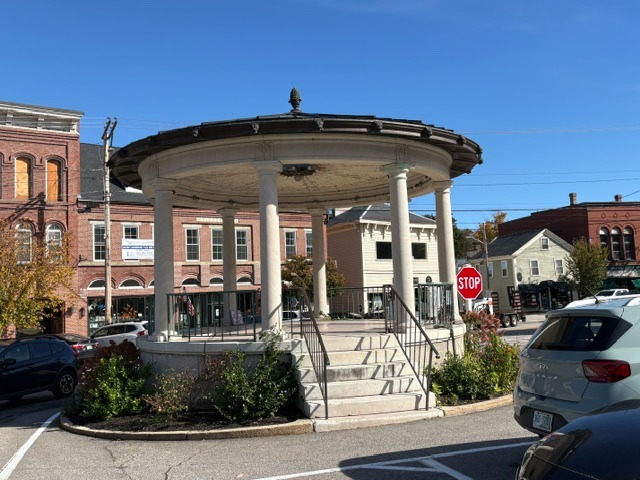
Swasey Pavilion: Exeter’s Bandstand
At the meeting of Front and Water Streets, Swasey Pavilion gives Exeter’s downtown a distinctive gathering place. Commonly called the bandstand, the circular structure was built in the summer of 1916 as a gift from industrialist Ambrose Swasey. Its architect was Henry Bacon, best known for designing the Lincoln Memorial in Washington, D.C. Bacon brought […]

