Exeter’s Black Heritage
Near the entrance to Swasey Parkway, a bronze marker honors Exeter’s early Black community and the Revolutionary War veterans who helped shape it. In the first federal census of 1790, Black residents constituted nearly five percent of Exeter’s population—the highest proportion recorded in any New Hampshire town. Their history connects military service, family life, commerce, religious leadership, and the struggle against slavery.
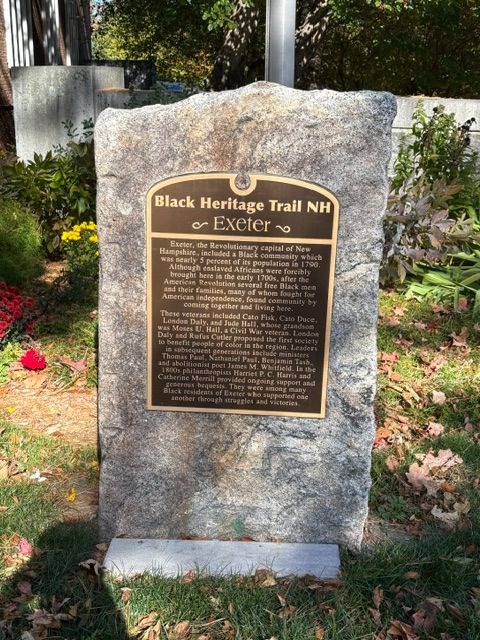
The marker names Cato Fisk, Cato Duce, London Daly, and Jude Hall among the veterans who made Exeter their home. Some had experienced enslavement before serving in the Revolution. Their participation in the fight for American independence existed alongside a continuing struggle for their own freedom and security.
Jude Hall’s life reveals that contradiction. Born into slavery, he served during the Revolutionary War and later established a household in Exeter with his wife, Rhoda Paul. Yet military service and freedom did not protect the family from the dangers of slavery: three of their sons were kidnapped and sold into bondage. Hall’s story places the promise of independence beside the insecurity Black families continued to face.
Exeter’s Black residents built lives through work, education, faith, and mutual support. Merchants operated downtown businesses, and children attended integrated schools. Later generations included ministers and abolitionists whose influence extended beyond the town. Exeter-born poet James Monroe Whitfield became a nationally known voice against slavery.
The marker also recognizes women whose contributions sustained the community. In the 1800s, laundresses Harriet E. Wilson and Catherine Merrill provided ongoing support and financial assistance to people in need. Their inclusion broadens the story beyond prominent public figures to the everyday work of helping neighbors.
Together, these histories restore people and families to Exeter’s familiar streets. The marker presents Black residents as an integral part of the town’s development. Here are people who served, raised children, established businesses, challenged injustice, and supported one another through both hardship and achievement.
Read More From Nancy
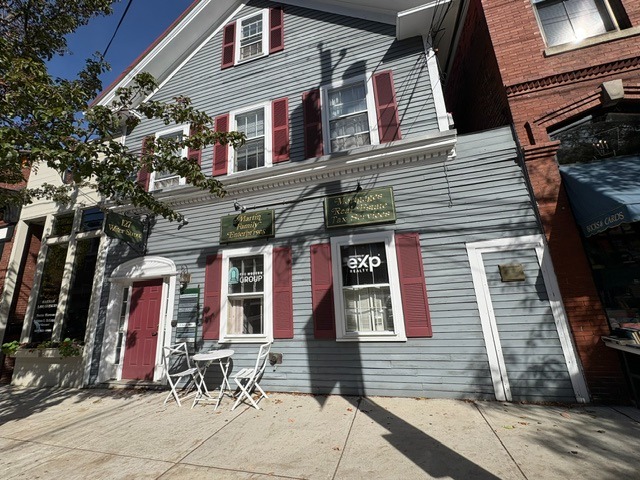
The Cutler and Harris Building
At 127 Water Street, a plaque identifies a building associated with generations of Black business ownership in Exeter. Its history connects the Cutler and Harris families with the shops, restaurants and services that sustained downtown commerce during the nineteenth century. Rufus Cutler, the son of Revolutionary War veteran Tobias Cutler, established businesses on Water Street […]
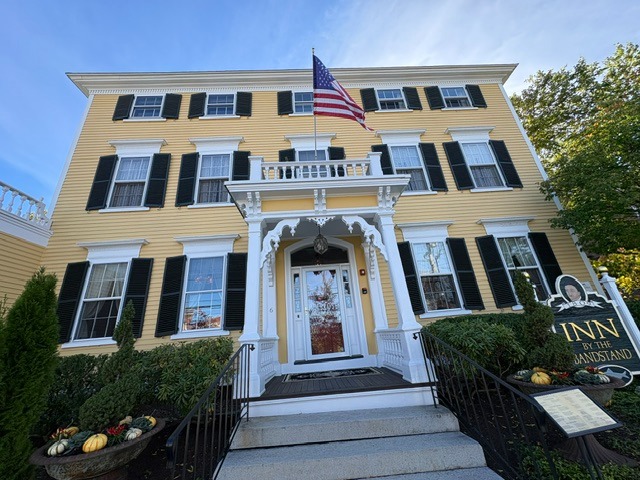
The Sullivan-Sleeper House: Inn by the Bandstand
Built in 1809, the Sullivan-Sleeper House stands on Front Street overlooking Exeter’s town center. Now known as the Inn by the Bandstand, it began as the family home of George Sullivan, a lawyer and statesman. Its three-story Federal-style form belongs to a group of neighboring houses that preserve the scale and character of early nineteenth-century […]
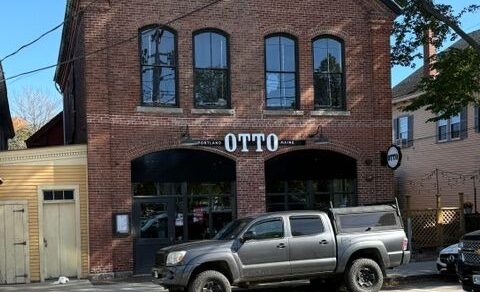
The Eagle Steamer House
The brick Steamer House on Water Street recalls a turning point in Exeter’s firefighting history. Its broad arched entrances, tall upper windows and small rooftop tower distinguish it from neighboring commercial buildings. Behind those entrances once stood equipment purchased to give firefighters greater power against the fires threatening downtown. In 1873, Exeter purchased a steam […]

