Swasey Pavilion: Exeter’s Bandstand
At the meeting of Front and Water Streets, Swasey Pavilion gives Exeter’s downtown a distinctive gathering place. Commonly called the bandstand, the circular structure was built in the summer of 1916 as a gift from industrialist Ambrose Swasey. Its architect was Henry Bacon, best known for designing the Lincoln Memorial in Washington, D.C.
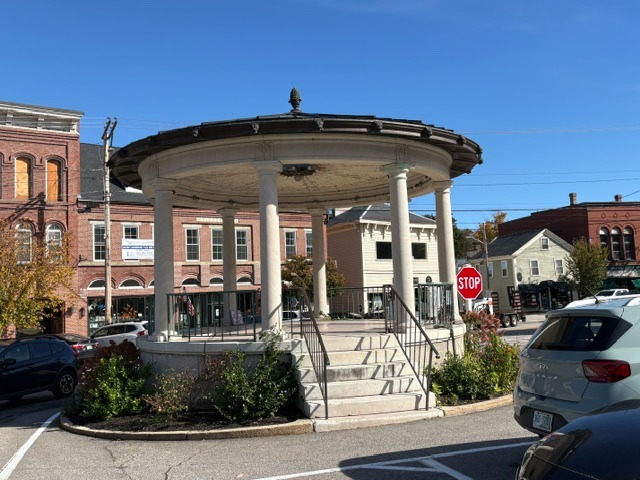
Bacon brought the formality of classical architecture to a small public structure. Slender columns support a broad circular roof above a raised platform, with steps leading toward the performance space. Open on all sides, the pavilion allows music to carry into the surrounding streets while giving musicians a prominent place within the town center.
Swasey’s gift provided a permanent setting for a community tradition. Band concerts brought people together for entertainment, conversation, and an evening in town. The pavilion gave those gatherings an architectural focus, placing public music alongside the shops, streets, and civic buildings of downtown Exeter.
The Exeter Brass Band’s performances became closely associated with the structure. The Historical Society records its summer concerts at the pavilion, continuing the connection between the bandstand and local musical life. Its role has also extended beyond concerts, making it a recognizable focal point for community celebrations.
Swasey Pavilion demonstrates how a relatively small building can shape the identity of a town. Its importance rests in both its design and its shared purpose: a lasting gift that made room for music and public gathering in the heart of Exeter.
Read More From Nancy
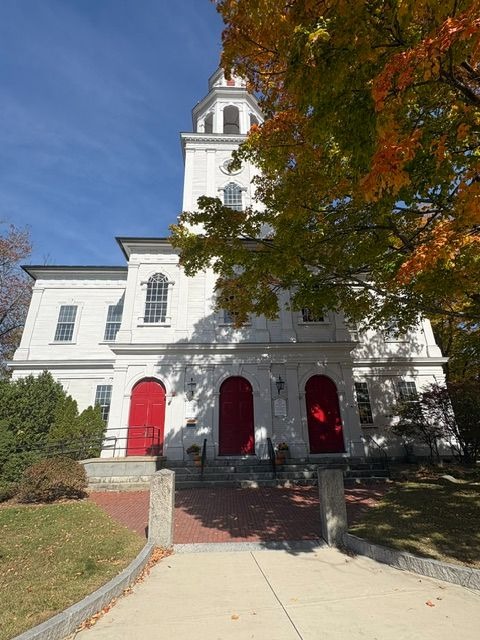
The Congregational Church
The Congregational Church on Front Street traces its beginnings to Exeter’s founding in 1638. Reverend John Wheelwright and his followers established both the congregation and the settlement after his expulsion from Massachusetts Bay Colony. Religious disagreement was therefore part of the community’s history from its beginning. The present meetinghouse dates to the late 1790s and […]
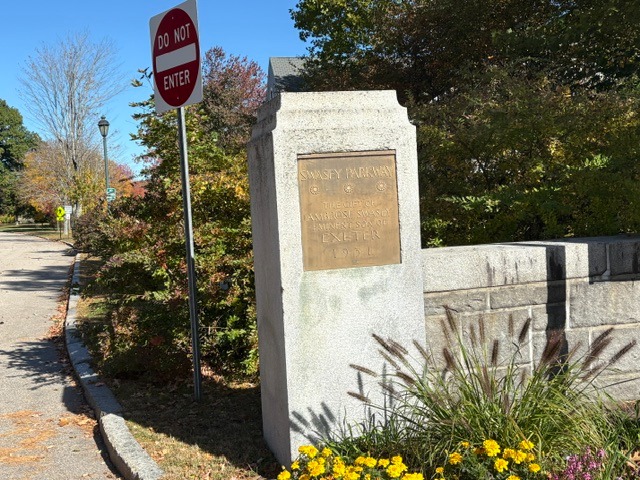
Swasey Parkway
Along the Squamscott River, Swasey Parkway preserves a landscape transformed through one resident’s generosity. Dedicated in November 1931, the parkway was a gift from inventor and industrialist Ambrose Swasey, who wanted to improve Exeter’s waterfront and create a welcoming public space near the town center. This shoreline had once been a working part of Exeter’s […]
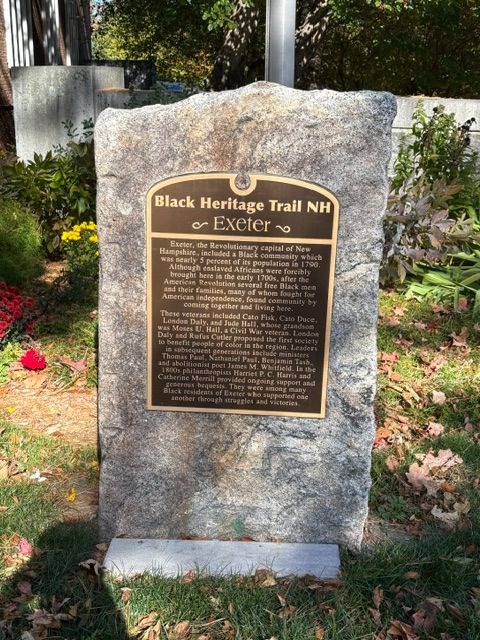
Exeter’s Black Heritage
Near the entrance to Swasey Parkway, a bronze marker honors Exeter’s early Black community and the Revolutionary War veterans who helped shape it. In the first federal census of 1790, Black residents constituted nearly five percent of Exeter’s population—the highest proportion recorded in any New Hampshire town. Their history connects military service, family life, commerce, […]

