Abigail Adams: Wife of a President, Mother of Another
On Boston’s Commonwealth Avenue Mall, Abigail Adams stands beside a granite pedestal, her arms folded and her expression resolute. Part of the Boston Women’s Memorial, her figure honors a woman whose life connected the American Revolution with two generations of presidential leadership. She was the wife of John Adams, the second president of the United States, and the mother of John Quincy Adams, the sixth. Her own contributions reached into the family’s finances, her children’s education, and the political debates of a new nation.
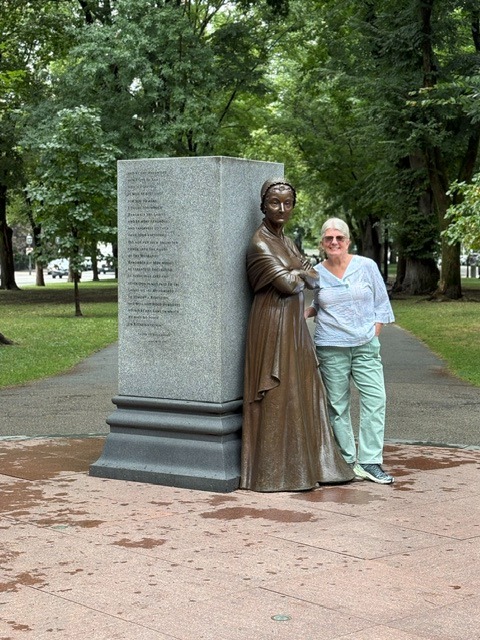
Born Abigail Smith in Weymouth, Massachusetts, in 1744, she grew up in a household that valued religion, reading, and public responsibility. Although she received no formal schooling, she developed an inquisitive mind and a lasting interest in ideas. In 1764, she married John Adams, a young lawyer from nearby Braintree. Their marriage became an enduring intellectual and emotional partnership, sustained through frequent separations by letters that mixed affection, family news, political observations, and candid advice. More than 1,100 letters between them survive.
The responsibilities behind that partnership were substantial. While John traveled for his legal work, attended the Continental Congress, and served overseas, Abigail raised and educated their children, managed the farm, and oversaw household finances and investments. Wartime shortages and uncertainty made these tasks increasingly difficult. Her letters reveal both her resourcefulness and the loneliness of carrying so much responsibility while her husband was away. Their family also experienced profound losses: of their six children, only four reached adulthood.
Abigail followed the Revolution closely and formed her own judgments about its promises. On March 31, 1776, she urged John to “Remember the Ladies” when considering the laws of the emerging nation. She challenged the unchecked authority husbands held over wives and argued for greater protection for women. She also championed women’s education, recognizing that mothers were expected to prepare future citizens while being denied many opportunities to develop their own abilities. Her appeal did not bring the changes she sought, but it preserved a powerful question about who would share in America’s new freedoms.
In 1784, Abigail crossed the Atlantic to join John, entering diplomatic society in France and Britain. When he became president in 1797, she brought years of political knowledge and practical experience to her role. She received guests, maintained important relationships, and offered advice that John actively sought. Her political convictions could also be controversial: she supported the Alien and Sedition Acts, including restrictions directed at hostile newspapers. Her involvement placed her within the arguments and divisions of the early republic. In November 1800, she became the first president’s wife to live in the building now known as the White House.
As a mother, Abigail placed great importance on John Quincy’s education, character, and sense of duty. When he traveled abroad with his father, she continued guiding him through letters, encouraging him to use his opportunities responsibly. She lived to see him become a diplomat, United States senator, and secretary of state. She died on October 28, 1818, seven years before he became president in 1825. Although she never witnessed his inauguration, she had helped shape the person who would take that oath.
Abigail and John’s marriage lasted fifty-four years. Across those decades, she sustained a household through war, participated in an extraordinary political partnership, and guided children whose lives would become part of the nation’s history. Her correspondence preserves the daily work and personal costs behind public achievement. At the Boston memorial, her presence gives recognition to that life, and to a woman whose words remain part of the American conversation.

Read More From Nancy

Massachusetts Veterans War Memorial Tower
Last year we camped near Mount Greylock, and although we have spent so much of our lives exploring New England, this was the first time we made our way to the summit. It was another reminder to me that exploration never really ends. No matter how many places we have visited, there is always another […]
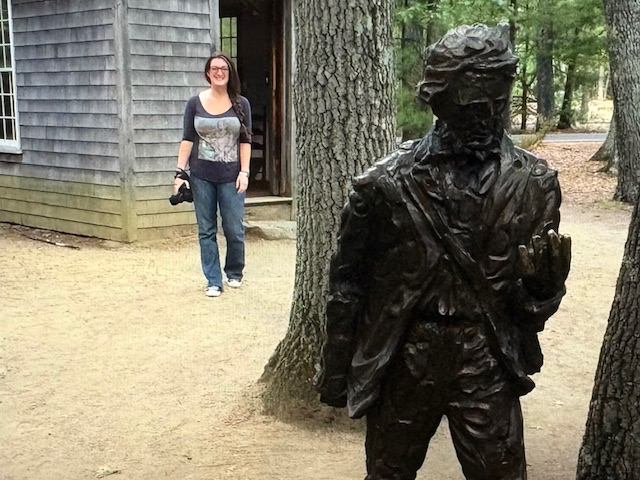
Replica of David Thoreau’s Cabin
Just outside the replica of Henry David Thoreau’s cabin at Walden Pond stands this bronze statue of Thoreau, depicting him much as we might imagine him during his years here. He is simply dressed and seemingly caught in the act of walking through the landscape he observed so carefully. Thoreau came to Walden Pond in […]
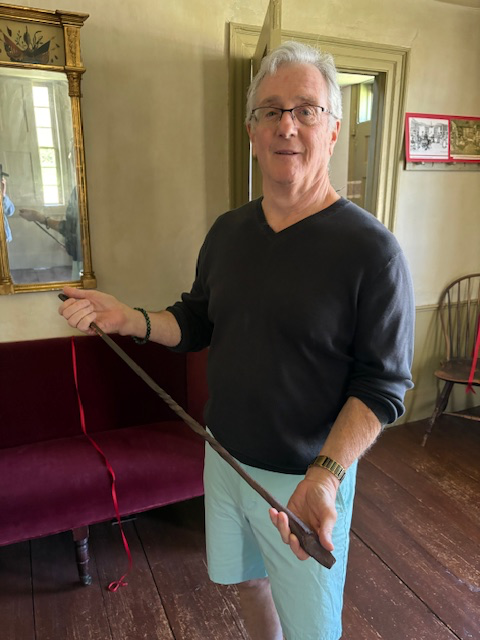
The Flip Dog
When we visited the Golden Ball Tavern in Weston, one of the objects that caught our attention was this long iron implement. At first glance, it doesn’t reveal very much about its purpose. But once we learned how it was used, it provided a wonderful glimpse into everyday tavern life more than two centuries ago. […]

