Thomas Dixson
In November 1776, help for the defenders of Fort Cumberland depended on someone getting beyond the siege. Thomas Dixson and three companions left the fort and made their way to Halifax to alert the authorities and secure reinforcements. Their journey helped change the outcome of an attempt to bring the American Revolution into Nova Scotia.
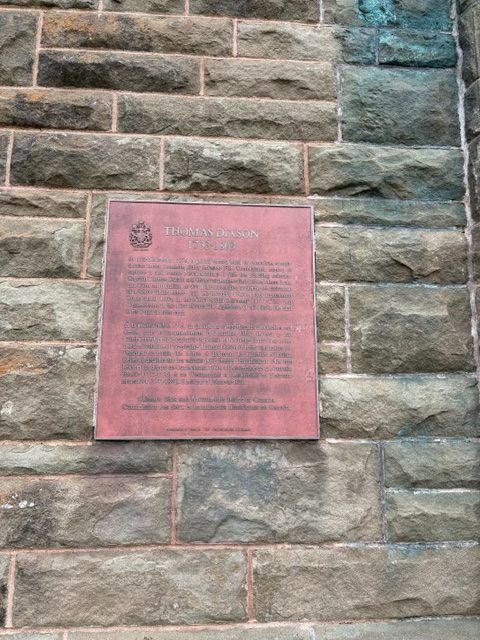
The attacking force was led by Jonathan Eddy, who hoped to capture the fort and encourage the region to join the rebellion against British rule. At that time, the territory that would become New Brunswick was still part of Nova Scotia. The conflict therefore reached into communities whose political loyalties were divided, bringing the revolution close to farms and settlements around the Chignecto Isthmus.
Dixson’s task carried him away from the protection of the garrison. With the fort under pressure, reaching Halifax provided a way to turn an isolated defence into a coordinated response. The reinforcements he helped obtain contributed to lifting the siege and driving off Eddy’s force. The fort remained in British hands.
His public service continued after the fighting. Dixson represented Cumberland Township in the Nova Scotia Assembly and later Westmorland in the New Brunswick Legislature, linking his military role with the political development of the region.
More than a century after his death, his connection to the fort received another expression. On July 24, 1938, his remains were reinterred with full military honours on its former parade ground. The ceremony returned him to the place most closely associated with his remembered achievement.
The plaque at Fort Beauséjour–Fort Cumberland commemorates a contribution made beyond the walls. While others held the garrison, Dixson carried its need for assistance to people who could act. His story shows how the outcome of a siege could depend on a journey as well as a battle.
Read More From Nancy
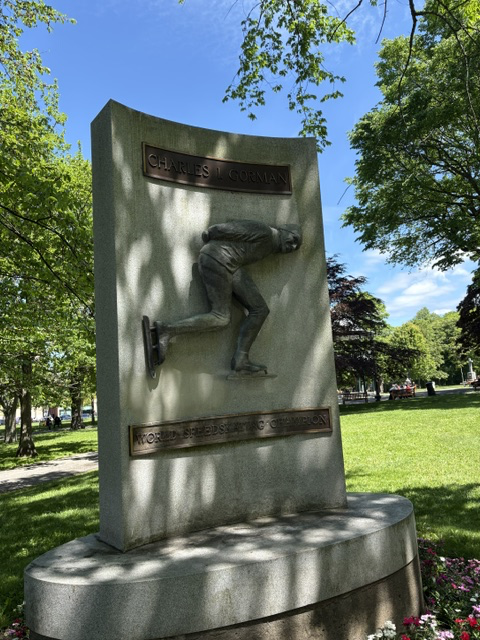
Charles Gorman Memorial
The figure on this monument is not shown standing triumphantly on a podium. Instead, Charles Gorman is captured at the beginning of a race with his body bent forward, one skate braced behind him, and every muscle prepared for the explosive first stride that made him one of the fastest skaters of his generation. Born […]
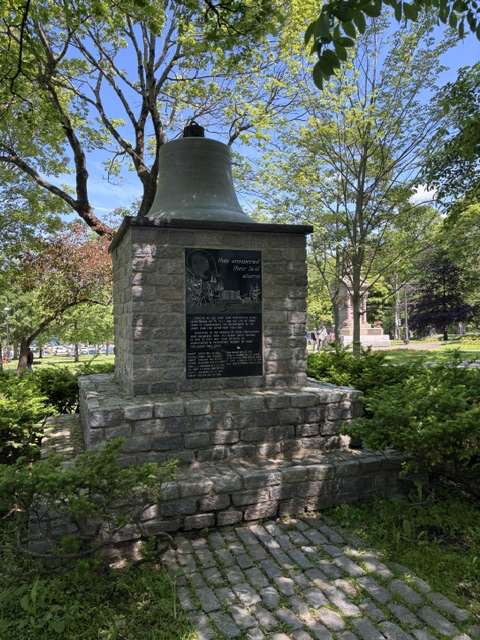
Last Alarm Bell Monument
A large bronze bell stands silently in King’s Square as a memorial to Saint John firefighters who died while serving their community. Known as the Last Alarm Bell Monument, it was erected in 1986 to commemorate the two-hundredth anniversary of the Saint John Fire Department. The department was established in 1786, only one year after […]
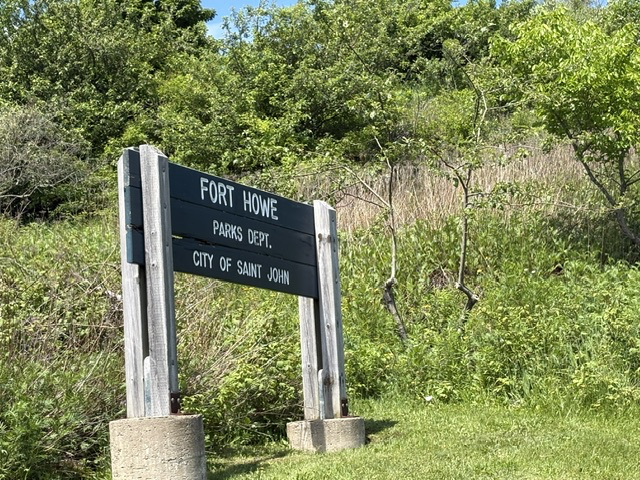
Fort Howe
From its position high above Saint John, Fort Howe once guarded the entrance to the Saint John River and the harbor below. The location offered British soldiers an expansive view of approaching ships and made the ridge a natural place from which to defend the settlement. The fort was constructed in 1777 during the American […]

