Greenock Presbyterian Church
On Montague Street in St. Andrews, Greenock Presbyterian Church preserves a connection between the town’s early religious life and its Scottish heritage. Built between 1821 and 1824 by local builder Donald D. Morrison, the wooden church combines the straightforward form of an American meetinghouse with the classical details of British Palladian architecture. Its entrance, arched windows, and rising tower give distinction to an otherwise restrained, symmetrical building.
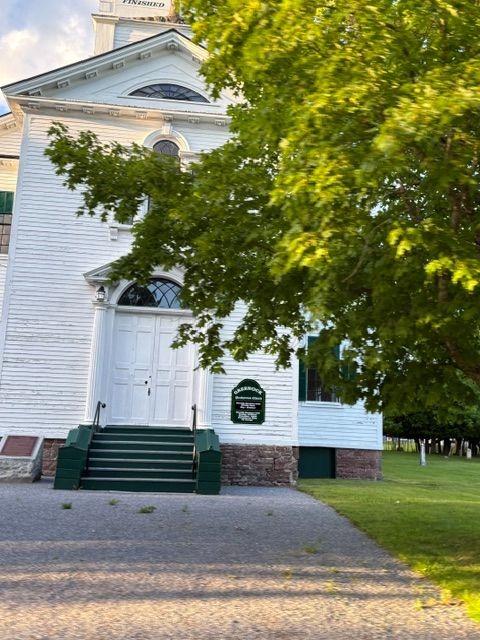
The congregation’s efforts to establish its own church gathered momentum after the arrival of the Reverend John Cassilis from Scotland in 1818. Construction began in 1821, but the available funds were exhausted before the building could be completed. Christopher Scott, a wealthy local resident originally from Greenock, Scotland, provided the support needed to finish it. According to local oral tradition, Scott acted after hearing disparaging remarks about the Presbyterians’ inability to complete their church. Whatever prompted his involvement, his contribution helped create an unusually elaborate place of worship for the community.
The name Greenock reflects Scott’s Scottish hometown. A carved oak tree on the tower reinforces that connection, accompanied by an inscription recording the church’s completion in June 1824. This distinctive emblem gives the building a personal link to its benefactor as well as a visible expression of the congregation’s Scottish roots.
Inside, the church retains important features of its early design, including enclosed box pews, galleries, and an elevated two-tiered pulpit. Bird’s-eye maple and mahogany enrich the interior woodwork. The pulpit, whose upper level reaches the height of the gallery floor, is particularly notable for its craftsmanship. Its prominent position reflects the central importance of preaching in Presbyterian worship.
Greenock Church was designated a National Historic Site of Canada in 1994. Its significance rests both on its architecture and on its role in the growth of Presbyterianism in New Brunswick. Preserved within the historic streets of St. Andrews, it records the determination of an early congregation, the influence of Scottish traditions, and the skill of the craftspeople who gave those aspirations lasting form.
Read More From Nancy
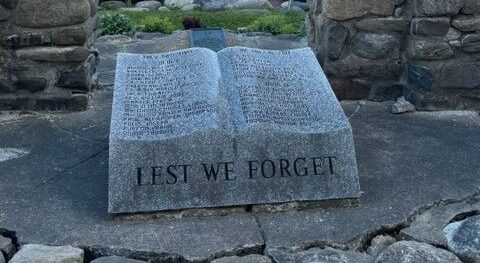
The War Memorial
At Market Square on the St. Andrews waterfront, a rough stone arch shelters a granite memorial carved in the shape of an open book. A lantern hangs beneath the arch, while the book’s pages carry the names of people from the community who died in war. Across its base, the words “LEST WE FORGET” state […]
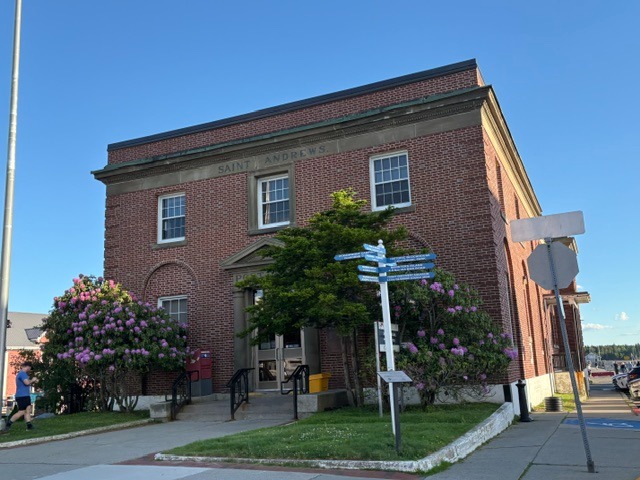
The Post Office and Customs Building
Overlooking Market Square near the waterfront, the St. Andrews Federal Building was constructed in 1936 to accommodate the town’s post office and customs services. Bringing these functions together placed two important connections with the wider world under one roof: the movement of correspondence and the regulation of goods entering the country. Its prominent location made […]
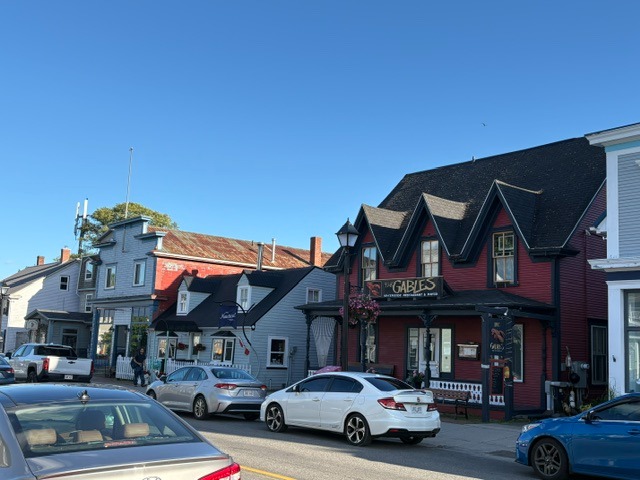
Water Street
Running parallel to the harbour, Water Street developed as the commercial centre of St. Andrews. Its closely spaced wooden buildings recall a town where merchants, shopkeepers and travellers depended on the movement of goods and people through Passamaquoddy Bay. Within the orderly street grid established after the Loyalists arrived in 1783, the waterfront road became […]

