Windsor House
At 132 Water Street in St. Andrews, Windsor House preserves the story of a Loyalist family home that later became a place of hospitality. Built in 1797 for Captain David Mowat and his wife, Mehitable Calef, the wooden house dates from the town’s early development. Its balanced façade, central entrance and side-gabled roof reflect the Georgian architecture brought to the community by its first generations of settlers.
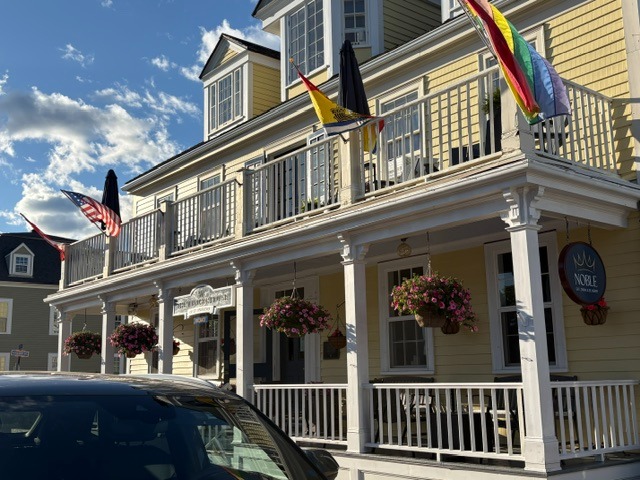
David Mowat was a master mariner, shipowner and member of the Legislative Assembly for Charlotte County. His life connected the household to the maritime trade and public affairs of the growing town. In 1810, he died in a shipwreck during a storm off the coast of Maine. Mehitable remained in the house for another fifty years, until her death in 1860.
A story preserved in local heritage accounts recalls Mehitable’s assistance to a struggling family. Learning that a mother was digging clams to feed eight children while her husband was away in England, she brought food and arranged for the family to stay in her home. They remained for six months until the father returned. Among the children was Oliver Goldsmith, who later became the first Canadian-born author to publish a book of poetry. The account gives Windsor House a connection to both community generosity and early Canadian literature.
The property remained with the Mowat family until 1873, when it entered a new chapter as Morrison’s Hotel. In 1903, H. A. DeLong purchased the building and operated it under the Windsor House name. Its years as a hotel continued until 1940, linking the former family residence with St. Andrews’ development as a seaside destination.
An extensive restoration in the 1990s renewed the interior and exterior. The surviving house retains its two-and-a-half-storey form, symmetrical arrangement of windows and distinctive upper and lower verandas. These features preserve the character of a building that accommodated family life and generations of travellers along Water Street.
Read More From Nancy
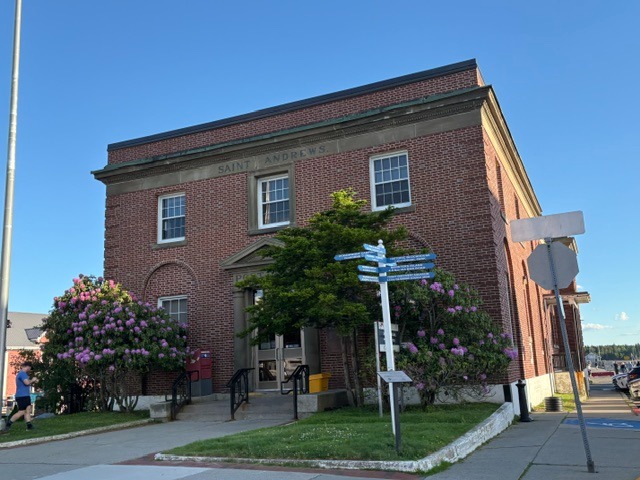
The Post Office and Customs Building
Overlooking Market Square near the waterfront, the St. Andrews Federal Building was constructed in 1936 to accommodate the town’s post office and customs services. Bringing these functions together placed two important connections with the wider world under one roof: the movement of correspondence and the regulation of goods entering the country. Its prominent location made […]
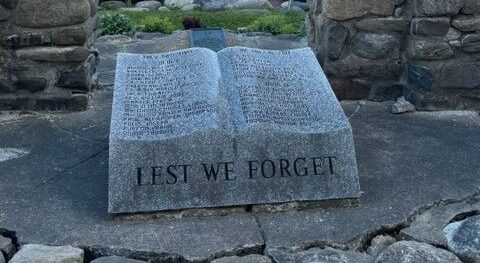
The War Memorial
At Market Square on the St. Andrews waterfront, a rough stone arch shelters a granite memorial carved in the shape of an open book. A lantern hangs beneath the arch, while the book’s pages carry the names of people from the community who died in war. Across its base, the words “LEST WE FORGET” state […]
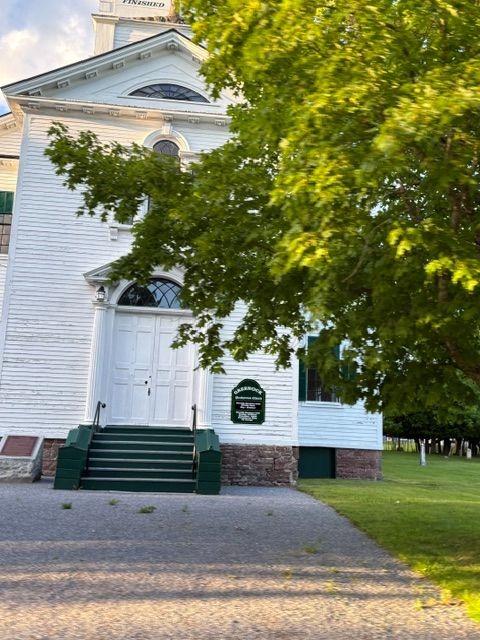
Greenock Presbyterian Church
On Montague Street in St. Andrews, Greenock Presbyterian Church preserves a connection between the town’s early religious life and its Scottish heritage. Built between 1821 and 1824 by local builder Donald D. Morrison, the wooden church combines the straightforward form of an American meetinghouse with the classical details of British Palladian architecture. Its entrance, arched […]

