Water Street
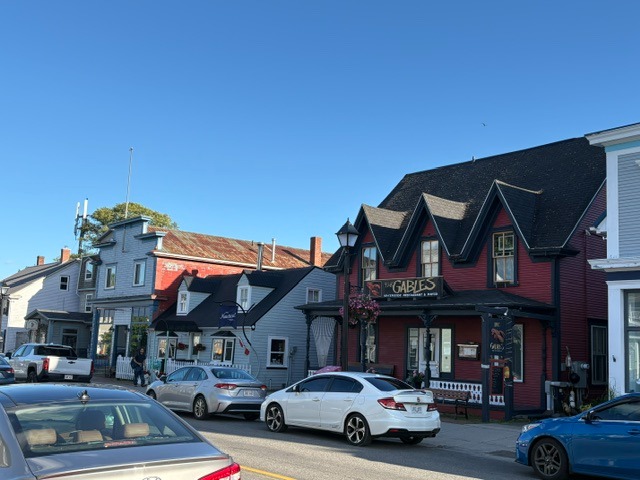
Running parallel to the harbour, Water Street developed as the commercial centre of St. Andrews. Its closely spaced wooden buildings recall a town where merchants, shopkeepers and travellers depended on the movement of goods and people through Passamaquoddy Bay. Within the orderly street grid established after the Loyalists arrived in 1783, the waterfront road became a place of concentrated business activity.
The harbour connected local commerce with distant ports. Nineteenth-century merchants imported provisions, household supplies and goods for resale while exporting products through maritime trading networks. One Water Street firm, Street & Company, handled an assortment that included tea, sugar, tobacco, soap, candles, spirits and gunpowder. Such inventories show how a coastal merchant’s business supplied many different needs within the same community.
The street’s architecture reflects that practical commercial life. Buildings stand close to the sidewalk, with entrances and display windows opening directly onto the route through town. Upper floors provided additional space within compact properties. Clapboard walls, pitched roofs and varied dormers give the streetscape its individual character, while the generally modest building heights preserve a consistent scale. These relationships between buildings, lots and streets are among the features recognized in the town’s National Historic Site designation.
Water Street also accommodated changes in the town’s economy and social life. Buildings that began with one commercial purpose could take on another as businesses and customers changed. The Street Building, for example, became associated with entertainment, including the introduction of films with sound in 1934. The commercial district evolved within existing structures, adding new uses to a streetscape rooted in the town’s earlier maritime economy.
The importance of Water Street lies in the collection as much as in any single building. Its narrow commercial lots, varied rooflines and buildings set close together preserve the physical organization of a historic main street. Walking its length reveals how trade, architecture and daily activity combined to shape the public face of St. Andrews.

Read More From Nancy
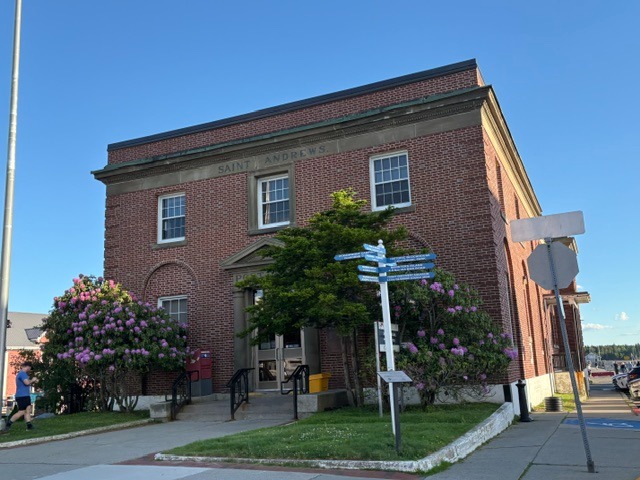
The Post Office and Customs Building
Overlooking Market Square near the waterfront, the St. Andrews Federal Building was constructed in 1936 to accommodate the town’s post office and customs services. Bringing these functions together placed two important connections with the wider world under one roof: the movement of correspondence and the regulation of goods entering the country. Its prominent location made […]
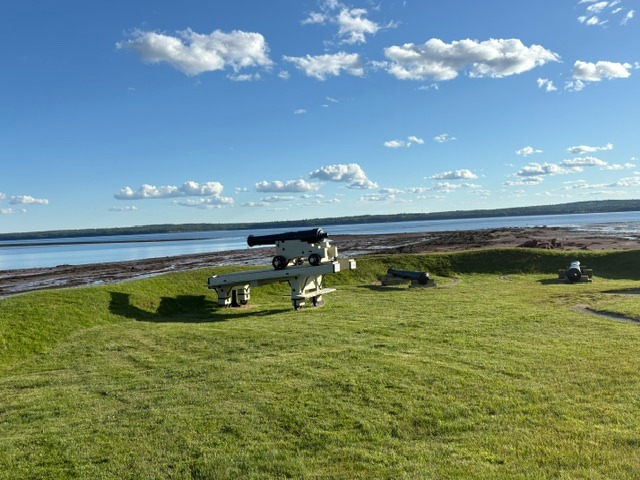
The Shoreline Battery
On the waterfront at St. Andrews, a cannon mounted on a wooden carriage faces the waters of Passamaquoddy Bay. Its position recalls the shoreline battery established during the War of 1812, when residents feared that armed vessels might approach the harbour. Here, the water that supported the town’s commerce also offered a route by which […]
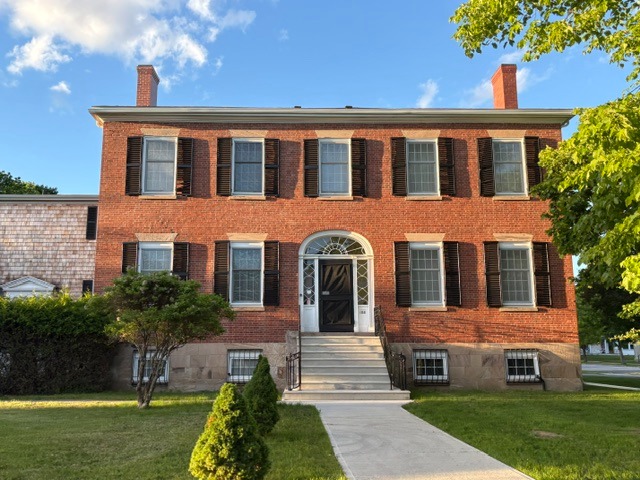
Chestnut Hall and the Ross Memorial Museum
Built in 1824, Chestnut Hall has served as a private residence, a center for regional crafts, and a museum. The red-brick house on Montague Street was constructed for Harris Hatch, an attorney and prominent Charlotte County resident. Its symmetrical windows, dark shutters, and central entrance reflect its classical design. A patterned fanlight and sidelights surround […]

