The Shoreline Battery
On the waterfront at St. Andrews, a cannon mounted on a wooden carriage faces the waters of Passamaquoddy Bay. Its position recalls the shoreline battery established during the War of 1812, when residents feared that armed vessels might approach the harbour. Here, the water that supported the town’s commerce also offered a route by which an enemy could reach it.
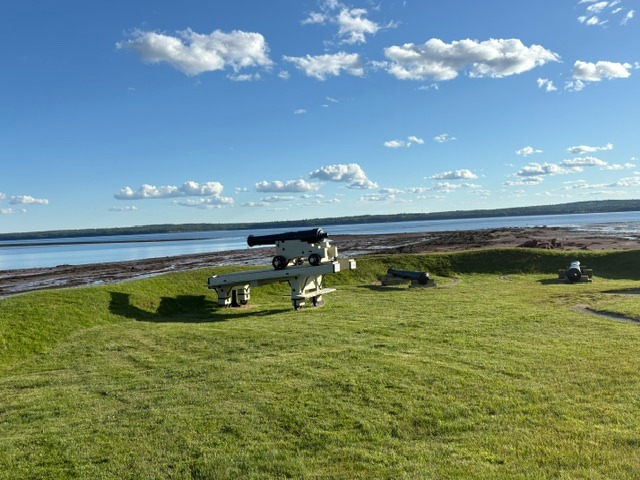
When war began between Britain and the United States in June 1812, St. Andrews occupied a vulnerable position near the international border. Local concerns centred particularly on American privateers, privately owned armed vessels authorized to act against enemy shipping. According to Parks Canada, residents feared raiders from farther south more than their nearby New England neighbours, with whom they maintained trading relationships. Townspeople raised money to construct defensive batteries at the eastern and western ends of the community.
The western battery was equipped with three 18-pounder guns and later two 9-pounders. These names referred to the weight of the solid iron shot they fired. The larger guns could reach toward Navy Island, placing artillery between an approaching vessel and the town’s waterfront. Their purpose was to make a seaborne raid more difficult and costly.
The carriage was an essential part of the weapon. It supported the heavy barrel and allowed the gun to be positioned for firing. The long wooden mounting beneath the displayed cannon makes that practical requirement visible: coastal artillery needed both a powerful gun and a stable platform from which its crew could aim it toward the harbour.
The battery’s setting explains its defensive role. Open views across the bay allowed approaching vessels to be observed, while guns directed seaward guarded the town from the shore. The cannon preserves a connection to that effort, when a community dependent on maritime trade took responsibility for protecting the waters on which its livelihood depended.
Read More From Nancy

The War Memorial
At Market Square on the St. Andrews waterfront, a rough stone arch shelters a granite memorial carved in the shape of an open book. A lantern hangs beneath the arch, while the book’s pages carry the names of people from the community who died in war. Across its base, the words “LEST WE FORGET” state […]
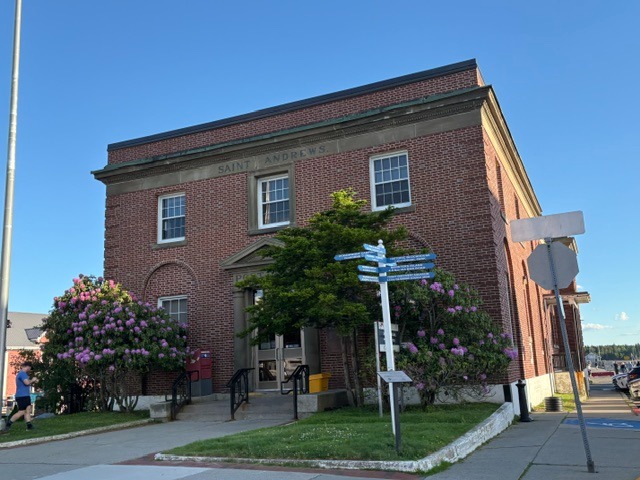
The Post Office and Customs Building
Overlooking Market Square near the waterfront, the St. Andrews Federal Building was constructed in 1936 to accommodate the town’s post office and customs services. Bringing these functions together placed two important connections with the wider world under one roof: the movement of correspondence and the regulation of goods entering the country. Its prominent location made […]
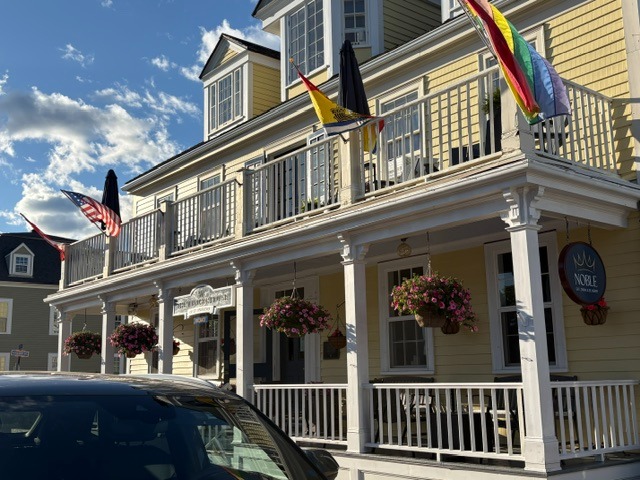
Windsor House
At 132 Water Street in St. Andrews, Windsor House preserves the story of a Loyalist family home that later became a place of hospitality. Built in 1797 for Captain David Mowat and his wife, Mehitable Calef, the wooden house dates from the town’s early development. Its balanced façade, central entrance and side-gabled roof reflect the […]

