The Post Office and Customs Building
Overlooking Market Square near the waterfront, the St. Andrews Federal Building was constructed in 1936 to accommodate the town’s post office and customs services. Bringing these functions together placed two important connections with the wider world under one roof: the movement of correspondence and the regulation of goods entering the country. Its prominent location made the building part of the daily activity of the town’s commercial centre.
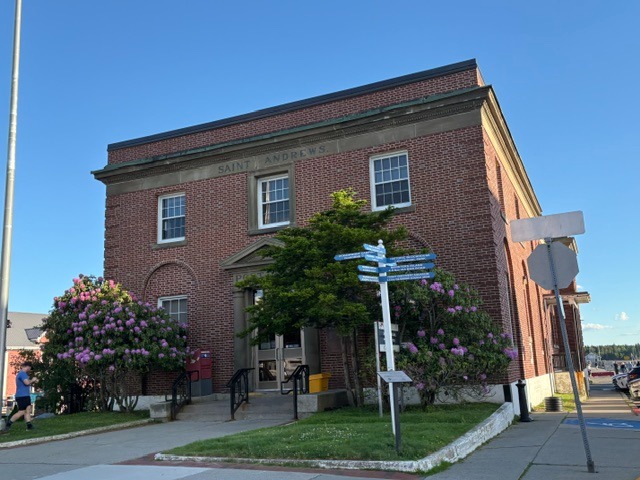
Customs administration had particular importance in St. Andrews. The town’s history as a seaport, together with its proximity to the United States, made the inspection of goods and collection of duties an established part of local government work. Long before this building appeared, customs officials served a community whose merchants depended on trade beyond New Brunswick. The new federal offices continued that administrative role in a town increasingly associated with summer visitors and seaside holidays.
The building expresses its public purpose through a restrained, orderly design. Red brick walls are accented by pale stone, while evenly spaced windows give the two-storey structure a balanced appearance. A triangular pediment marks the main entrance, and the town’s name is carved into the stone band above the upper windows. Shallow brick arches add detail to the lower walls without overwhelming the broad surfaces.
On the waterfront side, the word “CUSTOMS” remains above a separate entrance. Together with the town’s name on the principal façade, this surviving inscription makes the building’s original role unusually clear. Its architecture preserves the presence of federal services at the meeting point between the town’s streets, market square and harbour.
Read More
Read More From Nancy
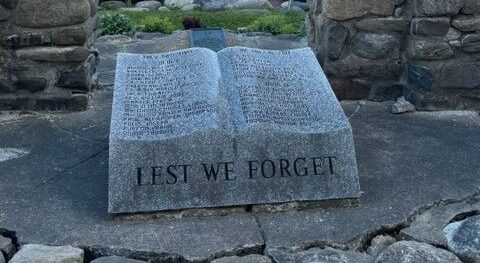
The War Memorial
At Market Square on the St. Andrews waterfront, a rough stone arch shelters a granite memorial carved in the shape of an open book. A lantern hangs beneath the arch, while the book’s pages carry the names of people from the community who died in war. Across its base, the words “LEST WE FORGET” state […]
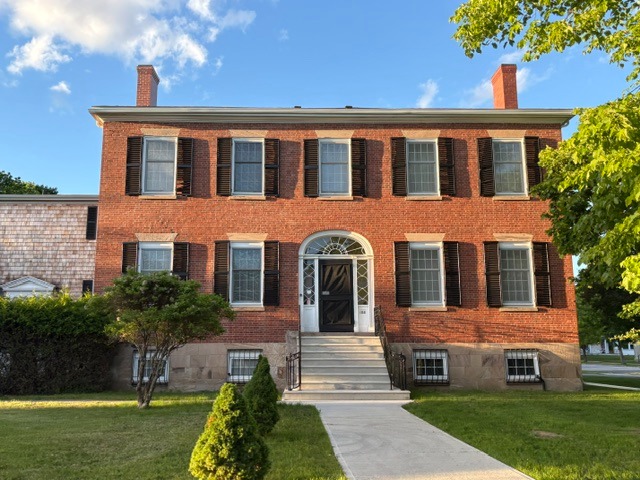
Chestnut Hall and the Ross Memorial Museum
Built in 1824, Chestnut Hall has served as a private residence, a center for regional crafts, and a museum. The red-brick house on Montague Street was constructed for Harris Hatch, an attorney and prominent Charlotte County resident. Its symmetrical windows, dark shutters, and central entrance reflect its classical design. A patterned fanlight and sidelights surround […]
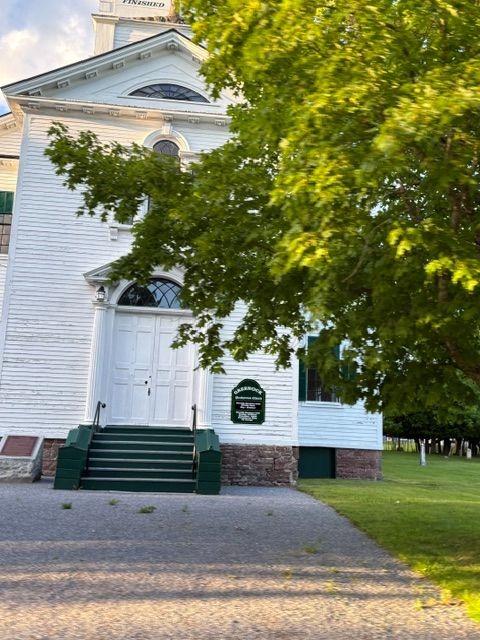
Greenock Presbyterian Church
On Montague Street in St. Andrews, Greenock Presbyterian Church preserves a connection between the town’s early religious life and its Scottish heritage. Built between 1821 and 1824 by local builder Donald D. Morrison, the wooden church combines the straightforward form of an American meetinghouse with the classical details of British Palladian architecture. Its entrance, arched […]

