The Imperial Oil Building
At the corner of Duke and Upper Water Streets, the Imperial Oil Building records a twentieth-century chapter in Halifax’s waterfront commerce. Completed in 1926, the two-storey brick building provided office space for Imperial Oil Limited. The company’s name, carved above the central entrance, preserves its original identity.
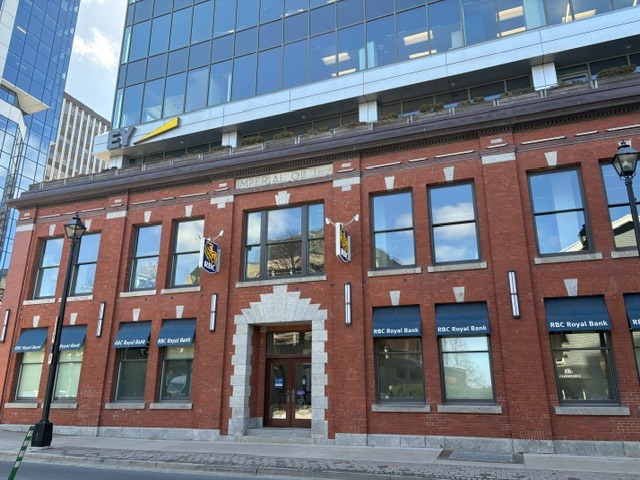
The property’s history reaches further back. It was once the site of the Pontac Inn, a well-known gathering place frequented by prominent members of Halifax society during the city’s early years. The inn is believed to have been partly destroyed by fire in 1830, followed by rebuilding and later changes in use. Imperial Oil purchased the property in 1925, demolished the wooden building then standing there, and commissioned the brick offices that survive today.
The new building served as the company’s regional marketing offices. Its location connected Imperial Oil’s administrative work with a waterfront long associated with shipping and trade. The company remained here until 1954, after which the premises accommodated shipping firms and consulates. These successive occupants continued the building’s connection with businesses and organizations operating beyond Nova Scotia.
The building’s red brick exterior reflects the practical character of its original use as company offices. A granite foundation anchors the structure, while evenly arranged windows and projecting brick columns give the façade a balanced appearance. Pale stonework draws attention to the central doorway, and a decorative cornice runs along the roofline.
Above the entrance, the Imperial Oil name preserves the building’s original identity. It remains a visible reminder of the company’s presence on Halifax’s waterfront and the decades when these rooms housed its regional operations.
Read More From Nancy
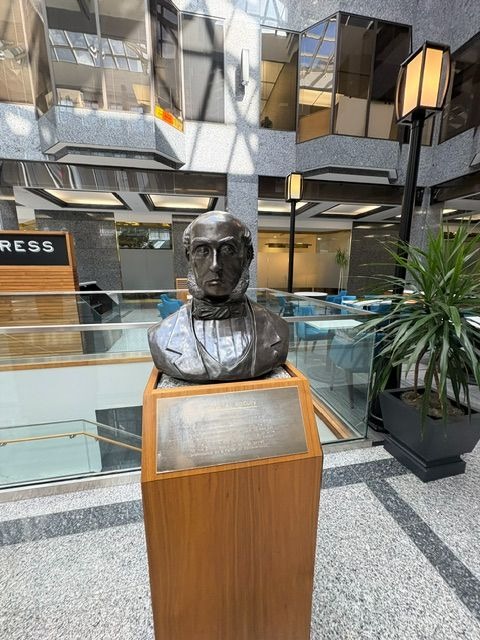
Jonathan McCully
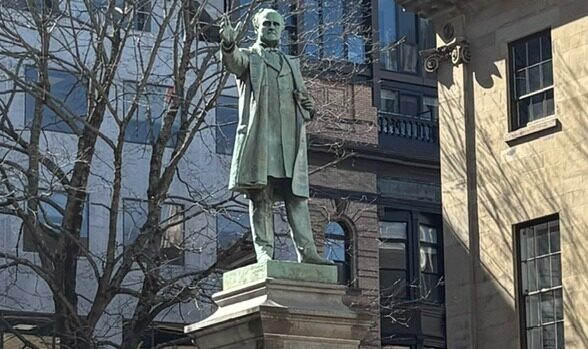
A portrait bust in Halifax’s Founders Square commemorates Jonathan McCully, a lawyer, newspaper editor and political leader remembered as one of Canada’s Fathers of Confederation. Born in Cumberland County, Nova Scotia, in 1809, McCully practised law in Amherst before entering provincial politics. Appointed to the Legislative Council in 1848, he later served as solicitor general […]

Sitamuk Kjipuktuk Cultural Post
On Halifax’s waterfront, the Sitamuk Kjipuktuk Cultural Post provides a place for Mi’kmaw and other Indigenous artists to share and sell their work. Developed by the Mi’kmaw Native Friendship Centre as a social enterprise, the post connects cultural expression with economic opportunity, bringing Indigenous art and craftsmanship into one of the city’s most visited public […]
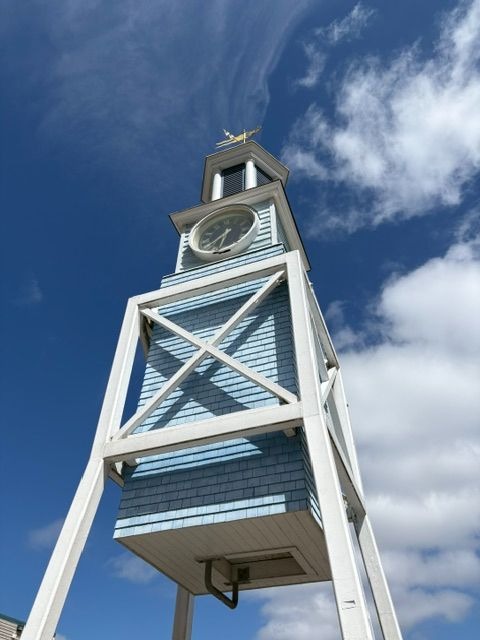
The Dockyard Clock
At Chebucto Landing on Halifax’s waterfront, the Dockyard Clock stands above the boardwalk in a blue-shingled tower supported by an open framework. Its public setting is relatively recent, but the timepiece dates to 1767. Made in London, England, it was installed in Halifax’s naval dockyard in 1772, where it served generations of sailors and civilian […]

