St. Mary’s Cathedral Basilica
On Spring Garden Road near its intersection with Barrington Street, St. Mary’s Cathedral Basilica rises directly from the streetline, its granite spire overlooking downtown Halifax. The three entranceways, pointed arches and elaborate stone tracery make it a prominent example of Gothic Revival architecture. Its construction and later expansion also reflect the growing presence and standing of Nova Scotia’s Roman Catholic community during the nineteenth century.
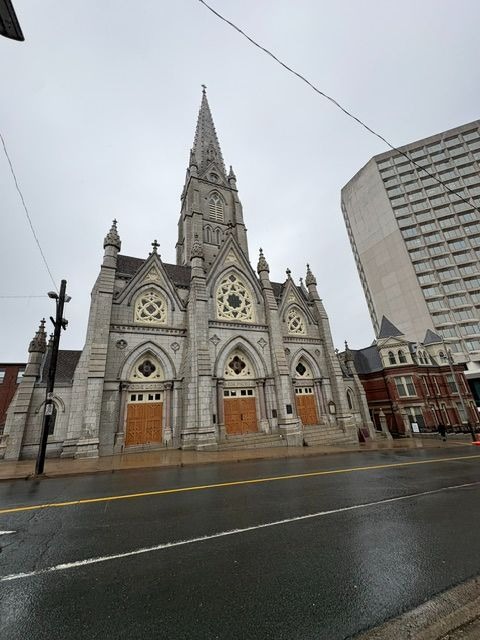
The cornerstone was laid on June 29, 1820, following the initiative of Bishop Edmund Burke. Built of ironstone with freestone trim, the church replaced the small wooden St. Peter’s Church that had served Halifax’s Catholics since 1784. The first Mass in the completed stone building took place in November 1829. Initially retaining the name St. Peter’s, it became St. Mary’s Cathedral in 1833.
Much of its familiar appearance came from a major expansion undertaken between 1860 and 1874 under Archbishop Thomas Connolly, with designs by Irish-American architect Patrick C. Keely. The work enlarged the church and introduced the richly detailed façade and central spire. Polished granite columns imported from Aberdeen, Scotland, added contrasting colour and texture to the entrance. The spire was completed on September 7, 1874, when a cross was placed at its summit, reaching 189 feet above the sidewalk.
The façade gives architectural expression to that period of growth. Three gabled sections frame the entrances, with circular tracery windows above them. Pinnacles, carved details and the tall central tower draw the eye upward, while the substantial stonework anchors the building at street level. The expansion transformed the earlier church into an imposing cathedral intended to serve a larger and increasingly established diocese.
St. Mary’s received the title of basilica in 1950 and was designated a National Historic Site in 1997. That designation recognizes both its architectural importance and its connection to the advancement of Roman Catholics’ legal and social standing in Nova Scotia and Canada. Its surviving structure records successive generations of building, enlargement and religious life across two centuries.
Read More From Nancy
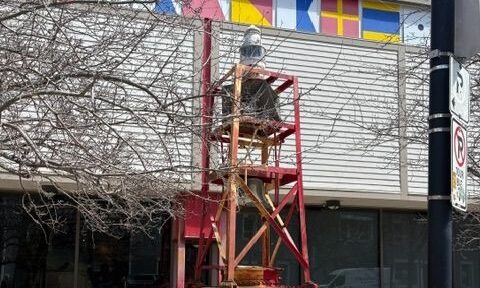
The Bell Buoy
Outside the Maritime Museum of the Atlantic, a weathered red bell buoy represents an essential part of navigation at sea. Its broad metal float supported a framework carrying a bell and a light, combining a visible marker with an audible signal. Equipment like this helped mariners recognize navigational markers when darkness or fog made the […]
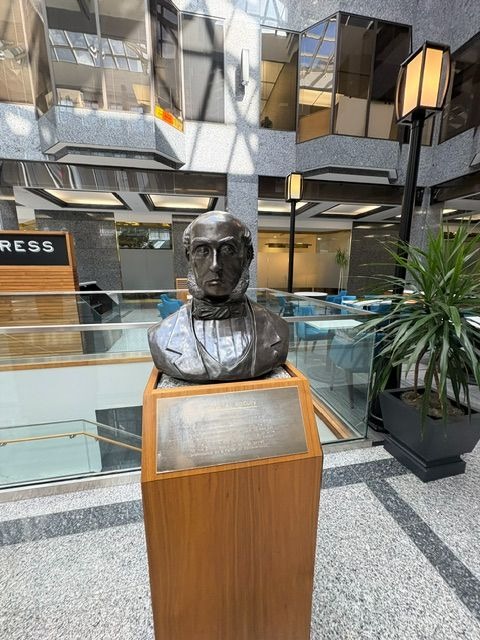
Jonathan McCully
A portrait bust in Halifax’s Founders Square commemorates Jonathan McCully, a lawyer, newspaper editor and political leader remembered as one of Canada’s Fathers of Confederation. Born in Cumberland County, Nova Scotia, in 1809, McCully practised law in Amherst before entering provincial politics. Appointed to the Legislative Council in 1848, he later served as solicitor general […]
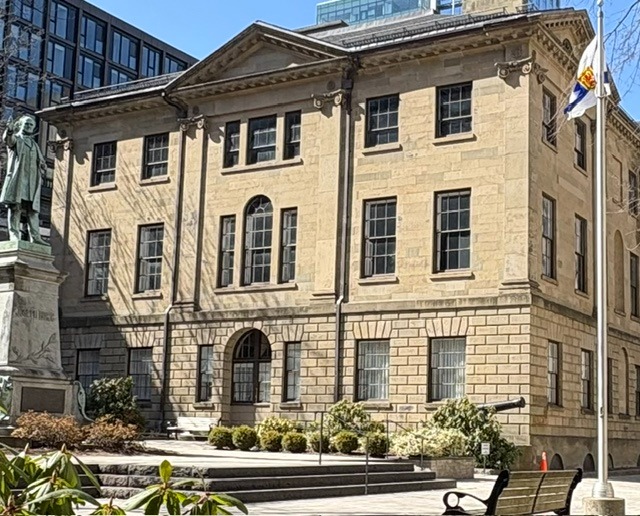
Province House
Province House has been the home of Nova Scotia’s legislature since its official opening on February 11, 1819. As Canada’s oldest legislative building, it preserves more than two centuries of parliamentary history within a structure still serving its original purpose. Its construction gave the province’s elected Assembly a permanent home after decades in temporary accommodations. […]

