The Shepherd Gate Clock
At first glance, the Shepherd Gate Clock looks familiar: a round face, Roman numerals, and hands marking the time. Look more closely, however, and the dial reveals twenty-four hours instead of twelve. The hour hand makes just one complete circuit each day, pointing downward at noon and upward at midnight.
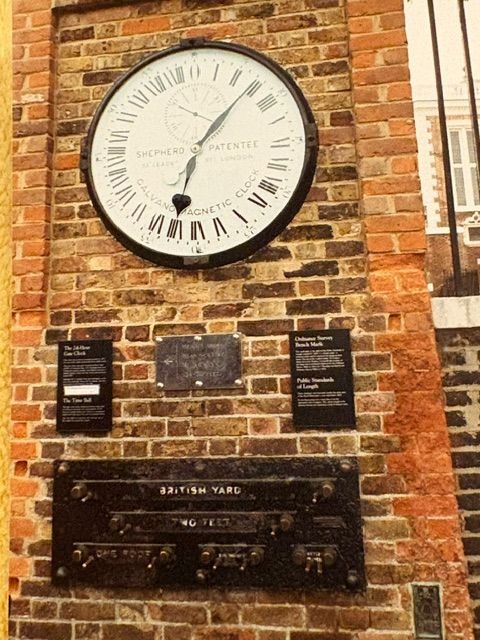
Installed outside the Royal Observatory in 1852, this clock brought Greenwich Mean Time directly to the public. Anyone passing the gate could consult the Observatory’s time without entering the building. In an era when an accurate personal watch was far from universal, that was a useful public service.
The clock was part of an innovative electrical system developed by Charles Shepherd. A central clock inside the Observatory sent electrical impulses to connected clocks, keeping their displays synchronized. The gate clock was one of these dependent instruments, displaying the time maintained by the master clock rather than keeping time independently.
Astronomer Royal George Biddell Airy recognized the possibilities after Shepherd demonstrated a connected clock system at the Great Exhibition of 1851. He commissioned a system for the Observatory the following year. Its reach extended beyond the gate: it controlled other clocks, operated the Greenwich time ball, and transmitted time signals along railway telegraph lines. Accurate time could now be distributed across considerable distances.
That development helped address a practical problem. Towns had traditionally kept their own local time based on the sun, so clocks in different places could disagree. A shared time standard became increasingly important as railways connected those places and journeys depended on coordinated schedules. The Shepherd system helped bring the Observatory’s precise measurements into everyday use.
The clock’s importance lies in that connection between scientific observation and public life. Mounted on an outside wall, it made an authoritative time reference available to anyone who stopped to look—a simple display at the visible edge of a much larger technological change.

Read More From Nancy
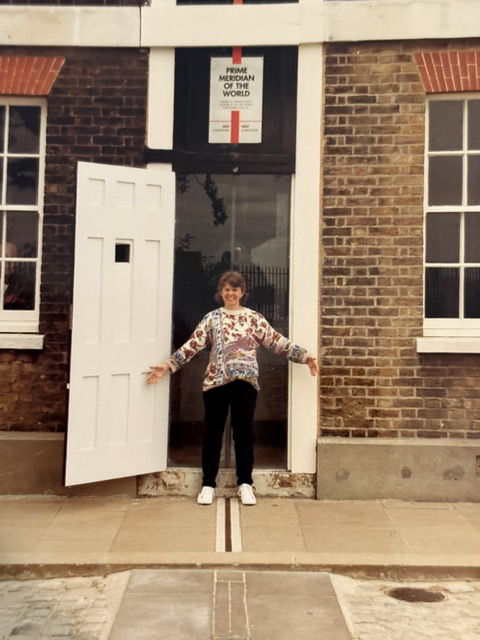
The Prime Meridian
During our travels in the United Kingdom with our girls, we visited Greenwich, just outside London. I wanted to see the famous Royal Observatory, but I also wanted the experience of standing on the Prime Meridian. There, with one foot in the Eastern Hemisphere and the other in the Western Hemisphere, I found myself straddling […]
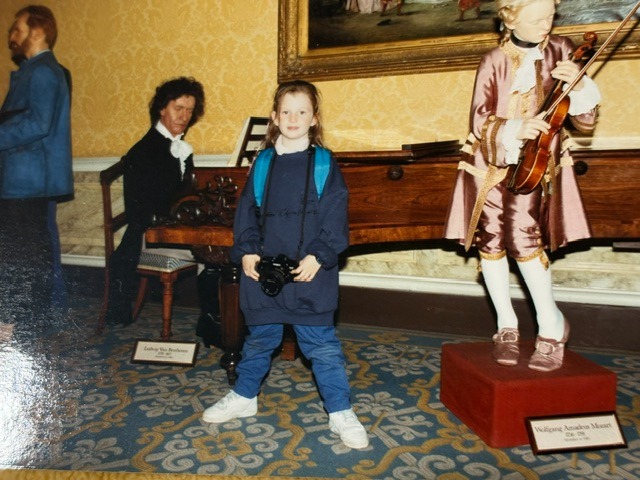
Madame Tussauds
Coming face to face with people from another century was part of the appeal of Madame Tussauds. We had to include this wax museum in our family vacation in the United Kingdom. Figures such as Beethoven and Mozart gave familiar names a physical presence, offering a playful way to encounter people whose music and stories […]
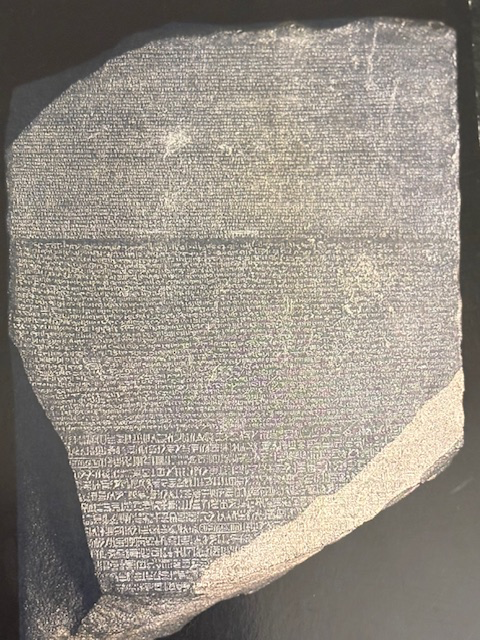
Rosetta Stone
When I arrive in a city like London for the first time, there are always choices to make, so many places, so many stories, so many directions to go. The British Museum was one of those places that was top on the list for a first visit. The British Museum is not just a collection […]

