Rosetta Stone
When I arrive in a city like London for the first time, there are always choices to make, so many places, so many stories, so many directions to go.
The British Museum was one of those places that was top on the list for a first visit.
The British Museum is not just a collection of objects it is a gathering of civilizations. It brings together pieces of human history from across the world and places them side by side allowing you to move not just through space, but through time.
We walked through its halls and passed from Egypt to Greece, from Assyria to Rome, each room holding what remains of cultures that once defined entire regions of the world.
Despite the scale of it all, certain objects pull more than others. One of those is the Rosetta Stone. What it represents is extraordinary.
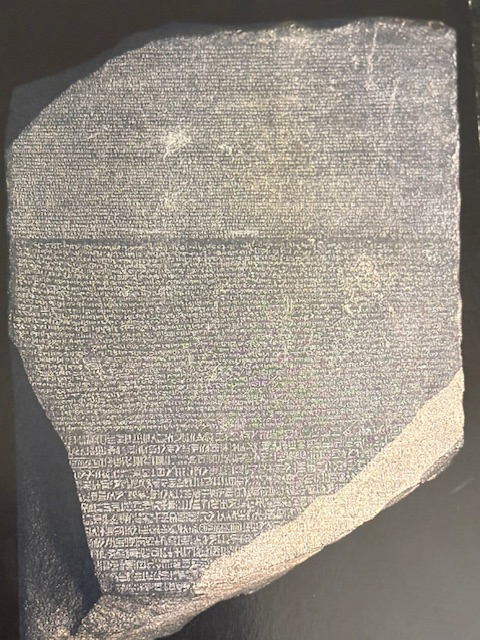
Before its discovery, Egyptian hieroglyphs were a mystery, symbols without a clear voice. The Rosetta Stone, with its inscription written in three scripts, became the key that allowed scholars to finally understand that language. This was a breakthrough.
Looking at the Rosetta Stone is looking at the moment when something having been long silent begins to speak again.
Read More From Nancy
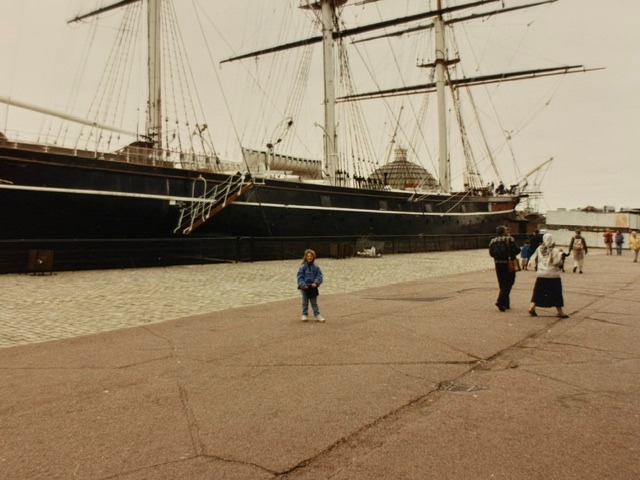
Cutty Sark
During our family vacation in the United Kingdom, we visited Cutty Sark in Greenwich. Its tall masts and intricate rigging offered a connection to a time when moving goods across the world depended on the wind, the design of a ship, and the skill of its crew. Launched in Dumbarton, Scotland, in 1869, Cutty Sark […]
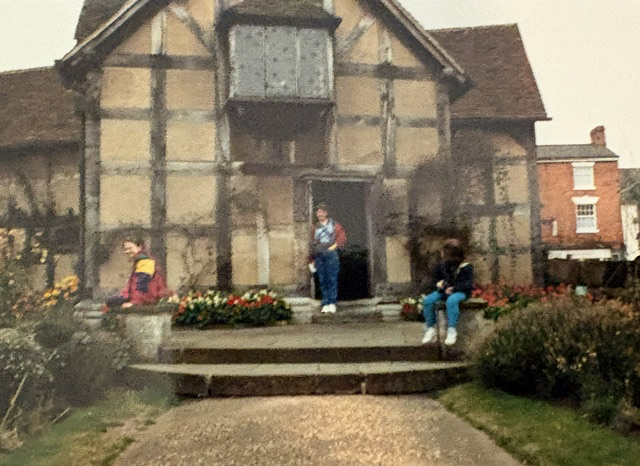
Shakespeare’s Birthplace
On our family trip to England, we took our daughters to Stratford-upon-Avon and spent the day exploring the places connected to William Shakespeare. One of the most important was this timber-framed house on Henley Street, where Shakespeare was born in 1564 and spent his childhood. The house belonged to Shakespeare’s father, John Shakespeare, a successful […]
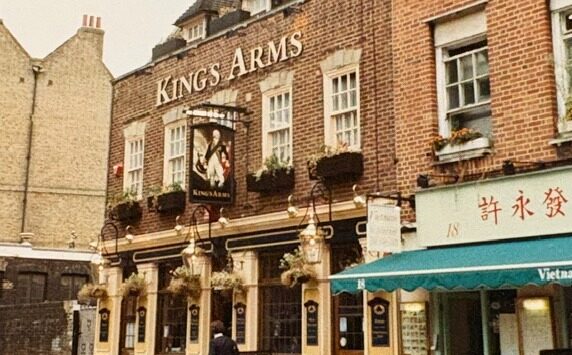
The King’s Arms
During our family vacation in the United Kingdom, we came across the King’s Arms on King William Walk in Greenwich. Its brick exterior, hanging sign, and flower-filled window boxes were part of the streetscape we encountered while exploring the area. Behind that familiar pub frontage is a story preserved partly through the memories of local […]

